
Tony Evans - When Government Replaces God (05/23/2017)
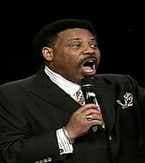
On July 4th, Dr. Tony Evans warns that America is in serious trouble, drawing a parallel from 1 Samuel 8 where Israel rejected God as King for a human government. He argues that the nation's decline stems from the breakdown of the family and the church's failure to be God's conscience, urging believers to prioritize God's kingdom over political allegiances to restore the country.
A Nation in Crisis on Its Birthday
On the 4th of July, there will be great celebration. People are amassing fireworks and events, parties and all manner of other forms of enjoyment to celebrate the founding of this Republic, the United States of America. Minds and hearts and thoughts are going to go toward this country that all of us call home.
You will, whether you want to or not, be forced to think about, reflect on, or on some level interact with what it means to be an American. If you watch the news, if you keep up with the newspaper, if you listen closely to what is happening around us, it is no secret that the United States of America is in serious trouble.
No amounts of celebration, no plethora of firecrackers will mute the reality that we are a nation on the brink. You and I are witnessing what we might call the devolution of a nation, not the evolution of a nation. We're watching disintegration occur on all levels that is undermining what used to be known as American exceptionalism.
It used to be known as the things that made America great. Even though historically America has had major flaws, nevertheless it was an experiment in history that was unique and one of a kind. But in the days that you and I live in, and in the days to come where your children and my children will grow up in these United States of America, it is quickly becoming a far different country than many of us were familiar with.
Now, regardless of your political persuasion—whether you're a Democrat, whether you're a Republican, or whether you're an independent—the principle is still true, and we are in trouble.
The Ancient Rejection of God's Rule
In 1 Samuel chapter 8, Samuel is old, in verse number one, and he appointed his sons as judges over Israel. There's a problem in verse three: his sons, however, did not walk in his ways but turned aside after dishonest gain and took bribes and perverted justice. So he appointed his sons, and that's not a problem except that his sons were not like the dad; they were evil in their ways.
Verse four: then all the elders of Israel gathered together and came to Samuel at Ramah and said to him, "Behold, you have grown old, and your sons do not walk in your ways. Now appoint us a king for us to judge us like all the nations." They came to Samuel and said, "We want a king. We don't just want a king; we want a king like everybody else, like all the other nations. We want to be like everybody else."
And the reason why we want to be like everybody else is your family is shot. In other words, the breakdown of the family led to an appeal to government. Follow me now: Samuel's sons did not walk in Samuel's ways, leading to family breakdown, causing them to want to appeal for government to come in and do what the family structure should have handled.
Today, many of the problems that government is trying to fix are because family has broken down. You would not nearly have all the issues we face if families were families the way God intended them to be. And so family broke down, so they wanted a king, and they wanted a king like everybody else.
Rejecting God for a Human Government
Now watch this: verse six says, "But the thing was displeasing in the sight of Samuel when they said, 'Give us a king to judge us,' and Samuel prayed to the Lord." So they wanted the king—that is government. They wanted government to come in and to manage the affairs of the nation.
The Lord said to Samuel, "Listen to the voice of the people in regard to all that they say to you, for they have not rejected you, but they have rejected me from being king over them." When God heard what they wanted to do, in spite of the issues with Samuel's family, he said their appeal for a king was a rejection of Him.
How does having a king, when God created government, become a rejection of God? Because they didn't just want a king; it says they wanted a king like the other nations. In other words, they wanted a king that could overrule God.
The Consequences of a Godless Government
He says in verse nine, "Listen to their voice; however, you shall solemnly warn them and tell them of the procedure of the king who will reign over them." Now watch this: He says, "Okay, you want a government. You want a White House and a Congress that would be king and a constitutional republic. You want a system of government independent of God because you rejected me, but you still want a king. So you still want government, and you want a government that leaves God out." He says, "Okay."
He says now, "Let me tell you what's going to happen when you get your government. 'Cause you can vote in, you can elect, you can choose a government that leaves me out, but you will know that that government has left me out. And let me tell you how you're going to know."
You're going to know, verse 11: "This will be the procedure of the king who will reign over you." And I want to read these verses down to 18. He will take your sons and place them for himself in his chariots and among his horsemen, and they will run before his chariots. You will see an increase in war. Okay, they're going to take your sons, put them in battle; they're going to run before your chariots, so that's an increase in battle.
He will appoint for himself commanders of thousands and of fifties, and some to do his plowing and his reaping and his harvest and to make his weapons of war and equipment for his chariots. He will also take your daughters for perfumers and cooks and bakers. He will take the best of your fields and your vineyards and your olive trees and give them to his servants. He will take a tenth of your seed and of your vineyards and give them to his officers and to his servants. He will also take your male servants and your female servants and your best young men and your donkeys and use them for his work. He will take a tenth of your flocks, and you yourselves will become his servants. Then you will cry out in that day because of your king which you have chosen for yourselves, but the Lord will not answer you in that day.
He says, "If you want to be like everybody else, and if you want a government—the king—that operates like everybody else, I'm going to give you that government. But when I give you that government, you're going to know I'm not involved. And here's how you're going to know: because you will see the government increasingly take, take."
You cannot exclude God and then complain that taxes are going up. You cannot exclude God and complain about the size of government. Government will always expand when God is removed because then government must play God. And the tragedy is many of God's people vote for government to play God because we do not have a biblical view of government.
When Government Takes God's Place
Turn to Ezekiel chapter 43. God's glory has come to the temple, but God has a concern as His glory comes to the temple. Verse seven of Ezekiel 43, He says, "Son of man, this is the place of my throne," talking about the temple, "and the place of the soles of my feet," talking about the temple. Okay, He says, now who sits on the throne? A king, right? A king sits on the throne.
He says in verse seven, "Son of man," because the son of man, in this case Ezekiel, is to be the watchman over the house, and He says, "This is the place of my throne; I'm King here, okay, and this is the soles of my feet; this is where I situate myself and my glory," that is, "my manifestation of my attributes in history. He says, "This is where I hang out."
Now watch this: "where I dwell among the sons of Israel forever, and the house of Israel will not again defile my holy name." Now what will defile your name? "Neither they nor their kings by their harlotry and by the corpses of their kings when they died." How are they doing this? Verse eight: "by setting their threshold by my threshold and their doorpost beside my doorpost, with only the wall between me and them. And they have defiled my holy name by their abominations which they have committed, so I have consumed them in my anger."
Okay, now what is God complaining about here? He says, "My throne is in the temple; the soles of my feet are in the temple; I rule from the temple. What you folks have done," yeah, had to come up with the righteous word there, He says, "is you brought the kings—that's the government, kings of the government. You brought the government, and you set their seat next to my seat." Is that you acting like we're equals? You acting like we're twins here? You've set them; you got this little partition, this little thin partition, and you set them next to me like we're on the same page.
And He says, "And you brought their evil next to me." It says "harlotry"; they have sold their souls like a woman sells her body—harlotry—"and you have set them next to me, praising your kings as though their throne ought to be next to my throne. You have made me and government, with its evil, equal. We are not equal. You can have that king, or you can have this King. You can't have both kings."
It is bringing civil religion into the church. It is using the church to advance a political cause rather than the kingdom of God. It is using the church not to send out what God wants but to send out what politics calls for. He says, "You putting them next to me, there's no next to me. It's not their view and my view; it's not their rule and my rule; it's my rule coming from my house." But that's not what we're seeing in society these days, or even in the church for that matter.
The Church as the Conscience of the State
The problem today is that the church—far too many in the church and far too many churches—have been co-opted by civil religion. Regardless of how you vote, and you ought to vote, you ought to be engaged politically, and you ought to think biblically as you vote. But regardless of how you vote, when you come out the voting booth, you are supposed to be representatives of the kingdom of God finally and ultimately.
Because no party fully expresses the kingdom of God, and therefore you must represent the kingdom of God. In a sense, you should be independent because you cannot fully align yourself with anything until you've measured it by His throne and the soles of His feet. Or else, when you do, you lose your ability to be an objective representative of God's agenda.
You see, what the church—the temple—is supposed to be is the conscience of the state. The church is not over the state; the state is not over the church. But the job of the church is to be the conscience of the state. In other words, to give it a moral compass for which it makes its decisions. Because if the church does not do that, how does the government know what's right or wrong? How does the government know what law is a good law and what law is a bad law? If Romans 13 says that the government exists for good, who's going to tell it what's good and what's not?
God's form of government is a constitutional republic, which is technically what we're supposed to be, where voters are voting representatives, and representatives represent the people based on a constitution of righteousness. That's why there should be a constitutional amendment that marriage is between a man and a woman, so that it's constitutional and the majority can't vote it out.
See, it should be a constitutional republic that establishes God's overarching guidelines by which now the representatives can represent the people so that it's not simply the majority; it's the majority ruling consistent with God. And the job of God's house is to reveal that. The problem is when the kings can get in the house, when you can sell your soul politically. This point is: the kings and me are not equal. The government and God are not equal.
Our allegiance is to God. We ought to honor the king; the Bible says we ought to respect government, absolutely. But we are to provide significant influence on government because—watch this, I love the way He says this—He says, beginning in verse 10, "As for you, son of man, describe the temple to the house of Israel, that they may be ashamed of their iniquities." He says, "You tell Israel, don't bring that king, don't bring that mess up in here. Don't put those kings next to me like we are one and the same, and you're going to get their view and get my view. Uh-uh, my view in my house is the only view that matters."
The Law of God's House
He says, "So if you want to get rid of your sins and get rid of your iniquities, 'cause this king problem," He says, "is a spiritual problem." He says, "Make known to them the design of the house. Let them build a house like I say build it, okay? Its structures, its exits, its entrances, its design, all of its statutes, all of its laws, and write it in their sight."
Okay, now they've taken God's laws out of school buildings; they've taken it out of many courthouses. And depending on the state you're in, they no longer want to have God's laws having to be obeyed. They don't even want the recognition of His Son at Christmas. All right, "Write it in their sight so that they may observe its whole design and all of its statutes and do them." And here it is, verse 12: "This is the law of the house: its entire area on the top of the mountain all around shall be most holy." Because this is the law of the house. Somebody say, "Law of the house."
He's in the temple; the house is the temple. Okay, the New Testament calls the church the temple. He says, "This is the law of the house," or to put it in everyday language, "This is how we roll." Okay, "You tell them to structure the house if they're serious and not just playing religion. You tell them to structure the house along my laws, okay, along my laws. Don't bring the government next to me and talk about 'y'all or we.' They know 'y'all or we'—that's my house."
He says, "And in my house, you give them the laws of my house." Now, I can't speak for your house, but I can tell you about my house: you can talk anywhere you want to in the street or in your house, but we don't allow profanity in my house. And once you cross the threshold in my house, there is a law of the house. He says, "Teach them the statutes and the laws of my house."
The authenticity of a church is when it's representing God's rules, not just repeating society's rules, even if it comes from the government. 'Cause He said, "Don't put those kings next to me like we're twins, like we're equals. Not in my house," says the law in my house. God is being pushed out of the culture. He's being slowly, methodically marginalized. But the reason He can be marginalized out of the culture is He's been marginalized in the church.
Because even the folks in the house don't want the laws of the house. They will quickly appeal to human viewpoint over God's viewpoint, appeal to what they think even when it disagrees with what God says, quickly appeal to their preferences rather than to God's preferences.
I want to say this: God has an answer for health care. He has an answer for taxation. God has an answer for all the moral issues of our day. God has an answer. All this stuff is in the Bible; this is in the Bible. But because the people in the house don't want to know the laws of the house, they listen to what the other kings say, and that's how they make their political decisions. The church, when it is functioning properly, becomes the conscience of the society.