
Tony Evans - The Command for Discipleship (03/18/2018)
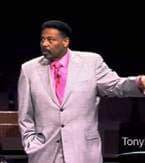
This sermon defines discipleship as the church's process of maturing Christians into Christlike representatives who can replicate themselves. Centering on Matthew 28:16-20, it argues that Jesus, possessing all authority, commands us to make disciples through going, baptizing, and teaching, promising His empowering presence specifically to those engaged in this mission.
The Mandate for Discipleship
God has installed a process for the development of kingdom people, and the name of that process is called discipleship. Discipleship may be defined as that process of the local church which seeks to bring Christians from spiritual infancy to spiritual maturity so that they are then able to replicate the process with someone else. Biblical discipleship, that is the cultivation of kingdom people, is that process of the local church to bring Christians from spiritual infancy to spiritual maturity so that they are then able to replicate the process with someone else. The goal of God's church is not simply to have members. The goal of God's kingdom is not simply to have citizens, but to have men and women, boys and girls, who have been developed over time into proper representatives of the kingdom of which they are a part.
On the 40 days between Jesus's resurrection and ascension on a cloud to heaven, he called a meeting. It was a scheduled meeting and the only one we know about because it's the only scheduled meeting the Bible talks about. Now he had many meetings but none scheduled. This meeting was so important that he had to designate the time and the location for the meeting to take place when he rose from the dead. According to Matthew 28:16, it says the eleven disciples met Jesus in Galilee on the mountain which he had designated. So it was a defined, designated meeting in Galilee at the site of a mountain to meet the risen Lord. It says the eleven met him there, that is minus Judas who had committed suicide.
According to 1 Corinthians 15, it says he met with more than 500 brethren at one time after he rose from the dead. The eleven are part of the 500, so that gets us about 489 that are at the meeting. So we have one group, the 11, then we have the bigger group, the 489, but then there's a third group at the meeting because verse 20 of Matthew 28 says "And lo, I will be with you always, even until the end of the age". Well, the age has not ended yet, so you and I are at the meeting. So why don't we all mosey on up the mountain since we've been invited to the meeting, since we're in the age that the meeting still applies, and find out what the meeting is all about since it is relevant to us today.
The Authority of the Risen King
Jesus Christ calls this meeting as the risen Lord, and then after they gather, it says they worshipped him. It goes on to say that when they saw him, the risen Christ, verse 17, they worshipped him, but then there's a tagline: "but some were doubtful". In other words, some had questions. Some came but wanted to know, is this stuff real? Does this stuff work? Is this thing I've been given my life to these last three years, is this the real deal? Let me check this thing out. So they all showed up, but some showed up with question marks. They were doubtful. We probably have that today. Everybody's here, but some are here with questions. You want to know, I'm worshipping this Jesus, but is this thing real? Does this thing work? Can I bank on this thing like I've heard?
Well, the good news is the doubts didn't keep them home; it brought them out. See, there are two kinds of doubts. There are doubts that keep you in because you question it, and then there are doubts because you want to check it out, so they came. So it says they came and they worshipped him. They celebrated the risen Christ even with their question marks, even though some were doubtful. They sang their songs, they prayed their prayers, they had their praises, and then it came time for the sermon. Jesus Christ stands up because he's preaching today, and then in verse 18 he utters these words: "All authority is given to me in heaven and on earth". Jesus says in verse 18, "All authority has been given to me in heaven and on earth". Translation: I'm in charge now.
All authority, not many, not much, not most, *all* authority has been handed to me up there and down here, in heaven and in history, in eternity and in time. He says I'm in charge now. So as we enter into this discussion about discipleship, let's get something straight. And that is, it's not just about God, it's about Jesus. He says I am in charge now. All authority has been handed over to me. Everybody can talk about God, but when it comes to who's in charge, who makes the final call, who makes the determinative decisions in your life and in our world, it boils down not to your belief in God, but to your relationship with Christ.
I want you to understand this. Believing in God, as far as seeing the authority of God at work in the world, is tied to Jesus, not generic God. In fact, when you use the name God, I don't automatically know who you're talking about, because God can be filled with all kinds of sub-definitions. But when you bring up Jesus Christ, I know exactly which God you're talking about. And Jesus says, "All authority has been given to me in heaven and on earth". That is critical to understanding discipleship, because Jesus, after declaring He is in charge, He has the final right to rule up there in the sweet by and by and down here in the nasty here and now.
He calls the final shot, not just believing in generic God. It is your association with Jesus Christ that makes the final call in your life. Follow me, this is critical. Therefore, Jesus says, "Go and make disciples," verse 19, "baptizing them in the name of the Father, the Son, and the Holy Spirit". He says, "I want you to make disciples". "Make disciples" is an imperative. It's not a request, it's not a suggestion; it is a command. He says, "I command you," telling His followers, "to make," don't just make Christians, "make disciples".
What is a Disciple?
And I want you to do that using three participles: going, baptizing, and teaching. Whenever you have an imperative, "make disciples," orbited by three participles, the participles give you the method for accomplishing the imperative. The imperative is make disciples; the way you do it is going, baptizing, and teaching. We'll explain that in a moment. But everything revolves around making disciples, so we must ask the question, "What is a disciple"? The word "disciple" in the Greek text is pronounced *mathetes*. That was a very well-known word in the Greek world. It meant somebody who was following in the footsteps of somebody else. That was a disciple, somebody following in the footsteps of someone else.
For example, Jesus says in Matthew chapter 10, verse 24, "A disciple is not above his teacher, nor a slave above his master. It is enough for the disciple that he becomes like his teacher, and the slave like his master". So a disciple is someone who becomes like somebody else, or as he says, "like his teacher". So the goal of discipleship is to become like Jesus Christ in our character and conduct, attitudes and actions, to be progressively conformed into His image. This means we begin to think like He would think if He was thinking with you right now, act like He would act if He was acting with you right now, be what he would be if he was being with you right now. It is becoming a replica of another.
This word *mathetes*, disciple, was a very key word in the Greek world. You and I live in a world dominated by Satan, but what God wants to do is train some people in the thinking of Jesus Christ so that the culture dominated by Satan has to deal with the influence of people who have been consumed by their teacher, having become disciples of Jesus Christ as they enter into the world in which the evil one dominates. So he says, "I want you to make disciples". There is only one master, Jesus Christ, but he wants some copies of him operating in society.
He wants men and women who have been run through the process because they are so attached as a slave to the master that Jesus Christ can rub off on them. Then when people see them, they've gotten a clue about what the master is like. The goal of the church is discipleship, not just membership. See, the reason why we don't have the influence we ought to have is we got plenty of churches and we got a bunch of members, but the King is having trouble finding disciples. He's having trouble finding people who have not become disciples of the culture because they've become disciples of the King. They've become duplicates, replicas of who Jesus Christ is.
Sharing Christ's Authority
So he says, "I want you to make disciples". Why? Here's why. Because he wants to share his authority with you. You see, Jesus only shares his authority with disciples. He doesn't share it just because you're a Christian. You can live all your life and never see the rule of God in your life. You can live all your Christian life and never see God overrule for your life because what you are is a long-distance Christian, not a close-up disciple. You get to see all authority operate when you become and when you're involved in making a disciple.
It is your relationship to Jesus Christ, not just your belief in God, not just your accepting him as Savior, but your relationship as a close follower—discipleship—that determines the authority you experience. Jesus possesses all authority, but if you've got a long-distance relationship you can't piggyback on that authority and get the benefit of that authority operating in your life. So you don't just want to be a Christian and you don't just want to be a church member, not if you want to see heaven visit history. You've got to be a disciple to get that one.
He says, "All authority belongs to me, so therefore make people into disciples so they can get authority in history and not just wait to get to heaven to see what it looks like". He says, "I want you to make disciples so that what I have done legally you can make literal, so that what I've done in heaven you can exercise and execute on earth".
The Process: Go, Baptize, Teach
So what do we do to make these disciples? Three things, three participles: Go, baptize, and teach. First of all, go. Now you can study "go" in Hebrew, Greek, Ugaritic, Aramaic, and "go" means "go". It means "don't stay". Okay? The word is used in Matthew chapter 10 when he says, "Go to the lost sheep of the house of Israel and tell them Messiah has come". When he says "go" he means take your witness. There should be no question about who you belong to. Now you can get away with it if all you're talking about is God, because God is safe. See, you're safe with God because we don't know who you're talking about. Okay?
Jesus Christ puts you in another category. You're not gonna offend anybody with God. Jesus is the problem, because now you've gotten real specific about which God you're talking about. He says, "I want you to go and let them know Messiah has come". That's why he says, "Baptize them in the name". Baptism has to do with a new union; you have become attached to, associated with, and connected to Christ. You are now reclassified in Jesus Christ. He is your new point of identification. You are a Christian. That means that your identity with God comes through the relationship through Christ.
That's why Jesus says in Matthew 10, "If you deny me before men, I will deny you before my Father". But then he says, "If you confess me before men, I will confess you before my Father, because my Father's only gonna do for you what I agree with, and I'm only gonna agree with stuff you include me in". So if you include me in church, but leave me out in the street, on the job, with your friends, with your homies—if you don't want to be associated with me out there, but you're all lovey-dovey with me in church—if you deny me before men, I will deny you before my Father. Why? Because all authority has been handed to me in heaven and on earth.
Therefore, I want you to go as a baptized person, as a person married to me, and then teach them, he says. What do you teach them? Pneumatology, ecclesiology, angelology, anthropology, superlapsarianism, dispensationalism? What do you teach them? No, he don't say none of that. He says, "Teach them how to live. Teach them to observe". That's what the verse says. "Teach them to observe whatever I have commanded you". Verse 20 says, "Teach them to observe whatever I have commanded you". Okay, here's the goal. The goal of preaching is not merely knowledge. Knowledge is critical because hopefully you learn, but the goal of preaching is observation or application.
Without application, teaching becomes a waste of time. He says, "Teach them to observe whatever I have commanded you". You are not a disciple until application is here. The fact that you took notes, memorized verses, all that's nice, but until it becomes part of your life, discipleship is not yet in place. Teach them to observe, and that's why we offer you, as you will hear, the opportunity to become life-on-life, because the goal of discipleship is life touching life, not just people in seats hearing sermons.
Unless a father touches the life of his family, unless a man touches the life of other men, or a woman touches the life of other women, and life on life is creating change, discipleship is not occurring; you're just having church. And God's goal is to make disciples, not make members. Baptize them in the name. The name means authority, ownership. To be baptized in the name means his name owns you, and then he gives the name of the Father, Son, and Holy Spirit. The singular name with three pronouns—that's bad English unless these three are one.
Representing the Name
He says trinitize them, so that a doctor is no longer just a doctor; he's God's representative in the medical field, so the medical field sees what God looks like when God helps hurting people. So that a lawyer is not just a lawyer; he's God's representative in the bar association, so the bar association gets to see what God looks like when God tries a case. So a businessman is not just a businessman; he's God's representative in business, so the business world gets to see what God looks like when God cuts a deal. So the teacher is not just a teacher; he's God's representative in the classroom, so the classroom gets to see what God looks like when God teaches a lesson.
So the housewife is not just a housewife; she's God's representative in the home, so the home gets to see what God looks like when God raises a family, because your job is to represent the name. There is great reward that comes from this because you're sharing his authority, but there's great pushback that comes from this, because it does bring about its level of rejection. So it's a win-lose situation in terms of experiences, but what you do get is authority because the Son joins disciples.
The Promise of His Presence
He closes in verse 20 with these words: "And lo, I am with you always, even until the end of the age". In the Greek text, there is a phrase and it's pronounced *ego eimi*. *Ego eimi* is often translated "I am". But here, the emphasis is intense. In many of your English Bibles they intensified the "I," and that's why I read "and lo, I". Jesus is literally emphasizing himself. Why does he emphasize himself? Because in verse 19 he says "be baptized in the name of the Father, Son, and Holy Spirit". He loves the whole Trinity. But in verse 20 he leaves out the Father and the Spirit and says it's about me. Why? Because all authority has been handed to me. I'm gonna make the final call. So "lo, I'm gonna be with you always".
Now I know we use this verse to say, "I got a headache, God said he'd be with me. I lost my job, God said he'd be with me. I'm still single, God said he'd be with me". You know, okay, there are other verses for that. What this is talking about is God being with folks who are disciples who are making disciples. In other words, God does not have the same relationship to every Christian. In John chapter 2 the Bible says "many believed on him but Jesus would not commit himself to them because he knew what was in them". They weren't ready yet. So just because you're saved doesn't mean you're close.
I love every member of Oak Cliff Bible Fellowship; I love you with my life, but I don't have the same relationship with every member. I got one relationship with the elders, another with the deacons, another with the staff. I have another relationship with those who are involved in ministry versus those who just come on Sunday. I have these different levels of relationships, although I love everybody. Jesus loves all of his children, but he doesn't have the same relationship with all of his children. Some he knows from afar, because it's a long-distance relationship. Others he knows up close, because they are becoming disciples and are reinvesting it in the discipleship of others.
So what he's saying in verse 20 is, "Who I really hang out with, who I really share my authority with, instead of my Father," because he's turned it over to me, "instead of the Spirit," because he waits on me to make the call, "I, even I, hang out with disciples and disciple-makers". That's the folk who experience the authority of the Son. So the question on the floor is: what kind of relationship do you want? Do you just want this relationship where you do the best you can, go to heaven, and hope life works out? Or do you want the relationship where heaven is sitting next to you making the call?
See, both the officials and the folks in the crowd at a football game are in the stadium, but only the folks on the field have authority. You may be in the kingdom, but without the authority of the kingdom, because you're too far in the stands from the king. What God is saying is, "I will be with those who are becoming disciples and who are replicating that by making disciples," because if you do it right, he says, "make disciples of the nations". The nations are not just individuals; they are whole collective groups of people who are united in social-political unity, who come together around the same customs and causes. I want you to be a dominant influence.
Why are we falling apart as a nation? The problem is not the White House; the problem is God can't get the attention of the church house. In TV and movies, they show you previews of coming attractions—always the hot scenes. Now it may be a terrible movie, but you never know, because the clips are always hot and they're strung right together to make you want to tune in. One day there's a big show coming to town. God is the producer, the Holy Spirit is the director, Jesus is the superstar, and it will be a worldwide production. It's called the kingdom of God.
But until that kingdom comes, he has left you and me here as previews of coming attractions. You see, we're supposed to be the hot clips of the upcoming show. People are supposed to see that clip of your life and your discipleship and say, "That's hot". They're supposed to see the way you roll and say, "That's hot". They're supposed to see the way you handle things and say, "That's hot, that's hot. Where can I buy a ticket to the whole show"? And that's when you can tell them, "You don't have to buy a ticket; the price has already been paid".