
Tony Evans - Concept of Faith (03/07/2018)
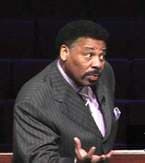
This sermon introduces Hebrews 11, defining faith as acting like God is telling the truth. It argues that faith is a lifestyle of trust in God’s integrity, not just feeling or talking, and is the only way to please God and see His promises fulfilled.
The Crisis of Faith and Hope
There are many people today who are living with a sense of hopelessness. A sense that it’s not working, it’s not worth it, it’s not fair. «I quit. I give in. I throw in the towel. I can’t take it anymore.» A sense of profound despair. That was true of the folks that the author of Hebrews was writing. They were on the verge of quitting—quitting the faith, going back to the world. They didn’t think this Christian thing was worth it; it just wasn’t working out for a lot of reasons.
There are people who are seated here today who may look the part, but if the truth be told, it’s not working. I’ve got unanswered prayers. I’ve got unfulfilled dreams. Things in my life that I thought God was going to take care of and have not yet been addressed. So I’m ready to throw in the towel. That leads him to discuss an awesome concept in a profound chapter. What leads him to discuss this concept is summarized in chapter 10, beginning with verse 35.
In chapter 10 of Hebrews, verse 35, he says: «Therefore do not throw away your confidence, which has a great reward. For you have need of endurance, so that when you have done the will of God you may receive what is promised. For yet in a little while, He who is coming will come and will not delay. But my righteous one shall live by faith; and if he shrinks back, my soul has no pleasure in him. But we are not of those who shrink back to destruction, but of those who have faith to the preserving of the soul.»
He says, «I am writing you so that you don’t throw in the towel. You need endurance.» And then he throws the zinger: «For the righteous shall live by faith.» Okay, watch this. Whatever faith is—we’re going to talk about in a moment—it’s supposed to be a lifestyle, not an event. «The righteous shall live by faith.» In other words, whatever faith is, is how you should roll. It should be how you flow. It should be your normal modus operandi of life.
Faith is not a concept you visit; it’s a lifestyle you possess. Because the righteous shall live by faith. So if you’re not living by faith, it’s because you’re not yet righteous, because that’s how the righteous live. And the righteous who learn to live by whatever faith is get to experience God in action. That’s what he says. You get to experience God fulfilling his word. So you’ve got to ask the question: Am I living by faith? Because if I’m not rolling by faith, then I’m not experiencing God in my circumstances. Because that’s how the righteous roll; they live by faith.
Defining the Substance of Faith
But that raises a question: What is faith, and how does it work? Which leads us to our series: «A Tour of the Hall of Faith,» where we’re going to look at the heroes of the faith. Verse 1: «Now faith is the assurance of things hoped for, the conviction of things not seen.» Faith deals with things that are real that have not yet penetrated your five senses because you haven’t seen it yet. Hope is an expectation about the future. Hope is an expectation of which you are convinced or convicted about.
In other words, you are confident of this thing even though the thing hasn’t occurred yet. Faith, then, must have substance. It must have some «stuff» that you can rely on. Now what this means is: faith is only as meaningful as the substance to which it is attached. If you’ve got faith in bad substance, then your faith will be insufficient no matter how much of it you possess, because the substance you’re placing it in isn’t much or maybe not real at all.
Faith has to do with an expectation, a hope, that must involve a substance. So the amount of your faith is not tied to how much faith you have; it’s tied to how much substance you possess. A little faith in significant substance produces great results. A lot of faith in insufficient substance will produce no results. Because what makes faith faith is the substance to which it is attached. Faith is the assurance (the substance) of things hoped for, and it is the evidence of something that your eyes have not yet laid eyes on but that you know is real.
If you want to grow your faith, don’t go faith-growth hunting; get a better substance. The surer the substance, the more solid the faith. So to understand faith, you have to look at the «substance of things hoped for"—that is, what the object is—and «the evidence of things not seen.» So this let me clarify something then about what faith is not. Faith is not how you feel. Faith is not—let me put in a word—necessarily how you feel.
You can feel faith-less but be full of faith. You can feel full of faith and have no faith. Because faith is not first and foremost an emotion. Emotions do not have intellect; emotions don’t think. That’s what emotions are; it’s how you feel, and feelings shift based on the information received. Faith is tied to substance that is not yet seen or experienced with the five senses, but that you are convinced is real based on the integrity of the subject who is calling for the faith.
Who is the subject calling for the faith? It’s God. He says, «…when you have done the will of God.» Now let me tell you why this sermon and this series, for many, may be the most important one you’ve ever heard. Because Hebrews 11, verse 6 says: «Without faith it is impossible to please God.» Faith is not one of the things you need; it is the key thing you need if you want to experience God. Because without it, it says, you are displeasing to God.
Faith as Action, Not Just Assent
So all of us here today who don’t roll by faith—we talk about visiting faith on occasion, where faith is not your modus operandi and lifestyle, that’s not how you normally flow—are living a life displeasing to God. So if you’re not living by faith, you’re not pleasing God. If you’re not pleasing Him, you’re displeasing Him. Why is God getting all upset about whether I have faith or not? Because when you don’t exercise faith, you are challenging God’s integrity.
So let me give you, or remind you again of, the formal definition of faith, boiling it all down: Faith is simply acting like God is telling the truth. Faith is acting like God. It’s not feeling that God is telling the truth. It’s not saying that God is telling the truth. Faith is acting like God is telling the truth. That’s why the Bible calls it walking by faith and not talking by faith or feeling by faith or even thinking by faith.
Unless it has hit your feet, it’s not faith. It’s intellectual ascent to a concept that hasn’t gotten mixed with action. Therefore, nothing concrete has shown up in the life. If you want a concrete manifestation of God, then what you believe about God must be married to what you do in light of that belief. Now you’re exercising faith so that God can now become concrete in your life and not a theory in your head.
Verse two: «For by it (by faith) the men of old gained approval.» For by it—by this definition of faith—the men of old gained approval. He says, «I’m going to take you on a tour of the men of old» (and he’s going to have—that means men and women, because he has men and women in chapter 11) «of old,» meaning in the Old Testament. He makes a statement in verse 1 about what faith is, and then he asks, «Are there any witnesses?»
He reaches back into the Old Testament, and he pulls out witnesses from the Old Testament for us New Testament Christians to know that what worked for them is what you need to work for you. He’s got some witnesses. So when we go through this Hall of Faith, we’re going to look at some witnesses. Because Abel’s going to come forth, and he’s going to be the first witness. Enoch is going to come forth and he’s going to testify. Noah is going to come forth and he’s gonna say hello. Abraham’s gonna come forth; he’s gonna tell you something.
Sarah is gonna come forth, and a girlfriend has something she wants to share with you. Rahab wants to tell you a little something-something 'cause she’s gonna testify as well. David’s gonna give a testimony. Joseph’s gonna give a testimony. The patriarchs are gonna give a testimony. That’s gonna be testifying week by week by week to let you know that verse 1 is the truth, the whole truth, and nothing but the truth, so help you God, when you understand faith.
He says, «I got some testifying to do.» He said, «By it the saints of old were approved"—that means validated and vindicated. There’s nothing like when God validates you. The end of chapter 10 says, «…and He will come.» He’s going to validate you. You don’t get your graduation certificate when you enroll in college. You don’t get it upon enrollment; you get it upon fulfilling the requirements. That’s why the end of chapter 10 says, «…when you have completed the will of God.»
See, because some of us are in college for 20 years because we’ve not completed the course we’ve been called on. So we’ve not received the approval of graduation—the validation and vindication of a life of faith. We pick and choose when we want to believe God. We believe God on the things we like; we disregard Him on the things we don’t like. And so we’re not living by faith; we are cherry-picking by faith. He says the righteous—this is how they roll. In other words, non-faith is the exception; faith is the rule—in spite of how they feel.
Witnesses from the Hall of Faith
It’s like the three Hebrew boys that said, «We believe God can deliver us, but even if He doesn’t, we’re not going to bow, because we trust God.» It’s like Habakkuk says in Habakkuk chapter 3, in the last few verses: «Though there’s no fig on the tree, though there is no cattle in the stall, though I can’t see anything God is doing, I’m gonna still rejoice because I still know God, even though I can’t see a change in my situation, because God has integrity in spite of my circumstances.»
There’s some strange people in this list in Hebrews 11. There’s some folk in this list that if we were making the list, wouldn’t have made the list. You got a prostitute in this list. You got a liar in this list. You got a murderer in this list. You got a passive man in this list. You got a lady who laughed in the face of God in this list. You got some messed-up people who made the list. Oh, that ought to be some good news to somebody.
Even though you walk through this door toe-up from the flo'-up, even though you walk through this door of spiritual failure, if you right now will begin to live by faith, God still will let you make the list. Some folks you shouldn’t belong here—that means there’s hope. There’s hope if you and I begin to live by faith and stop faking it to make it—playing in church, playing religion, playing Christianity, and not taking God seriously and stopping our challenge of His integrity.
Because why would you answer the prayer of somebody who calls you a liar every day? When God’s integrity is challenged, His promises lie dormant and unfulfilled.
The Ultimate Illustration: Creation by Faith
He comes to his final point; it’s a zinger too. Verse 3: «By faith we understand that the worlds were prepared by the word of God, so that what is seen was not made out of things which are visible.» I need to read that again because this is a zinger: «By faith we understand that the worlds were prepared by the word of God, so that what is seen (what is visible) was not made out of things which are visible.»
He said, to make my point about faith, let me take you all the way back to the beginning. He says we understand that the worlds that we do see were created by Someone using something we don’t see. Genesis 1:1 says, «In the beginning Elohim created the heavens and the earth.» That’s the Hebrew name for the Creator God found in Genesis chapter 1, verse 1. Stay with me here.
It says «the worlds"—and notice the word «worlds» in verse 3 is plural. That means the whole universe, not just the earth. So the whole universe, all the galaxies that exist, was created by Someone you can’t see, using stuff you can’t see, to create a universe you can see that we’re still trying to look at through telescopes. But there are too many galaxies that even our strongest telescopes can’t even locate them. God used this strategy to create the universe. And how did He do it?
Verse 3 says by a rhema word. The word «word» there is rhema. A rhema word means a divine utterance, a spoken word. He’s spoken. You remember Genesis 1: «In the beginning God said, 'Let there be light, ' and there was light.» «God said, 'Let the water be separated from the land, ' and it was so.» God He uttered—He uttered a word, and what wasn’t became because of what was uttered.
Learning to Trust God’s Integrity
Normally, sitting right there is my grandson, the littlest grandson, J2. We call him J2—Jonathan II. After the second service on most Sundays, Jonathan II runs out at the end of the service, runs up the steps, comes over to the edge and says, «Poppy» (which is what he calls me), «catch me!» And he stands up here, and I hold my hands out, and he jumps. I did this with the other grandkids, too, when they were that small. They come up here and jump. So he comes up almost every Sunday. He runs up here, and he says, «Poppy, catch me!» And so I hold up my hands, and he jumps.
But it always wasn’t like that. Let me rewind. Initially, I picked him up and put him up here, and I stood down there, and I said, «J2, jump!» He said, «No, no, I’m scared.» I said, «J2, I got you.» He said, «No, no, no, no.» I said, «J2, but I’m right here. I got you.» He couldn’t say it like this, but he was basically saying, «I’m not sure. No, no, no.» But I kept uttering the word, uttering the word, uttering the word. The problem is, he wasn’t believing the word because he was not confident in my integrity.
He was not convinced I either had the will or the ability to catch him, and that I would not let him fall. But after pounding him with the word over and over—"J2, jump! J2, jump! J2, jump! J2, jump!"—pounding him with the word, he came over to the edge. I said, «Jump, J2.» He said, «Come closer. You too far. You’re too far.» But when he asked me to draw near, when he called on me to draw near, I came a little bit closer, and I drew a little bit nearer.
Because I knew the closer I got, the more confident he would have. And so I got closer. I said, «J2, jump.» He lifted up one leg but kept the other leg down. He wasn’t fully comfortable. And so he didn’t jump; he just kind of tentatively leaned forward so that I could grab him. I put him back up there. I said, «Jump. It’s time.» He went up a little higher. «J2, jump!» He went even higher. Now, at the end of the church, he runs out here and says, «Catch me! I’m jumping!» Sometimes he jumps before I even put out my hands.
Because he’s learned to believe in my integrity. He believes that Poppy is not going to drop him, is not going to let him down, is not going to let him fall on his face. And once he becomes convinced that he can trust me, he now invites the opportunity to have faith. God wants you to trust His integrity so you can say to Him, «Catch me in this situation. Catch me in this circumstance,» because you have learned to trust Him. You have learned that your God has integrity.