
TD Jakes - Count it All Up
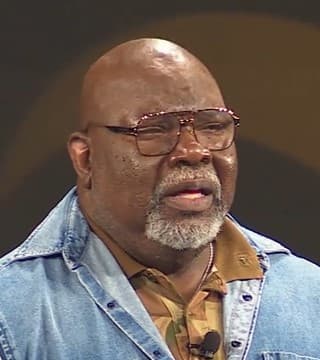
Drawing from Romans 8:18, Paul—after enduring beatings, stonings, shipwrecks, and despair—reckons (audits his life like an accountant) that the sufferings of this present time are not worthy to be compared with the glory that shall be revealed in us, urging believers to keep reckoning through pain until God's promised assets and profitability outweigh all liabilities.
Surviving the Turbulence
Even the wisest amongst us has to scratch his head with the ideology of how—how can I survive this moment? I know I am strong, I know I am tough, I know I am resilient, I know I am committed, but how can I withstand the turbulence of this moment?
You must understand that when we delve into the complexities of this text and we dare to hear the Apostle Paul speak, he is not speaking something he saw on Instagram—he is not picking up a quote from Twitter and running with it.
This is a man who has suffered and been beaten—this is a man who has been left for dead, this is a man who has been wounded in such a way that the lacerations against his skull caused the crowd to think he was dead. And after they all walked away thinking he was nothing but a corpse, he got his bloody body up off the ground and walked away, and then he said, “For I reckon.”
It is not so much the rest of the text that I want to grapple with—I want to grapple with the “For I reckon.” I reckon is a term that almost sounds country to me.
The Meaning of "Reckon"]
I grew up in West Virginia, and when people would be talking and you wanted to respond to them, you would say, “Well, I reckon.” I reckon—it made you sound country, it made you sound hillbilly, it made you sound out of sorts.
And I know that this King James Bible that I am holding could not be written in West Virginia or down in Mississippi where my grandparents come from, where they would say, “I reckon it is over yonder, I reckon it is across the street, I reckon it is around the store.” I reckon—where did this term come from that the Apostle Paul, who is intelligent beyond human comprehension, would use such a word? Certainly he is not just using it as my cousins and my friends did playing in the school yard—“For I reckon.”
What does he mean by reckon? Reckon speaks to reasoning—it speaks to rationale, it speaks to trying to understand. As Marvin Gaye would say, “Tell me what is going on? What is going on?”
I have to admit, 2020 has left me scratching what hair I do not have, trying to figure out what is going on, and I struggle with the word reckon, so I had to look it up. And it says logizomai in the Greek, where we get logos—it means in the sense of an account or reckoning. And then I begin to understand that reckoning is not a country term—reckoning is an accounting term, an accounting term where we reconcile the books.
Reconciling Pain and Suffering
And is that not what we all want to do with our suffering and with our pain and with our life? To find some kind of way to make sense out of it, to make purpose out of it. If I had to lose my daughter, why? I have to make this pain make sense.
There is not one amongst us with a grain of intelligence at all that has not spent a moment trying to audit our own lives and try to figure out why did I have to go through that? Why was I abused at a vulnerable age? Why did my father and mother leave me? Why did I move from house to house? Why did I grow up in foster homes? I wonder why?
I reckon, I reckon, I reckon means I am wrestling, trying to reconcile what in the world is going on in my life. I reckon means I am trying to figure out why am I dealing with what I am dealing with like I am dealing with it when I am dealing with it.
This is not the time for me to be going through pain, and yet I do not always get to pick the moments that I hurt, that I suffer, that I cry, that I wail, that I lose. I do not get to pick the weapons that are used against me or the rocks that are thrown at me, or the ships that fall apart, or the dogs that attack me. I do not get to pick my own story. I reckon. I reckon.
Moments of Deep Reflection
There have been moments in my own life that I had to sit down, get all by myself, get quiet, make everything shut up for a minute and just try to reckon. It is at this moment of deep reflection that we are allowed by the Holy Spirit to hear one of the greatest orators and thinkers of our time grappling with the ideology of how do I make sense out of life?
This is the Apostle Paul trying to figure out what is it all about—tell me what is going on. I reckon. This is the Apostle Paul who tells us that when he went to Asia he was so overwhelmed that he went into a state of depression and wanted to die. This is not some whimsical upstart motivational speaker who is trying to give us a good feeling.
This is somebody who is acquainted with grief and sorrow and injustice and misunderstanding and pain and turmoil of such consequence that when they did not kill him he thought about killing himself. For I reckon.
How Paul Found Strength
How did he find the strength to get up when the stones had knocked him down? And how did he find the strength to overcome depression when he felt like caving in and giving up his own life? And how did he find the strength to resist the shame of being laughed at by his own fellow scholars because he dared to believe in Jesus?
He was an intellect, and their laughter was more painful than the stones at Lystra. How did he find the courage to go on when everybody was talking about him? It must be hidden not in his manuscript, not in his preaching, but the audit that goes on in his head when he says, “For I reckon.”
How you reckon about a thing determines how you deal with it, how you overcome it, how you withstand it, how you persevere. Whatever you reckon determines your direction—whatever you reckon determines whether you lay there and play dead or get up and fight again.
Whatever you reckon determines whether you forgive or whether you spend the rest of your life hating somebody who went on with their life. What are you reckoning with? How are you reconciling the books so that you can have the peace to go forward?
Personal Reckoning: Was It Worth It?
A young man who had been with me almost since the inception of my ministry periodically came along down through the years as he followed me, and he would ask me in a private moment, “Was it worth it?” And the question that he asks me, depending on the time that he asked it, elicited a different type of response.
Most of the time I would love to tell you I responded, “Oh yes, it was worth it,” but for years and years I said, “I do not know yet—I am not sure, I am still reckoning.” If you happen to ask me at a time that I was in great pain or great suffering or great denial, “Was it worth it?” I did not know how to answer him because I had not finished auditing the books.
I was still trying to get everything in the right column and make sense out of it, and I was still trying to compute the cost—how much it costs to be me. I was not sure it was worth it. I knew he was trying to ask me so he could determine his own life’s course, and I was supposed to say oh yes it was worth it, but I dropped my head and I said I am still thinking about it.
The Liability Stage
The liability of the stage—was it worth it? The viciousness of people—was it worth it? The expectations of those who admire you who put you on pedestals that they could never live up to and then knock you down for fun—I was not sure it was worth it.
The inability to be saved from amongst your own clergy—I was not sure it was worth it. You are never enough—if you go down you are not low enough, if you go up you are up too high. I do not know—was it worth it? I do not know, I did not know, I was not sure, I was not sure.
Like you go into the accountant’s office and you say, “Am I good to go?” and they are still in the middle of the audit—and I had to tell the young man, “I am still in the middle of the audit.” I am 40 and I am still in the middle of the audit. I am 45 and I am still in the middle of the audit. I am 50 years old and I am still in the middle of the audit.
And some of you out there are going through some things in your life—in your marriage, in your finances, in your company, with your children—and I know you would never tell anybody what you are reckoning, but deep down inside you are wondering was it worth it?
Enduring to See Assets
And we serve a God who demands that we always have something left, and some of you have not got to that something left because you are in the liability stage. And when you are in the liability stage everything is going out and nothing is coming in, and it looks like God is not fair.
But if you stay where you are and endure hardness as a good soldier, after a while the same soldiers, the same police officers who hit you in the head will escort your body back—because if you hold out long enough you will rise again undaunted. And the same people who watch you be crucified will watch you be resurrected, and the same people who watch you go down will watch you come back up again.
It is that that the Apostle Paul talks about. “For I reckon that the sufferings of this present time”—he said you caught me at a bad moment, this present time is crazy—“For I reckon that the sufferings of this present time.”
The Sufferings of This Present Time
I reckon that the mask on our faces and our inability to meet, and our inability to touch the people in our own family—I reckon that the pain we endure and jobs that we lost, and the funerals that we had to stand back from the family—I could not hug my own members.
I reckon that the suffering of the people who stood outside the hospital in the parking lot watching their parents die on FaceTime—the sufferings of this present time.
This present time is a tough time—it is ripping marriages apart, it is ripping ministries apart, it is ripping businesses apart. The sufferings of this present time is a liability stage, but you cannot have liabilities and not eventually accrue assets. And that is what this text is all about—it is crawling through the liabilities till you get to the assets.
Like the woman with the issue of blood—I am crawling and bleeding, I am crawling and hurting, I am crawling and embarrassed and ashamed, and I am crawling while they are whispering about me, and I am crawling where even the law is against me, but I am crawling on.
God's Profitability
He asked me was it worth it—and I knew what I was supposed to say, but he asked me while they were beating me with billy clubs, and he asked me while they were nailing me to a tree, and he asked me while the rocks were being thrown up against my head and I could not think straight—so I said, “I do not know yet.”
Somebody I am talking to right now—you do not know yet—so I thought I would bring before you this morning somebody who had already been through it. And unless you have been stoned half to death and snake-bitten and sailed on ships that shipwrecked and you had to float across on broken pieces—unless you have spent years locked up in a cold grotto in a cave in a jail cell begging for a coat—then whatever else you are suffering with cannot compare to the testimony of the Apostle.
For the man that I bring before you today—he endured all of that and he was still thinking about it—“For I reckon.”
Keep Counting Until Profit
There are moments in your life where you are still counting it all up—and I came to tell you do not stop counting because God will not be satisfied until your assets outweigh your liabilities. God will not stop until your assets outweigh your liabilities.
I came to tell you that the sufferings of this present world are not worthy to be compared to the glory that shall be revealed in us—not our jewelry, not our watches, not our car, but the glory in us is a direct result of the sufferings of this present time.
And that is why I tell hell it was good for me that I was afflicted. If I had not been afflicted I would not have the power to stand where I am standing right now. It was good for me that people did not help me—it was good for me that I had to crawl through the crowd to touch the hem. It was good for me—made me better, made me wiser, made me stronger, made me tougher, made me more resolute—that I am not going to let no devil just have what God gave me.
I have paid too much to get where I am right now—it was good for me that it did not come easy. It was good for me that I had to sweat for it and crawl for it and pray for it and do without to get it because it made me appreciate it.
My God is a God of profit—my God is a God of profitability. He is a God of what you got left.
Joint Heirs with Christ
Paul did not start this text out talking about suffering, and he did not start it out talking about this present time, and he did not start it out talking about I reckon. He started it out telling me that I was a joint heir with Christ—that I was an heir with Christ in God, that I had an inheritance laid up for me, that there was something that God was going to give me that was so beyond me—that I was a joint heir, not just an heir but a joint heir with Jesus.
Can you imagine being a joint heir with Jesus Christ? A joint heir means everything he inherits I inherit it too.
And because he knew that he was an heir of God and a joint heir with Jesus Christ, he had to throw that into the audit. He had to throw into the audit that if God be for you he is more than the world against you. He had to throw it in the audit that there is no sickness in Jesus and there is no failure in Jesus and there is no pain in Jesus and there is no despair in Jesus.
That if I am a joint heir with Jesus, then I reckon that the sufferings—“the sufferings of this present world are not worthy to be compared.”
There is no comparison between what God has for you and what you are going through.
Keep On Counting
So I want to tell you—do not count in a vacuum of emotional despair or intellectual complexities. Do not count it in the vacuum of one season in your life—do not count it by the rocks they throw at you, do not count it by the snake that bit you, do not count it by the marks in your body.
Keep on counting till you come to a profit. If you keep on counting God will open up the windows of heaven and pour you out a blessing you will not have room enough to receive.
If you keep counting, after a while he will make your enemies your footstools. If you keep on counting, he will not just make you a conqueror—he will make you more than a conqueror.
If you keep on counting, he will turn the whole thing around. If you keep on counting, he will bring you out on top. If you keep on counting, the last shall be first—the tail will be the head.
I got to count it all up—I got to count it all up. Devil, I am not through counting—devil I am not through counting. I will not stop counting till I get everything God promised me.
I am preaching to every suffering saint watching me right now—keep counting. This season will pass—this moment of inconvenience will pass, this season of shame and disgrace will pass, this season of mockery will pass.
The hoses will run out of water, and the policemen will run out of blows, and the crowd will run out of rocks—and you will still be standing if you count it all up.
Stand there and count it all up until God vindicates you—count it all up till you get a crown for everything you went through, count it all up until God sets before you an open door, count it all up until the child that broke your heart comes back to wipe your head, count it all up until those who said you were a nobody want to be mentored by you. Just keep on counting till you count it all up.