
Steven Furtick - It's In Your Hands (01/28/2026)
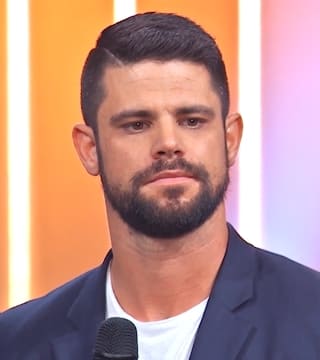
Steven Furtick shares a deeply personal message in response to the 2015 Charleston church shooting. Using his own life story, he explains how racial prejudice is passed down, using the painful example of his own father's racism and subsequent transformation. He calls on the congregation to examine their own hearts, break generational cycles of hate, and embrace the gospel's power to exchange darkness for love.
A Personal Need for God's Presence
The idea behind me interrupting everything and just coming in to preach is probably a little bit selfish on the selfish front because, as I said, I needed to be in the presence of God today. What happened in Charleston on Wednesday affected me in an unusual way. I'm a little bit ashamed to say that it was unusual, but to be honest, and I would imagine you can relate with the amount of bad news, of terrible things that we receive, not day to day anymore but hour to hour, through the way that news is presented to us, you become numb. You just do. So, awful things can happen, and you're dealing with a mortgage payment. Awful things can happen. You're dealing with a job issue. Awful things can happen, and you say, My heart goes out, but then God allows something to come close enough to home. where your heart doesn't go out to them, but it gets in your heart, and it breaks your heart. That has to happen. God has to allow your heart to break sometimes so his light can come in. Otherwise, your heart would be hardened. Ground can't produce anything if it's never broken up, and neither can your heart.
It broke my heart when Holly woke me up Thursday and said there was a shooting in Charleston. Nine people are dead. They believe one of them was the pastor of the church in the Bible study in Charleston. I said, That's terrible. Then the next thing she said to me when she said, And it was a black church. I couldn't understand at the time, and I'm going to lead you in today to understand why that was so significant to me personally. At that moment, it shifted from, that's terrible to it became personal for me. I'll explain why in a moment, so I just ask you to to go with me here and journey because God gave me permission or release in my heart today to share some things about how I grew up that will help you understand, I guess, who I am as a pastor by understanding where I've been as a person.
Finding a Home in a Gospel Choir
So I gave my life to Christ personally, grew up in church, gave my life to Christ personally. You know, there's a difference. Gave my life to Christ personally, my decision, not my parents, gave my life to Christ personally at age 16. And then a year later, and then this is the kind of the gap I want to bridge to help explain a little bit of my heart. A year later, my friend, Chris Dixon invited me to join the Voices of Unity gospel choir. And, uh, his mom, Martha Dixon, Ms. Dixon was an accounting teacher at the high school. And I took a class with her, Ms. Dixon, and she started putting pressure on me because she knew how much I loved gospel music. She knew how much I loved John P. Key and the New Life community choir. And I had just gotten my first Kirk Franklin tape, cassette tape. That was life-changing. I will never forget the first time that I heard Save Your More Than Life to me. And I was so excited about gospel music. And Chris said, well, why don't you come sing with us? I said, Chris, I can't come sing with you. I'll be the only white guy in the black gospel choir, but he would not leave me alone. He's like, no, we want you. Come sing with us. It's not about your… So he invited me, and I came. And Ms. Dixon, she would tell me every time, now, you better come. I'm counting on you. You better come. And so I came. And it was amazing. I sang with them all year.
Now, let me tell you a few things about that. A few things. Number one, they were so gracious to me. On our spring concert, when we would march into the sanctuary… There was a little processional from the back of the church into the sanctuary. When they were first teaching it to me, it was a little complicated for me. It was a little bit more than I could handle. They simplified the march three times until I could participate. I know I hadn't read a Scripture yet, but I'm just sharing with you today. So the spring concert comes around, and I make all of my friends come. Eric, I don't think you showed up at my spring concert. I'm still bitter. But it was at Monks Corner AME Church, and they gave me a solo. Now, I found a VHS tape, and I wonder, would it be okay? I know there's a lot of serious stuff going on in the world, so this is what I… I'm going to bring this together in a moment and tell you where my heart is and what I want to say to our church today. But first, I want you to take a little trip back to Monks Corner AME, Voices of Unity spring concert, 1998, the year of our Lord. Check this out real quick.
Now, if I thought you would enjoy it, I would…. I'm not sure if you're interested in hearing a few bars of my solo with the Voices of Unity. I don't know if you would be interested in that. It's not very convincing at Blake D. Matthews, so I'm not going to… Just a few bars. This is painful for me. Just a few bars. Just a few bars. This is when it was cool for your shirt to be three sizes too big, by the way. I'm not sure if you guys think you're interested in it. Just a few bars, just for the record. I was showing that to you so you could understand why, that when I heard that this AME congregation that welcomed somebody who was different into their church, why it impacted me, because I have been on the receiving end of that kind of open-armed Christian love.
A Confusing Heritage on Race
Let me clarify. I didn't show you that to get cred, street cred. See, I've always loved black people. That's not why I showed you that. I was showing you how much they loved me to let me come in. My childhood, as it relates to race, is a little bit confusing, because my mom taught me consistently not to judge anyone by the color of their skin. She learned that from her dad, who was a Methodist minister. He served in that Methodist church. He was so cool. My grandfather. was the man. He was the man. They brought in three people to speak one night in the church where he pastored. The council, the leadership council, wouldn't let the one that was black speak. He said, if he can't come, I won't come, and sat with him in the car while they had church and left that church as the pastor as soon as he could. So that's on one side of my family.
So on the other side, you've got my dad. And my dad came from a home that was very, very racist, frighteningly racist. I didn't even know until this week how deep it was when I was talking to my mom trying to understand this, because there's one conversation my dad had with me when I was young that has stayed with me, where he said, and I'll tell you about that in a moment, where he said some things that still ring in my head today, and it's taken me all my life to understand why he said them, but I think I understand it now. It was passed to him. It was passed to him. It came from somewhere. It was passed to him. I live in a world where I talk to a lot of white people who like to live in denial that it's not still being passed around.
The Poison We Pass Down
And I hear people say things like, well, I'm not racist, but. .. And it's hidden in these little phrases. It's hidden in these little things. It's not only hidden in the little phrases, but it shows up in big ways that we see in society, but it starts with the heart. And they didn't get that being born. Somebody put it there. So I can't fix everything today, but I can lead you today to check your heart at a time like this. It said that no father, even being evil, wants to give his kid a snake when his kid needs a fish, wants to give his kid a stone when his kid needs a loaf of bread. That's what Jesus said. Yet as fathers, when we pass on prejudice to our children, we're handing them snakes all the time. We're handing them stones all the time that they might grow up and throw at somebody who's different than them because of the ignorance that we perpetuated through our perspective and our prejudice that wasn't checked in our hearts.
And it's got to stop somewhere. And I know I might not say it right today, but at least I'm saying something. Stop denying the divine. We're called to bridge it with the cross. So please, please, please be seated. My dad, when I was about 12 years old, called me in one day and I had had some trouble with a black student at school and I was telling him about that. And up until this point, I'd never heard my dad say anything about other types of people. I'm using the construct of black and white because that's what I understand. It goes far beyond that. But when I told my dad what happened at school that day, he shut the door. Never forget this. This is a dad who coached my baseball team, black kids and white kids on the team. It blew my mind. And he said, I've been waiting to have this talk with you.
A Father's Painful Lesson
And he unloaded. I mean, just the worst, most vile stuff that you can imagine. And I'm 12. And so he's telling me, he said phrases. I won't say a lot of the phrases that he said. I wouldn't even say them to quote them, but he said, this is how they are. You see? This is how they are. And he started to pass down. all that hate that had been given to him, all that hate that he'd been keeping inside. All of it just came out, and it just came out. And it got in me. It got in me. He was given a snake. He was given a stone. And you know what? What does not heal gets handed down.
Evidence of a Transformed Heart
My dad, he came to hear me preach and I've told this story before, so I'll be brief about it, but he came to hear me preach at our, my home church. And he came to the altar and I prayed with him. This was my freshman year of college. And he had a radical transformation in his life. You know how I know he had a radical transformation? He had this stuff hanging on his walls in his barber shop. There was this one flag that he had hanging up, a Confederate flag that he would hang there. And the reason he would hang it there is to start conversations with other people where he could start tearing people down. Cause most of his clients and not all of his clients were white. And one of the ways I knew God had changed his heart is when I went back to visit him in the barbershop and he had taken that flag down. That's one of the ways I knew God was in his heart. Because if you can tell me God is in your heart, but you can hang a symbol of hate, someone laughing at me.
And I never understood the, I never understood the challenge and the complexity. is a white pastor. I never understood it. I never understood it until I, Until I open my heart to it. I'm suggesting to you a couple of things today. One, I'm suggesting to you that this matters. Secondly, I'm suggesting to you that it's our responsibility. Third, I'm suggesting to you that you have a part to play in it. Fourth, I'm suggesting to you that it starts with change on the inside of each of our hearts. It starts there. See, my dad took down that flag, and there was other paraphernalia, racially motivated paraphernalia in his barbershop. He took it down. Some of his customers quit coming, and he kept it down. He let him walk, and I thought that was cool.
The Power of One Changed Heart
I watched his attitude change in a lot of ways. I watched him struggle in a lot of ways, too, like we all do. You know, transformation is not that clean cut, but you know the memory that I have that I want to kind of leave you with, and we're going to pray in a few minutes and take communion together as a church. That's something that we've been passed down from Jesus himself that we can always do. in any moment of doubt or crisis or joy or pain. We're going to do that together in a moment, but I want to tell you about Father's Day 2011, June 19, 2011, where I'll show you a picture of my dad on Father's Day. This is June 19, 2011, and I don't know how I remembered that I had this picture on my computer, but God must have brought it to my mind this week as an example of what God can do, because he was handed hate, and he was handing back hate to his son, and then God intercepted and turned it into a love that's so remarkable that today I don't even recognize.
In fact, in his own life, by the time this picture was taken, I didn't even recognize the man that had closed his door and told me this is how to do it. One of the reasons… He was working in a ministry with a pastor in town, a black pastor in town, and on Father's Day 2011, just to show you what God can do and to give you one example… See, one heart can cause tremendous devastation or can bring great healing. One heart. We see that this week. What happens in one heart matters. What happens in one mind matters. What we pass to our children matters. The conversations we participate in, either implicitly or explicitly, matter. It matters what you do. It matters. It makes a difference.
The Gospel Exchange: Hate for Love
This is a gospel issue, though, because. what could not have been trained out of him or reasoned out of him… I saw God tear out of him, and I went to see him on Father's Day 2011. I said, Dad, I'll do anything with you today. It's your day. What do you want to do? I'll take you anywhere to eat. We can go get a couple's massage. I didn't say that to my dad. How weird is that? I said, Anything you want to do. Manny Paddy. I said, Anything you want to do? He said, I want you to take me to church. I want to go to church. I said, All right. Well, I said… I was kind of trying to take the day off, but I like church. Where do you want to go? He said, You have to take me to the bishop's church. We drive out in the middle of nowhere. He's telling me every turn to take. In the middle of nowhere. We walk into this church. I was watching this little video. In fact, you want to play it for me right now.
What's In Your Heart?
A Father's Day 2011. I want you to kind of get a picture of how God can turn somebody's heart. And how God can take a man who was handed hate. Who was handed hate. But when you give God your heart, your broken heart, when you give God your heart, your doubtful heart, when you give God your darkness, there's an exchange that happens at the foot of the cross. He has a way to fill a heart with love that was filled with hate. I came today not to offer any grand solution or to be some kind of racial unifier in my own right, but just to ask a question that I think is my part to ask you. What's in your heart? Because whatever change we need to see beyond this room starts in our hearts.
It starts with dads who decide, you know, this is what I was handed, but I'm not handing this on. This stops here. It starts in my heart, and it stops with me. I'm not handing this to you. I'm going to talk to my kids about treating people right. I'm going to set an example. The gospel looks like this, church. The gospel looks like this. You can't call his name when he hung like this and stand like that. Like this, they let me sing in the choir and cheered for me and taught me how to march. in something that approximated rhythm. And I am who I am. I know we have a lot of work to do, but it has to start somewhere. I know different people have a part to play. We're not done with this discussion, but I want to pause here for today and invite you, that as you examine your heart today and say, God, what's in me that I'm handing on that needs to stop and be exchanged? The gospel was an exchange more than anything else. You bring me your sin, I give you my righteousness. You hand me your sin, I'll hand you back my righteousness. You hand me your shame, I'll hand you back my righteousness. You hand me your regrets, I'll hand you back a hope and a future. You hand me your transgressions, I hand you...