
Steven Furtick - When Resistance Doesn't Make Sense (10/30/2018)
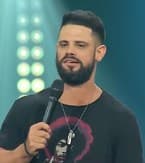
In this sermon from Mark 6 on Jesus walking on water, Pastor Steven Furtick teaches that resistance and storms often confirm you're on the right path when following God's direction. The wind was against the disciples precisely because they obeyed Jesus, showing that true faith persists through opposition, and victory comes not from our efforts to reach God, but from Him stepping into our storm.
The Significance of Opposition in Obedience
It is significant that Jesus told them to go forward and the wind was against them. That's significant. Significant because a lot of times I assumed in my life that if God sent me to do something, the wind would work with me. That's pretty much the premise of early Christianity. Turn your life over to God and he'll take your burdens away. Turn your life over to the Lord and what used to keep you up at night won't keep you up at night anymore because it'll be replaced by other stuff that'll keep you up at night. Fill in the blank.
You realize that a lot of times our claims to faith are actually our efforts to manipulate God until we discover in the course of time that just because the wind is against you doesn't mean that God is not for you. Many times the confirmation that God has spoken to you is the fact that the wind is against you. We're discovering this. In our study of the Gospel of Mark, we are learning that resistance is often the greatest place for revelation. Would you please take that elevation pen that cost about 11 or 12 cents? And before you steal it from the church and use it to sign a check this week, write it down. Resistance leads to revelation.
The wind was against the disciples, not because they disobeyed the words of Jesus, but because they went in the direction of his command. He sent them to Bethsaida. They went to Bethsaida. I got it when it was Jonah because the wind was against Jonah because he wasn't going to Nineveh. He was going to Tarshish and God said, go to Nineveh. And when you go to Tarshish, when you should go to Nineveh, expect the wind to be against you because God didn't send you to Tarshish. He sent you to Nineveh.
When Obedience Brings the Storm
So I expect the wind to go against me when God told me to go to Nineveh and I went to Tarshish. But when he told me to go to Bethsaida and I went to Bethsaida, I expect the wind to work with me. I expect God to bless me when I come to church. I expect good parking places because I came to church. I expect those shoes to go on sale No, because I came to church. I expect a promotion because I came to church.
It makes me mad when somebody who didn't come to church, they slept in, and they get a raise, and I get fired, and I can't understand how God could be with me and the wind could be against me. But often the confirmation of the Word of God is the resistance of the enemy to show you you're on the right track. Here's why. I feel like preaching. Here's why. I'm going to help somebody. You want to turn around and go back home because the wind is against you. The wind is against you so that you will know that it is the Lord's presence with you that makes you successful.
If the wind was working with you, you would thank the wind when you got to your destination. If it were easy, you would thank the wrong things. If the wind wasn't against you, you wouldn't need the Lord to come and step into the wind and speak peace to the storm. So the wind has to be against you to prove that the Lord is with you. Calm down, Furtick. This is just the introduction.
Jesus Sees You in the Storm
So Jesus, Savage Jesus, the Jesus that's in the Bible, not the Jesus that's on Pinterest. Savage Jesus, real-life Jesus, Monday morning Jesus, Friday Jesus, Saturday Jesus. Not the Jesus that is playing a harp and stroking the wool of the lamb, but the Jesus who sends his disciples into a storm and watches them strain. I have to go. You won't believe this. You're about to be really jealous. I have to go and sit on the mountain where Jesus prayed. The man who took us there last year knew everything about everything. I think he was Jesus.
He took us up there. He said, here's where Jesus was praying in Mark chapter 6. And then he pointed to the lake that the Bible mentions where the storm was. And from that mountain, you can see the whole lake. And he dropped this on us right before he left us. He said, so the whole time they were straining, Jesus could see them. And he walked off. And I cried. I have a picture of me sitting on that mountain, and there are Kleenex all around me. Because Holly just kept handing them to me, one after another.
He saw them in the storm. And then I was, after I got done crying, because I realized he sees me in my storm. And he knows what I'm going through. And he knows what I deal with. And he knows what people have done to me. And he sees tears that I've cried on my pillow that nobody else knows about. And that he sees what's going on in my soul that I can cover up in front of people, but I can't hide from him.
Why Jesus Waits to Intervene
And after I got done crying about that, I got kind of angry, because I thought if he could see them, why didn't he stop it? All of a sudden, it felt kind of cruel to me that he would send them into a storm and see them in the storm and not stop the storm. So, I think it is significant that the Bible says that he saw the disciples, verse 48, straining at the oars, because the wind was against them. Shortly before dawn, he went out to them. This is 48B, walking on the lake.
I thought he was about to pass them by. I thought he would never leave me. I thought he would never forsake me. I thought he promised his presence to me. And so, he's about to pass them by. And they were afraid. One interesting thing about this particular record in Mark's Gospel is that it was recounted by a man named Peter. Have you heard of him? He was a very outspoken disciple of Jesus Christ. He was the one… I don't know if you're like this. He would say what everybody else thought. He was filter-free.
And so, when he was right, he was really right. When he was wrong, he was really wrong. I'll prove it to you. He said, You are the Christ, the Son of the living God. Jesus said, You are Petros, this rock. You are Peter, not Simon, not Shifty. Upon this rock I'll build my church, the rock of his revelation of who Jesus was. A few verses later, Jesus said, Get behind me, Satan. And he was pointing at Peter, because Peter said, You can't go to the cross. And Peter opposed the very thing that Jesus came to do, all in the same Bible chapter.
Peter's Perspective on the Story
This is Peter. Peter is the one telling Mark about this story so Mark can write it down. Peter is the one recording the audio book. Peter is the one giving Mark the gospel account. Mark wasn't a disciple. Mark was an evangelist. He compiled the story. Peter told... Look, I'm going to show you something. We have four of these. We have four gospel accounts. The gospel is the good news of Jesus Christ. When we say the gospel of Mark, it's the gospel according to Mark. When we say the gospel of Luke, the gospel of John, the gospel of Matthew, that's the gospel account they wrote down.
John said that Jesus did so much, if you wrote a whole book, if you tried to write down everything he did, the whole world could not contain it. If you wrote down all the works Jesus did, Wikipedia would break. So, they had to decide what was significant enough to put in the gospel account that would prove what they wanted to prove about who Jesus was.
So, when Mark got ready to write, he said, Jesus walked to the disciples in a storm, and when he got in the boat, the winds died down. When Matthew got ready to write it, he included something that Mark left out. I'm going to read you now from Matthew 14. It's the same story, but there's one detail in this story that is omitted in Mark's gospel, which is based on the recollection of Peter.
The Missing Detail: Peter Walks on Water
And it's in Matthew's gospel, but not Mark's, so here's what we'll do. This will be an interactive class. When I get to the part that wasn't in Mark's gospel, stop me. When I get to the part where you're saying, wait, that wasn't in the other one that you read before, I want you to wave your hands and stop me. This is the only time that you are allowed to tell me to stop preaching. You can tell me to preach anytime you want. Preach, Pastor. But when I get to this part today, I want you to stop me in every location.
Let's start in verse 22. Immediately, Jesus made the disciples get into the boat and go on ahead of him to the other side while he dismissed the crowd. After he had dismissed them, he went up on a mountainside by himself to pray. Later that night, he was there alone, and the boat was already a considerable distance from land, buffeted by the waves because the wind was against it. So far, so good. We're good. Keep going. Keep going. Yeah. Similar. Very similar. Very similar. Few words different. Same stuff.
Shortly before dawn, Jesus went out to them walking on the lake. And when the disciples saw him walking on the lake, they were terrified. It's a ghost, they said, and cried out in fear. But Jesus immediately said to them, take courage. It is I. Don't be afraid. Lord, if it's you, Peter replied, tell me to come. Okay. Okay. Okay. What's wrong with you? Lord, if it's you, Peter replied, tell me to come to you on the water. Come, he said.
This is amazing. Hey, hey, if I was writing my memoir, I'll put this in. Because watch what happens next. Then Peter got down out of the boat, walked on water, and came toward Jesus. Well, I'm totally putting that in. I'm totally including the part where everybody else was in the boat crying out in fear, and I was walking on water, transcending the laws of buoyancy. Babe, if I ever walk on water, and then I die, and they're writing a story about my life, you make sure they don't take that part out. If I ever walk on water... And I know I do metaphorically in your heart, but if I ever physically... If they ever write about me, I'm not saying they will, but if they do, leave this in.
Why Peter Omitted His Miracle
Touch somebody and say, this is significant. This is a good question. How can Peter walk on water, and when it comes time to tell Mark what to write about this night on the sea, tell Mark, you know, I think people are probably just about sick of hearing about this. Do you really think this is significant? Turn to your neighbor and say, yes, Mr. President. This is significant.
I wonder if he left it out because of verse 30. I mean, because so far this is amazing. Peter's like, if it's you, tell me to come. Jesus is like, it's me, come. And you know, the wind is blowing, so you can't hear that good. So Peter's like, did you hear it? He said, it's me, come. And John's like, no, he said, Peter, you're dumb. Because, I mean, two people can hear the same thing. It's Yanny, not Laurel, but, by the way, it's Yanny. It's Yanny. It's Yanny. Come to the altar. It's Yanny. You need your ears open. I lost half the church. You can hear the same word a different way.
Now, the other disciples were operating on what Jesus told them before they left, which is go. Go to Bethsaida. I'll meet you on the other side. Peter is operating out of what he feels in the moment, and he says to Jesus, if it's you, tell me to come. And I've often preached about Peter getting out of the boat, but sometimes the more significant faith is the willingness to stay in the storm, not the impulse to escape it. I'm not saying Peter was wrong. I'm just saying that it takes faith to keep rowing when you can't see the shore. Sometimes it takes even more faith to stay in the boat than it does to step out of it.
Peter gets to this part of the story. In his recollection, he does not see fit to include the part of the story where he said to Jesus, if it's you, tell me to come. I wonder if it's because of what happened in verse 30 that he left it out of his gospel account, because the Bible says that he took several steps toward Jesus. And for a moment, he was walking on the water, and for a moment he was experiencing a miracle.
When Focus Shifts from Word to Wind
But verse 30 says, when he saw the wind, see, he heard the word, but then he saw the wind. And I relate to this because sometimes I pay more attention to what I see than what God said. And anytime I give more focus to what I see than what God spoke, I start to sink. And Peter's doing pretty good as long as he's going off of what he heard, because faith comes by hearing, and hearing comes by the word of God. And all you need is one word from God.
Peter wasn't walking on water. He was walking on a word. And when you have a word from God, your kids can be acting crazy. Your money can be acting funny. You can be in the darkest night of your life, but declare he is Lord. And then he saw the wind. And the Bible says, when he saw the wind, he began to sink. And he cried out, Lord, save me.
And I thought, well, that's why Peter left it out. Because I think people don't really need to hear about this. We can leave that out, can't we? You know, you want to leave certain things out of your story. Skip over certain parts and certain failures. There's some stuff, honestly, that you don't need to share with everybody. There's some stuff that they don't even need to know about. Sometimes your greatest testimony is that you went through the fire, but you don't smell like smoke.
Victory Comes When Jesus Steps In
And when Peter was telling Mark what to write, I imagine Mark saying, shouldn't I put that part in where you climbed out of the boat? And Mark said, I don't think you want to leave that out. Peter said, no. No, it's been a while now, because this gospel is written decades after it happened, you know. And by this point, Peter has discovered something. Mark, chapter 6, verse 51. Then he climbed into the boat with them, and the wind died down.
Peter said, it's not significant what happened when I climbed out of the boat. Let's read it again. Then Jesus climbed into the boat with them, and the wind died down. Peter said, don't tell him what happened when I climbed out. Tell him what happened when he climbed in. That's so good, I want to sit down, and then stand up, and run a lap around this Ballantyne building all by myself.
It's not important what happened when Peter climbed out of the boat. It's not important what happened when Peter stepped out. It's not important what happened when they were straining all night. All night long, they strained to get to Jesus, but the wind didn't stop while they were straining. The wind did not die down because Peter came to Jesus. The wind died down because Jesus came to Peter.
And that's the gospel. Not that I came to God. Not because I was so good. Not because I was so glorious. Not because I got my act together. No, I'm not praising him because I got out of the boat. I'm praising him because he got in. And the wind died down. Now go ahead and worship him for 18 seconds. Not because I got out. Because he got in.