
Philip Anthony Mitchell - You Must Choose (01/25/2026)
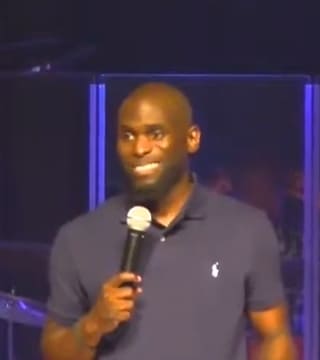
In the powerful finale to the P31 series, Pastor Philip Anthony Mitchell closes Proverbs 31 by contrasting the rare, virtuous woman against the common, destructive ones described throughout the book—showing her immense value as the embodiment of godly wisdom. He urges believers to make intentional choices: pursue virtue over folly, character over culture, and wisdom over waywardness—because decisions shape legacy, relationships, and eternity. Rejecting superficial image, he calls us to fear the Lord as true beauty, choosing the road less traveled for lasting blessing.
Welcome to the Final Week of P31 Series
Hey, if you are a visitor with us, we want to welcome you to Victory Church. And if you are watching right now or listening on podcast, we also welcome you to Victory Church. We want to welcome all of you to what will be the last week of our P31 series. It has been our teaching journey through Proverbs 31, the last chapter of the book of Proverbs.
If you’ve missed the four previous messages—“Gems for Him,” «Who Can Find Her?», „Marks of Virtue One,” and „Two”—all those messages are available online. They’re also available on the Victory Church ATL app.
I want to close out this series with a special worship experience, a final message, and then some words from my wife and me that we’re going to share with you together. What we’re going to do this morning is finish out the last couple of verses.
My wife and I have been teaching exegetically through Proverbs 31, from verse 1 all the way through to the end. Today, I’m going to finish out the last four verses, 28 through 31. Also, what we’re going to do this morning is take a quick sprint, a quick run through the book of Proverbs.
I’m going to share a lot of Scriptures with you in a short period of time, and I hope that you don’t feel uncomfortable about that—and you shouldn’t, because we are in the house of God. Really, what I want to do this morning is close out this series trying to make a case for the Word of God.
Making a Case for God’s Word
I want to make a case for God Himself and for His Word. I want to make a case for the genius of the Word of God. I think sometimes we take the Scriptures for granted. Sometimes we can’t see the wisdom of God in His Word.
I want to just close out the series making a bold case for God and for His Word. For my note-takers, for my believers, I want to make an appeal to you from my heart. If you’re a believer in this room, you are a follower of Jesus—I am talking directly to you.
I want to make an appeal to you. And if you’re not a follower of Jesus in this room, you’re still in a safe place. If you’re still exploring the claims of Christ, maybe you’re not a Christian—much of this will be for the believing camp, but maybe you’ll get something from this too.
You might see some things that may make you feel uncomfortable or squirmish, but I want you to know I’m not really talking to you. I am talking to those who call themselves followers of the Lord Jesus Christ.
With that said, I want to go ahead and close out the series with this final message. For my note-takers: „Gems for Him,“ „Who Can Find Her? ,“ „Marks of Virtue One“ and „Two,“ and we’ll finish up with this last sermon: „You Must Choose.“
You must choose. You must choose. Got to make a choice. All the Christians in this room—you have to make a choice. You gotta choose. You can’t just hear God’s Word and walk away from it without something happening—either ignore it or apply it. But you’ll have to make a choice. Let’s choose.
Opening Prayer
Let’s pray. Father, in the name of Jesus, I just thank You for this opportunity to share this last sermon with Your people in this series. Father, I pray that Your Word of God will prevail and the number of disciples in this room will increase—not fans of Jesus, but true followers of Jesus. Let Your Word prevail and let the number of disciples increase. In Christ’s name we pray, amen.
Thank you so much, gentlemen. I appreciate you. We have a guest pianist today—don’t know your name, brother, but thank you so much, and I appreciate you. Help me celebrate this guest pianist. Shake your head—thank you so much, brother.
I’m gonna call you back up in about thirty minutes, so wherever you go, just don’t disappear, okay? So I appreciate you. Thank you so much, gentlemen.
A Heartbreaking Reminder
You know, yesterday morning on Saturday, I woke up on Saturday morning and kind of went into my prayer room to pray. And you know, I got a notification on my phone that really broke my heart—that the day before, the night before, news had broken that 29 Christians, 29 Coptic Christians, 29 believers were dragged off a bus in Egypt.
The very land where our Lord—His parents had taken Him down to that land to hide Him during the time they were killing children. The Bible says, „Out of Egypt I called My Son.“ And I got a notification on my phone that twenty-nine believers were dragged off a bus and put to death by a very violent militia right now that is spreading terror all across the Middle East and it’s spreading towards the West.
And among the twenty-nine believers who were killed, ten of them were children. And my heart was just so broken and so grieved as I sat there staring at this notification, thinking about the fact that 29 of our brothers and sisters were just put to death, and among them ten children.
Not knowing if all of the parents of those ten children were on that bus or not—that there are parents right now who are grieving, that are getting ready to put their children in the ground. You know, we should bury our parents, but parents should never have to bury children.
And my heart was just so broken. You know, and I called my family down to my prayer room, and I began to pray over my wife and pray over my children. I prayed over them one by one, and I called their names before the Father.
And I just reminded them that oftentimes in the United States we kind of live in this vacuum, we live in this bubble, we kind of live separated from the larger context of Christianity—that because we are so comfortable here, because we have so many freedoms here, we have so much liberty here, we just take Jesus for granted.
We take gathering in a house of God for granted. We take the fact that we have the liberty to praise Him—and there are not people outside the door who’s going to come in here and try to drag us out and put us to death—we kind of take those things for granted.
And I was just telling my children and reminding them of the freedoms that they have and reminding them not to take the freedoms for granted, not to take their walk with Jesus for granted, not to take the fact that they have Christian parents for granted, not to take all the blessings that God has bestowed upon them for granted.
The Power of Decisions
I prayed over them, and I thought I was done. I really sat and thought about how these kinds of things are happening all over the world. When we look at things like that—when we look at what happened to those twenty-nine believers—it is this constant reminder of the two forces that are at work in the earth: the forces of good and the forces of evil.
And how these things oftentimes brush up against one another. And ultimately, on both sides of that incident, you had people who had made choices in what they believed and who they were going to follow.
For some of those people who were martyred, they had made a choice to put their faith in Jesus and would end up giving their life for Jesus. And for the ones who did the killing, man, they believed in something else and put their faith in something else.
And really, the thing that separated them was the decisions that they had made and what they had been exposed to. It just reminded me of the power of decisions.
But as I’m talking right now and as I’m speaking right now—as I’m preaching this message right now—every single person in this room, every person watching and listening to me on podcast—we all are, for the most part, the sum total of almost every decision we have made or decisions that have been made on our behalf.
Your life and my life right now—whether you enjoy your life or hate your life, wherever you live, who you have married, the children you have—all of us right now at this very moment, what we believe in, what we don’t believe, what we follow and what we don’t follow, what we read and what we don’t read, who we serve and who we don’t serve—all of us right now are the sum total of the decisions that we have made or the decisions that have been made for us.
And our lives will be—and where we end up—will be the sum total of every decision you and I will ever make. You are right now—whether you’re full of joy or full of sorrow—the sum total of every decision you have made.
And what will happen in your life and what will happen in my life will be determined by all the decisions that we will make from the time the sun rose this morning till the time you go to bed tonight. You will make hundreds of decisions, and by the time the week is over you will have made thousands of decisions, and by the time the year is over you will have made millions of decisions—and all of them will determine the direction and the outcome of your life.
And every decision we sow is a seed, and every decision we sow we’re going to reap a harvest. And we don’t just plant decisions or choices and they just disappear—but every decision we throw out there, it is a seed that will come back in some kind of form of harvest. Decisions bring blessings, and decisions bring consequences.
The Impact of Decisions
And so right now, those of us who are a little bit older than teenagers—the adults in the room who are a little bit older than teenagers—we could look over our shoulder and tell other people of all the places we wish we would have made a better decision.
And I know I’m not the only person in this room who has a laundry list of regrets—and those regrets are attached to bad decisions that, if we could, we would go back at this time and this year, at this age, and say, „Man, if I only had the wisdom I have now, I would have made a better decision.“
Because the bad decisions have accumulated to all the grief that we suffer right now. And I’m not the only one who is carrying scars—and sometimes maybe even a flashback—of a moment in time in which I said to myself, „Man, I wish I would have made a better decision.“
We see the impact of decisions right now in politics. Some of us right now are grieving our vote because of politics. And I’m a biblical conservative—I’m not a liberal—but I’m sure there are conservatives out there right now who are grieving their decisions.
We see the impact of decisions socially when it comes to family members and friends. We see the impact of decisions when it comes to our education. We see the impact of decisions when it comes to relationships. We see the impact of decisions when it comes to friendships.
We see the impact of decisions when it comes to who we listen to. We see the impact of decisions of what we read, what blogs we read. We see the impact of decisions of what church we attend—and some people are learners where they just sit and are comfortable in sin because the pastor is afraid to tell them the truth.
We never want to challenge anybody with the Word of God—and he or she makes me feel good, but he or she has not transitioned my soul from death to life. And so we see the impact of decisions even on our spiritual walk or lack thereof.
If you and I will be honest, we see the impact of decisions everywhere. And today I want to show you the impact of a decision.
Context of Proverbs 31
Now we understand that Proverbs 31—before we wrap this up—which was written by King Lemuel. It was the wise words of his mother, who spent some time first correcting him about his own character, verses 1 through 9, before she would then begin to lay out for him the character of the type of woman she would have him pursue and ultimately marry—verses 10 through 31, that description of what we call the virtuous woman.
Now Proverbs 31—and I want everybody to listen to what I’m going to tell you carefully—Proverbs 31 is a dynamic chapter. It’s full of wisdom, it’s full of insight, it’s full of all of these gems. But if we just only teach or read Proverbs 31 separated from the rest of Proverbs, then we will ultimately miss the bigger picture, the macro picture of what God is really saying in that proverb.
But when we understand Proverbs 31 in the broader context in which it was written—that is, when we understand Proverbs 31 in the context of the entire book of Proverbs—then we truly begin to see the genius of God and what it is He was really trying to accomplish.
And Proverbs 31 on its own is awesome. In the broader context of the entire book of Proverbs, then it illuminates the genius of God and what He was trying to accomplish in Proverbs 31.
And so, for all of us to appreciate His genius and all of us to appreciate what God has done, I want to just take us through a quick sprint through the book of Proverbs.
The book of Proverbs was inspired by God but written by three men: Solomon, Agur, Lemuel. And for us to really—before we leave this series—because as I was thinking, what direction do I want to take in this last sermon? And I thought I would be remiss as a pastor if I didn’t help you to see the beauty of Proverbs 31 connected to the entire book of Proverbs.
So what I want to do—to expose the beauty of this proverb we’ve been talking about—I want to take a quick jog or a quick sprint through the entire book of Proverbs. Not every single chapter, but just some key things I want to point out to you.
A Sprint Through Proverbs
Let’s just start at Proverbs chapter 1, verses 1 through 7. King Solomon wrote this: „The proverbs of Solomon son of David, king of Israel: for attaining wisdom and discipline; for understanding words of insight; for acquiring a disciplined and prudent life, doing what is right, just and fair; for giving prudence to the simple, knowledge and discretion to the young—let the wise listen and add to their learning, and let the discerning get guidance—for understanding proverbs and parables, the sayings and riddles of the wise. The fear of the Lord is the beginning of knowledge, but fools despise wisdom and discipline.“
And so from the very beginning we see what the purpose of Proverbs is: to help someone increase in wisdom, increase in prudence, increase in knowledge, transition from being simple to being wise, and understanding the fear of the Lord.
Then verse 8 and 9 says: „Listen, my son, to your father’s instruction and do not forsake your mother’s teaching. They will be a garland of grace around your head and a chain to adorn your neck.“
So the Proverbs begins with a father talking to a son, and it ends with a mother talking to a son. It’s sandwiched in the middle of the two people that are supposed to give us wisdom.
Then look at verse 20, Proverbs 1: „Wisdom calls aloud in the street.“ Watch the next verse—the next word: „she raises her voice in the public squares.“ Proverbs 1, verse 20: „At the head of the noisy streets she cries out, in the gateways of the city she makes her speech.“
And so from the very beginning of the Proverbs, we see that for the rest of the book of Proverbs all the way up to chapter 9, wisdom is personified as a woman. Watch the genius of God.
And if you read the entire book of Proverbs, you’ll constantly keep seeing wisdom personified as a woman—she does this, she does that, she calls to this one, whether or not they listen or they don’t listen. And so wisdom is seen as a woman in the book of Proverbs.
Proverbs 8:1 through 9: „Does not wisdom call out? Does not understanding raise her voice? On the heights along the way, where the paths meet, she takes her stand; beside the gates leading into the city, at the entrances she cries aloud.“
We’ll look who she cries to: „To you, O men, I call out.“ Look what she says: „I raise my voice to all mankind. You who are simple, gain prudence; you who are foolish, gain understanding. Listen, for I have worthy things to say; I open my lips to speak what is right.“
She probably has shine on her lips, right? „My mouth speaks what is true; my lips detest wickedness. All the words of my mouth are just; none of them is crooked or perverse. To the discerning, to the one who has ears and can hear, for the one who has a heart that is open to believe and understand, to the one that can hear the Holy Spirit beckoning to them—to the discerning, all of my words are right.“
That means anything other than this—they are wrong. „To the discerning they are right; they are faultless to those who have knowledge.“
Now from this point forward, Proverbs will make wisdom a woman, and this woman will make a case for godly wisdom. And the rest of Proverbs from this point forward will then begin to contrast the blessing of wisdom and the pain of folly.
Women in Proverbs – The Contrast
But before we bump into the woman in Proverbs 31, Proverbs will first introduce us to a list of different women. Watch the genius of God’s Word.
So the person sits down with the book of Proverbs and opens up—they begin to read from Proverbs 1 all the way to the end. But before they get to this beautiful, dope virtuous woman in the end, they bump into a list of other women.
Let’s find them in the book of Proverbs. Proverbs 5:1 through 6: „My son, pay attention to my wisdom, listen to my words of insight, that you may attain discretion and your lips may preserve knowledge. For the lips of an adulteress drip honey, her speech is smoother than oil, but in the end she is bitter as gall, sharp as a double-edged sword. Her feet go down to death; her steps lead straight to the grave. She gives no thought to the way of life; her paths are crooked, but she knows it not.“
And so we see the adulterous woman.
Then we see another woman. Proverbs 6:20: „My son, keep your father’s commands and do not forsake your mother’s teaching.“ Mother and father: „Bind them around your heart forever; fasten them around your neck. When you walk, they will guide you; when you sleep, they will watch over you; when you awake, they will speak to you. For these commands are a lamp, the teaching is a light, the correction of discipline are the ways of life, keeping you from the immoral woman, from the smooth tongue of the wayward wife. Do not lust in your heart after her beauty or be captivated by her eyes.“
So the prostitute and the adulteress prey on your very life. So now we see the immoral woman and the wayward wife.
We’ll go up into another woman. Proverbs 11:22: „Like a gold ring in a pig’s snout is a beautiful woman who shows no discretion.“ So now we bump into an undisciplined woman.
Then we’ll go up into another woman. Proverbs 21:19: „Better to live in a desert than with a quarrelsome and ill-tempered wife.“ So now we see an emotionally unstable woman.
Then we’ll bump into another group of women. Proverbs 9:13–18: „The woman Folly—she is loud; she is undisciplined; she is without knowledge. She sits at the door of her house, on a seat at the highest point of the city. She’s a busybody, calling out to those who pass by, who go straight on their way. ‘Let all who are simple come to my house!’ To those who lack judgment she says, ‘Stolen water is sweet; food eaten in secret is delicious!’“ She’s a deceiver, she’s a liar, right? „But little do they know that the dead are there, that her guests are in the depths of the grave.“
So we see the foolish woman and the boisterous woman and the rebellious woman and the woman of folly.
The Genius of Proverbs 31 – Final Verses
And so let’s put the whole list together to see all these other women we bump into in Proverbs. So when we put the whole list together, we see an adulterous woman first, we see an immoral woman who has not learned standards yet first, we see an undisciplined woman first, we see an emotionally unstable woman first, we see a foolish woman first, we see a boisterous and clamorous woman first, we see a rebellious woman first, we see the woman of folly first.
Now this list does not represent women who have just made mistakes—this list represents women for whom this is their lifestyle and have no desire to change.
Now let me ask you a question—watch the wisdom of God’s Word. How easy is it to find one of these women? Can we turn on Netflix and find women like this? Can we go on to Facebook and find women like this? Can we go on Instagram and hit the Explorer tab and find women like this? Can we go in the club and find women like this? Can we go on college campuses and find women like this? Can we go in our jobs and find women like this? Can we go in churches and find women like this? Is it hard to find women like this?
No—you can gather 300 women in a crowd and take a quarter and throw it into the crowd and hit a woman like this every time.
My wife and I were just—don’t judge us when I say this—we were just watching this movie on Netflix the other night. It was real ghetto, right? It was called „Boy Bye,“ right? Okay, naming a movie „Boy Bye.“ And there was this businesswoman—her name was Love—and she was sleeping with all the men in her office. And then she finally fell in love and found a guy who had his own money, and she got her heart broken. And then she was talking to her friends—they were just having these conversations. I don’t know—there’s other something you’ll get that when you get home. And it was just crazy, right?
And the thing about—listen, I’m not throwing shame on women like this. I’m not being judgmental. I’m trying to show you the wisdom of God’s Word. These women are not hard to find. I could take a quarter and throw it in the crowd and hit a woman like that every time.
Now with these Scriptures as a backdrop, how then does Proverbs 31 make more sense? Because if the reader of Proverbs is reading from verse 1 through the end, they keep bumping into all these different women—“Oh snap“—they keep bumping into all these different women that are common and easy to find.
How then does Proverbs 31 make more sense to us in the broader context of the book of Proverbs? It increases the worth and value of the P31 woman because now we recognize from all the other women that she is not common or ordinary.
If you study Proverbs 31 by itself, we would miss that. But when you study it in the context in which it was written, it increases her worth and her value.
And so as we finish these last couple verses—verses 28 through 31—it says about her, after she’s done all these itemized blessings, what does it say about this woman? It says: „Her children arise and call her blessed; her husband also, and he praises her.“
The people she served—they now bestow upon her praises. It says: „Many women do noble things, but you surpass them all.“
And if you look very carefully, you see that those are quotation marks—which means by the time Lemuel wrote this down, he had found the woman his mother told him to find. And he slips in his own praise for his wife in the middle of all the things his mother had taught him.
It is the only verse with quotation marks, and it’s the only verse in the second person. It doesn’t say „she does“—it says „you.“ Quotation marks.
Lemuel had found the woman his mother told him to find. And while she was writing down all the stuff that she told him to write down, he said, „Hold on a second—let me slip in my own praise for this virtuous wife that I have found.“
And then verse 30: „Charm is deceptive, and beauty is fleeting; but a woman who fears the Lord is to be praised. Give her the reward she has earned, and let her works bring her praise at the city gate.“
You see that? You know charm is deceptive because it makes promises that oftentimes it cannot keep. And beauty—there is nothing wrong with being beautiful. Beauty is not inherently evil. Beauty may be the draw to a relationship, but beauty should not be the hook for a relationship—because beauty will fade.
And if our relationship is only built on physical features, then we’re going to have a very shallow relationship in the end. And so what lasting things can we say about the woman?
A woman of virtue is worthy of honor and adoration—that when we see a woman of virtue, we owe it to her to honor her and to praise her. She is owed it. She commands it. She is different from every other woman.
And then the last thing we’ll say in the series about her: a woman of virtue is distinct and a highly valued treasure. She is not common at all.
I want you to notice—as we land the plane on this series—I want you to notice that never one time is a physical feature mentioned in Proverbs 31. We see nothing about what her face looks like. We see nothing about what her body looks like. We see nothing about whether or not she has pretty feet or not. We see no mention of her breasts or any of that stuff we may see in other parts of the Bible.
I want you to notice in Proverbs 31 that the physical features of the woman are never mentioned. You know why? Because God was trying to communicate to us that while there’s nothing wrong with being physically attractive, the true essence of beauty is not found in physical features but found in the content of character.
That the most beautiful thing in a woman is not her face or her body—it is not your hips or lips, women. The most beautiful part of you, ladies, should be the content of your character. It’s the most beautiful part of a woman.
You Must Choose
Proverbs 31—when understood in the broader context of the Scriptures—this is when I want to say something that’s very important. If we really understand Proverbs 31, you know what Proverbs 31 really is?
We know what it really is—it is an invitation to a decision. For those of us who are followers of God, it’s really an invitation to a decision we have to make between wisdom and folly, between righteousness and ratchetness, between the wisdom of God and the ways of the world.
It is a decision we have to make—for what we will be will either be men and women of virtue or we will be men and women of waywardness. That’s really what Proverbs 31 is.
This laundry list of all these things is not necessarily a description of just one woman—that’s not what it is. It’s not a prescriptive list of all these things that every woman has to do—that’s not what it is.
What Proverbs 31 is—it’s really the embodiment of the wisdom of God from chapters 1 through 30 lived out in demonstration. That’s all it is—that if you go and look at „she does, she does, she does, she does“—all it is is all of the wisdom of God in the entire book of Proverbs embodied and personified in this one female.
That brings all of us to a decision—especially women—of which one are we going to be? Is it going to be godly or not? We’re either going to be virtuous or not.
And for those of us who are single, it gives us a decision—we’re going to choose someone who is virtuous or not.
Here’s the thing: you must choose. And the reason you must choose—because if you don’t make a choice who you’re going to be, and if you don’t make a choice who you’re going to pursue, I assure you our flesh and the natural inclinations of our human nature and the pressures of the world will make a decision for us.
If you don’t make—and if I don’t make—a firm decision who we will be in terms of our character, then the external pressures of this world will choose my character for me.
If I don’t make a decision if I’m going to be virtuous or not, then the external pressures of this world will make a decision for me. My friends will make a decision for me. My environment will make a decision for me.
No one is virtuous by accident. If we are virtuous, we’re virtuous intentionally.
And my brothers and sisters, I just want to make an appeal to you—and it is virtue that impacts lives and leaves a lasting impression on people, leaves a lasting legacy on family members and friends.
It is this virtue that we saw in the Lord Jesus Christ—why He impacted people so deeply. And we can’t keep calling ourselves Christians and followers of Jesus and not consider our character.
And for a lot of us, it comes to a point in time where we have to make a firm decision, man—who we’re gonna be and who we gonna pursue.
Man, I want to submit—there are people listening to this message right now, man—and you know when you look at this, you have a decision about maybe who you’re dating. Is the person you’re dating right now a person of virtue? Is that a person like all the others that’s gonna bring pain and ruin, or is this a person that’s going to bring blessing?
I mean, you gotta choose. When you look at your own personal life—are you a person that brings blessing, or do you bring pain to everyone but you? You gotta choose who you’re gonna be.
Because if you don’t choose—and if I don’t choose—then our society will choose for us. My background will choose for me. What I didn’t have will choose for me. This thing that happened to me in my past will choose for me. The pressure of my friends will choose for me. The pressure of the world will choose for me. The pressure of Instagram will choose for me.
You got Christian girls on the worship team on Sunday, on the twerk team on Saturday night—because the pressures of the world are choosing for them. We worship God on Sunday and then get led astray by friends on Monday—because the pressure of our surroundings chooses for us.
So we got to make a choice, man. I wanted to close out the series challenging us, man—challenging us. But what society needs now more than anything is real role models. What our children need now more than anything is real role models—real men and women who will make a decision to be godly and to be wise and to be virtuous.
And we could impact the people that surround us, man. Our churches are bankrupt of this, and social media is bankrupt of this. Our jobs are bankrupt of this. College campuses are bankrupt of this.
Man, I feel like Jesus just died and shed His blood so we could just have services. He called us deeper, man—to follow after Him.
And listen—character is not easy, and being self-sacrificial—all these things are not easy, and being upright and moral and all those things are not easy. But man, the road less traveled is the road He’s calling us to—and that road will leave a lasting legacy that’s worth living. It’s worth living, and it’s worth leaving, and it’s worth practicing.
And if I could leave you with one last passage before I bring my wife up here for us to say some final words to you—for the one who’s like, you’re still on the fence, right? You know, you’re still on the fence. He’s still like, you know, „Pastor, I heard all of that—you know, all those other women, you had the woman of virtue—yeah, I heard all of that, but I want to still do me.“
I want to leave you with these words from Proverbs 1, verse 20, and I’ll close with these words. I want to just let the Word of God minister to you.
The Plea of Wisdom
„Wisdom calls aloud in the street, she raises her voice in the public squares; at the head of the noisy streets she cries out, in the gateways of the city she makes her speech.“
And look at the plea—look at the plea of her heart, which essentially is the plea of the heart of God: „How long will you simple ones love your simple ways? How long will mockers“—you know what mockers are? You try to go to church but we don’t live it. We open the Word but we don’t live it. We sing songs but we don’t live it. We claim Christ but we don’t live it—“how long will you mockers delight in mockery and fools hate knowledge?
„If you had responded to my rebuke, I would have poured out my heart to you and made my thoughts known to you. But since you rejected me when I called and no one gave heed when I stretched out my hand, since you ignored all my advice and would not accept my rebuke, I in turn will laugh at your disaster; I will mock when calamity overtakes you—when calamity overtakes you like a storm, when disaster sweeps over you like a whirlwind, when distress and trouble overwhelm you.“
He’s saying that if you keep going the world’s way, and if you keep ignoring wisdom, and if you keep ignoring sermons, and if you keep choosing not to live this for real—you know what’s happening? You’re gonna—if you keep ignoring the kind of person you should be dating, and if you keep ignoring the kind of person you should be becoming—if you keep hearing and ignoring, you’re gonna end up in a bad place.
And you’re going to end up with a broken heart and unnecessary pain and unnecessary headache—and you’re going to keep going around the same mountain of pain over and over and over and over again if you will not listen to my cry.
„And when disaster comes upon you, and when calamity overtakes you like a storm, when disaster sweeps over you like a whirlwind, when distress and trouble overwhelm you“—you know what’s going to happen? When you end up broken on your knees for the 18th time, then you will call out to me—but grace has a limit. „Now I will not answer.“
You can only be rebellious for so long. He says, „I will not answer. They will look for me and will not find me, since they hated knowledge and did not choose to fear the Lord.“
You must choose—it’s your choice. Serve God or serve the adversary. Be a woman of virtue or a woman of waywardness. Hear God’s Word or ignore God’s Word.
Whatever decision we make, we harvest blessings—or we will deal with the painful consequences of ignoring the wisdom of God. Because you will only ignore—and I will only ignore—for so long before we call out for help and find none.
Make the right choice. That person you’re dating—make the right choice. This person you’re trying to be that’s not what God’s calling you to be—make the right choice. This thing you’re doing you know that ain’t right—make the right choice.
The wife you are right now—you know it right now—bringing pain to your husband—make the right choice. The man you are right now—trying to follow the waywardness that’s not really what God is calling you to be—make the right choice.
You see, I’m trying to help you make the right decision so that we don’t have to keep dealing with unnecessary heartache. And let’s stop acting like we can’t hear—we can hear, we can feel. We just have to have enough wisdom to make the right choice.
You gotta choose.
Closing Prayer
Father, in the name of Jesus, thank You for the opportunity to share this truth with these men and women. Thank You, God, for the truth of Your Word.
And Father, I just pray right now that the weight of the Word would rest in our hearts—that this is not just about sermons in church, man. This is real-life relationships, friendships, legacy—the person we’re going to be, the person we’re going to pursue, the person we’re going to marry.
God, help us to hear Your Word beckoning to us, calling us to be P31 men, calling us to be P31 women. Help us to see the folly of waywardness and the beauty of wisdom.
Help us, God, to be wise—to make a good choice in terms of who we will be and who we will pursue. And if You’ve called us to marriage, who we will marry.
Help this congregation—the believers watching, listening—help us to be P31 men and women of virtue and wisdom.
Help us to be that. Help us to feel in this moment the weight of the decision and not walk away from that—to not take lightly the invitation You’ve given us to a life of blessing founded in wisdom.
Help us not to make that bad decision. We ask right now—help us. In Jesus' name we pray, amen.
And Father, I just pray right now that the weight of the Word would rest in our hearts—that this is not just about sermons in church, man. This is real-life relationships, friendships, legacy—the person we’re going to be, the person we’re going to pursue, the person we’re going to marry.
God, help us to hear Your Word beckoning to us, calling us to be P31 men, calling us to be P31 women. Help us to see the folly of waywardness and the beauty of wisdom.
Help us, God, to be wise—to make a good choice in terms of who we will be and who we will pursue. And if You’ve called us to marriage, who we will marry.
Help this congregation—the believers watching, listening—help us to be P31 men and women of virtue and wisdom.
Help us to be that. Help us to feel in this moment the weight of the decision and not walk away from that—to not take lightly the invitation You’ve given us to a life of blessing founded in wisdom.
Help us not to make that bad decision. We ask right now—help us. In Jesus' name we pray, amen.