
Philip Anthony Mitchell - Meaning in Moments (01/25/2026)
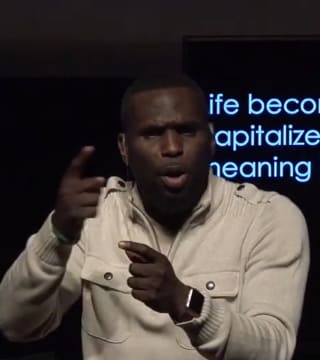
In the opening message of the "Finding Meaning" series, Pastor Philip Anthony Mitchell addresses the universal human search for purpose, exposing how both cultural narratives (meaning in accumulation/arrival) and flawed Christian teachings (meaning in attaining/status) leave hearts empty and weary. Drawing from Solomon's tragic quest in Ecclesiastes and the simple yet profound moment of Mary at Jesus' feet, he reveals that true, lasting meaning flows from intangible sources—starting with intentionally finding purpose in present moments rather than stepping over them in busyness or preoccupation. Slowing down to connect with God and people transforms mundane days into deeply fulfilling ones.
Introduction and Welcome
If this is your first time visiting, or if you’re watching on podcast, we definitely want to welcome you to Victory Church.
And welcome you to what I think is a very important collection of talks—our very first series of the new year. We’re calling it «Finding Meaning.» Finding meaning—a very significant topic, a very significant subject matter. One that I think deserves our attention. One that I believe, if you lean into, will be a blessing to your life.
I have some core convictions about some of the things I’m going to share with you in this series. And I believe if you lean in—I believe that if you lean in with your heart, if you lean in with your spirit—that these teachings are gonna be a blessing to you.
The first three of them—even if you’re not a Christian, if you’re in this room and you’re not a follower of Jesus—the first three you can appreciate. You can still pull some principles from them even if you’re not a follower of Jesus. The last message absolutely makes no sense apart from following God.
All four of them are within the context of having a personal relationship with the Lord Jesus Christ. And I’m gonna be sharing with you a different thought each week in this series—with the hopes that as you latch onto all of these thoughts, your life will start to take on more purpose and more meaning.
The Global Search for Meaning
The search for meaning—it is a global issue. It is a global phenomenon. It is an itch in the heart of almost every human being. It is something that we see come up in all cultures, all faiths, all world religions, all ethnicities—in all corners of the world.
Whether you live in a civilized nation or whether people live in underdeveloped nations—it doesn’t matter where people are—on any corner of the globe, there is a search for meaning and an understanding of what life is all about.
For people of all places, religions of all types try to answer the question of meaning—whether it’s Islam or Buddhism or Hinduism or whatever. People say even atheism. Atheists—everybody is searching to try to answer the question of meaning.
Philosophers who have come down through the ages—sages who have written—and you can go and read some of their writings—all making their theories and declarations about what is meaning and what is the purpose of life and how do people find purpose in life.
A Personal Encounter That Sparked This Series
A couple months ago, I was going to visit someone—actually going to pick up a sister in our church. And when I got to the place where I was going to pick up that sister in our church, there was another sister in our church who was standing outside of the home. They live together.
And the person I went there to pick up was standing at the door and just staring at me. And I motioned to the other sister that happened to be there when I went to go pick up this person. I told her, «Come over to the car.» And she walked over to my car and she leaned her head in the window. She put her hand up on the window.
And you know, I looked in her eyes and I said, «Hey, how are you doing?» And she said, «You know, I’m doing okay. I’m doing good. I’m fine.» And we paused for just a second. And I stared at her in her eyes very intently.
And you know, I know that the person I’ve come to pick up was waiting on me. And I said to her again—I said, «No, tell me how you really feel. You know, what’s really going on on the inside?» And her head dropped. And she said no words to me at all.
And I began to speak to her. I said, «You’re going through right now a sense that your heart feels very heavy—a sense that you’re hurting.» And you know, I just want to encourage you. And not knowing what to say, I began to feel the Holy Spirit start to move on me.
She had on her work shirt at the time—a uniform shirt, nametag. And I said to her, «I get a sense that you feel like you’re not making any progress. You feel bad because you see other people getting blessed and you feel like you’re not blessed.
You feel that things that you’ve been believing God for—other people have gotten it before you—whether it’s marriages or better homes or better cars or better careers. You feel like you have girlfriends who are prospering better than you are.
You feel discouraged. You feel empty. You feel like things are not really working out the way that you planned. You feel confused. You feel like you’re not really obtaining things that you’ve heard that you can obtain.»
And as I began to speak that to her, tears began to just fall from her eyes. They just started streaming down her face. She said no words to me at the time. She never opened her mouth.
And I could tell from her tears that everything that God was giving me to say to her was speaking directly to where she was at this point in her life.
Response to Her Tears – The Birth of This Series
In essence, you know, we have an adage in our culture that says that, you know, God was reading her mail in that moment. I’m always interested and always in awe of how God can pick us out at any time—no matter what we go through—even when we’re not praying.
He loves His children so much—He can send someone when you least expect it to minister right where you are in the place that you are. And you know, she began to cry. And you know, she was hurt and she was grieved.
You know, I thought very deeply about that because I was studying some things around that time. And the four messages in this series are a response to her tears. They are our response to what she was going through that day a couple months ago.
Because if I could just be honest—I know what that feels like. And if some of you are honest, you know what that feels like. You know what it is to be alive but dead on the inside at the same time.
You know what it is to have dread when you wake up for work on Monday morning. You know what it is to get up and go and work and do and come home and lay in your bed at night and just feel empty on the inside.
And I would like to believe that I’m not the only person in this room that has ever felt that. Am I the only one that has ever felt that? No.
The truth of the matter is that many people battle with that feeling all the time. There are people watching and listening to this message right now who are battling with that feeling. There are people sitting in this room—hundreds of you—who are probably battling with that same feeling.
Competing Narratives – Culture vs. Flawed Christianity
And part of it is, I think, competing themes that we have been bombarded with from both ends. On one side, we have culture, right? And culture has narratives.
And so if you peer into social media, if you turn on television, if you listen to songs, if you listen to artists, if you read blogs—you see that culture has a narrative. And culture has a very strong narrative that teaches us that meaning is found in accumulation and in arrival.
That the more you obtain, the more you will feel better about yourself. The more you obtain, the more you will find meaning. The bigger the house—the more meaning you will have in your heart. The newer the car—the more meaning you will have in your heart.
We hear commercials that say the next best thing. And we have Samsung Galaxys. We have iPhones, right? And people who are smart have iPhones. And people who are saved have Androids. The wise have Apple. Who am I? Should I tweet that? The wise have Apple.
But if you listen to the narratives of culture—this is what culture teaches us, right? That the next best thing will make your heart satisfied. That will find meaning.
And so we’re constantly trying to get the bigger home. We’re constantly trying to get the newer car. You know, we think the next deal will give us meaning. Or the person we’re pursuing will give us meaning.
We think that if we increase our standard of living, that we will have a greater sense of meaning. If we increase our income, we will have a greater sense of meaning. How many trips do we have to take around the world? How many things do we have to see? And if we do these things, we’ll have a greater sense of meaning.
We hear messages that teach us: look, when you arrive at this level of socioeconomic status, you will have—watch this—made it. You will have accomplished the American dream. And once you have the house and the perfect marriage with the white picket fence and the dog that can slide through the little square in the wall—you will have found meaning.
That we find meaning in acquisition and in status and in things.
The Flaws in Christendom
And then on the other end, my brothers and sisters, you have the flaws—or the errors—of Christendom. Because in Christendom, in American Christianity, there is also a narrative that is subtly poisonous. And we drink it in all the time.
It looks like water, but it’s really cyanide. See, because water and cyanide are the same color—they’re clear—but one will kill you and the other will give life to you. Jesus said His words are what? Life.
But the words of today’s preaching is almost like cyanide—not in every house, but in pulpits all across America. We hear a type of preaching that tells us: when you get to this place, you will have found purpose. When you get this title, you will have found purpose. When you get to this platform, you will have found purpose.
You keep living—and then eventually you will find purpose. And so they make purpose—a lot of times preaching—as a place that you arrive to. Some actualization that we give to, right?
They make God a genie that we have to keep getting things from. And the more we can get from God, the more we can scratch our itch for meaning and purpose.
And if God doesn’t answer that prayer, then I feel empty on the inside—because I’ve believed You for this and You have not given me this. So either I don’t have enough faith for it—and I feel empty on the inside.
You’re still sick because you don’t have faith. You don’t have the house because you don’t have faith. You don’t have the car because you don’t have faith. You don’t have blank because you don’t have faith.
And then in the absence of those things, we feel like this—we don’t have more meaning. And so our Mondays feel like a drag because God didn’t come through on Sunday.
And so there’s a flaw in American Christianity that teaches meaning in attaining. And the world teaches meaning in accumulation.
The Damage Caused by False Narratives
What damage does that cause to the human heart? If meaning is found in attaining, then when I can’t put my hand on what I desire, it causes me to feel empty.
If meaning is found in building my life out with things that are tangible that I can touch—whatever the career is, whatever the salary is, whatever the house is—whatever—if meaning is found in those things, then what happens when you don’t get them? Your heart grows sick. Your heart gets despondent. Your heart feels discontented.
Or if meaning is found in some kind of arrival—if it’s found in attaining—if it’s found in the accumulation—and watch—then the bar keeps moving, right? The bar keeps moving, right?
Because if I need more to keep feeling like I have some kind of worth or value—then as soon as I get one house, I will live in it for two years and feel like this is not good enough. I have a car and then drive it for a couple years—and this is not good.
And what you don’t realize is you’re trying to scratch an eternal itch with temporal things.
And so many of us—even believers—buy into these lies. Whether it’s from the narratives of culture or even from the toxic preaching inside the church.
Because we love preaching that makes us feel good—but so much of what we like is really cyanide. And it’s subtly killing us.
Think about how much preaching you listen to that makes you always striving to put your hand on something tangible. I want you to think about that.
Think about how many conferences we come from that make us always focus on trying to put our hands on—watch—the next best thing. You come out the conference: Amen! Bigger, better! Bigger, better! Bigger, better! Bigger, better!
We get intoxicated with the need for stuff to bring to us a sense of meaning and purpose. It makes us do it—and then when we don’t get it—watch—it makes us discontented on the inside. It makes us feel dread. It makes us feel empty.
You know how this goes down—you go on IG and then it makes you feel jealous. You see what other people have—you feel like if I don’t have that, my life has no meaning or purpose. So you start to feel jealous.
You’ll go like this for a moment and then put it down—and sadness, right? You start to feel jealous, right?
And then on the inside—as you’re watching what everybody else is doing and as you’re listening to the false narratives of culture, the toxic narratives of Christendom—right—your heart starts to grow weary. You start to get restless. You start to get depressed. You start to deal with self-loathing.
My brothers and sisters—in its most extreme form—this can cause great depression that leads the wealthy—and could even lead a poor man—to commit suicide.
A Tragic Story of a Wealthy Man
I heard a story of a man—he was a very wealthy man by our worldly standards. And he had a great job, husband, wife—you know—kids. And his wife was upstairs in her bedroom.
And she heard her husband come home from work one day. And she’s upstairs—and all of a sudden she hears just like that—just a loud boom. And she calls out to her husband—and she doesn’t hear him respond.
And so she runs downstairs. And when she runs downstairs, she walks into the kitchen—she puts on the light—she sees her husband like this—slumped over on the table. A note on the table saying goodbye to his wife and children.
He said he was empty. He took his life. He was a wealthy man—and he took his life. He was in search for what? For meaning. Trying to figure out what was the purpose of his life.
His meaning found in accumulation. His meaning found in attaining. His meaning found in arrival.
Solomon’s Quest and Conclusion in Ecclesiastes
About 900 BC, there was a man—a king named Solomon—who was the second king of ancient Israel. And Solomon, when he came into office, he asked God for wisdom.
And history tells us that God gave Solomon wisdom that no man had ever seen at that point in world history. Solomon took that wisdom and he went out to begin to amass for himself everything that he thought would increase meaning.
In fact, Solomon himself would tell that Solomon did something very, very incredible. He set out on a journey in life—a mission to bring everything into his life he possibly could in a search for meaning and purpose.
He was a very wealthy man—by today’s standards probably the wealthiest man that ever lived—rivaled by no man in history with wealth. And Solomon set out on this great quest to acquire everything that he could put his hands on.
In fact, Solomon said in his own words that he denied his eyes and his hands nothing. He devoted his whole life’s energy to accumulating and attaining and going after and striving.
And in his old age, he wrote a memoir that’s been preserved for us in the Old Testament called Ecclesiastes.
And I want to read to you two pages from Solomon’s memoir—beginning in Ecclesiastes chapter 1 and verse 1.
Solomon wrote these words—and he wrote these words in his old age—at the end of his life—after he had set out on this quest to find meaning.
Solomon sat down at the end of his life and he wrote these words in Ecclesiastes chapter 1, beginning in verse 1.
He says, «The words of the Teacher, son of David, king in Jerusalem: 'Meaningless! Meaningless! ' says the Teacher. 'Utterly meaningless! Everything is meaningless.'
What does a man gain from all his labor at which he toils under the sun?»
Some of us know what the word «toil» means—the rat race of trying to obtain and accumulate and accomplish. Why? Because you want to impress people that you don’t even like anyway. Feel that if I only have this, I will have better status, right?
If I only get this, I will feel better about myself. I don’t want to pull up at the light and I got a '94 vehicle and the person next to me has a 2018. So let me do all I can to put myself in deeper debt so I can keep up with this brother I will never see again.
«What does a man gain from all his labor at which he toils under the sun? Generations come and generations go, but the earth remains forever.»
In other words—watch, my brothers and sisters—life is short and your days are numbered.
«The sun rises and the sun sets, and hurries back to where it rises. The wind blows to the south and turns to the north; round and round it goes, ever returning on its course.
All streams flow into the sea, yet the sea is never full. To the place the streams come from, there they return again.»
As when I look at nature, I can’t understand—but there’s something behind that whole thing—that is beyond my understanding.
«All things are wearisome, more than one can say. The eye never has enough of seeing.»
So think, man—if I get that, I’ll find meaning. But as soon as you get it, you’re gonna want something else, right?
Nor the ear its fill of hearing. What has been will be again. Man, if we do this thing—man, it’s going to be so awesome—and then you’ll die and somebody else will do it over.
«There is nothing new under the sun. Is there anything of which one can say, 'Look! This is something new'? It was here already, long ago; it was here before our time.
There is no remembrance of men of old, and even those who are yet to come will not be remembered by those who follow.»
In other words—your life is so short that when you’re gone—a couple years after you’re gone—you may not be remembered.
So what happens if I’m not famous? If I’m not on Wikipedia—how am I gonna find meaning? If my life is so short and when I die nobody’s gonna remember me—if I’m not on Wikipedia—if they can’t look me up on Google—I’m trying so hard to be famous because if I be famous, then I’ll have meaning.
If I’m known, I will have meaning. If I’m rich, I will have meaning. If I keep acquiring, I have meaning. If I arrive at this place, I’ll have meaning.
Solomon’s Conclusion – Meaning Apart from God Is Meaningless
And then the Teacher says, «I, the Teacher, was king over Israel in Jerusalem. I devoted myself to study and to explore by wisdom all that is done under heaven. What a heavy burden God has laid on men!»
I like this next word—watch verse 14—watch what he says: «I have seen all the things that are done under the sun"—that is, Solomon had a life that was not lacking any tangible thing a human being could acquire.
«All of them are meaningless, a chasing after the wind.»
You know what’s so interesting about wind? Everyone can feel it, but no one can grab it. You know what that means? Wind is that feeling that you get with the new car—and it feels good for a moment—and then that feeling fades away like the wind.
You get the new house—and it feels good for a moment—and then it fades away like the wind. Now all the things we’re running after to try to find meaning and purpose—it comes in and makes us feel good for a moment—and then it blows out of our life like the wind.
And then he will continue when he says in chapter 2, verse 1: «I thought in my heart, 'Come now, I will test you with pleasure to find out what is good.' But that also proved to be meaningless.
'Laughter, ' I said, 'is foolish. And what does pleasure accomplish? ' I tried cheering myself with wine, and embracing folly—my mind still guiding me with wisdom.
I wanted to see what was worthwhile for men to do under heaven during the few days of their lives.
I undertook great projects: I built houses for myself, I planted vineyards. I made gardens and parks and planted all kinds of fruit trees in them.
I made reservoirs to water groves of flourishing trees. I bought male and female slaves and had other slaves who were born in my house.
I also had more herds and flocks than anyone in Jerusalem before me. I amassed silver and gold for myself, and the treasure of kings and provinces.
I acquired men and women singers, and a harem as well—the delights of the heart of man.
I became greater by far than anyone in Jerusalem before me. In all this my wisdom stayed with me.
I denied myself nothing my eyes desired; I refused my heart no pleasure. My heart took delight in all my work, and this was the reward for all my labor.»
Then he comes down to the end of his life and he says this—yet this is so tragic: «When I surveyed all that my hands had done and what I had toiled to achieve, everything was meaningless, a chasing after the wind; nothing was gained under the sun.»
What a tragedy for Solomon. What a blessing for you and I.
Here was a man who devoted his entire life’s journey—his entire life—to just accumulating. And this is what he did from a young man: he said, «I’m gonna spend the rest of my life accomplishing everything I desire and surrounding my life with every possible tangible thing in the search for purpose and meaning.»
And he strayed from God in his lifetime. At the end of his life—after this man had everything—I mean this is like the top of the upper echelon of our society, right?
In business this would be like Bill Gates. Like in hip-hop this would be like Jay-Z, right? This would be like in R&B—it’d be like Beyoncé. But just at the top of what we think is the pinnacle of arrival.
He comes down to the end of his life—man, I spent all my energy accomplishing, accumulating, attaining—and arrived at a place and peeked in the door, laid down, and realized, «Dang, my heart is still empty.»
And sick and void. I did all of that only to realize that it was meaningless. Meaningless—cried the Teacher.
With the hopes that those of us who are wise would come by the pages of his memoir and read what this man had to say—with the hopes that we would not set out on the same journey trying to pad our lives with stuff and people and things in the attempt to think, «If I only get this next thing, I will find meaning and purpose in my life.»
What a tragedy that is for Solomon. What a tragedy to live a life given over to vain pursuits—only to die empty.
What a tragedy to live a life of poverty—only to die empty. Because if it required wealth to have meaning, then it cannot be true meaning—because everyone will not have wealth.
And if it can’t be felt in poverty, then it cannot be true meaning—because some people will die in poverty.
So that means meaning can’t be found in anything that is tangible. It can’t be found in anything you can touch.
With all of your sweatless days of trying to get the next thing—meaning can’t be found in anything tangible.
Because God would be foolish to wrap up meaning in something that you can touch. Because if it required status to get it, it would be unfair. For it only could be touched and not felt in poverty—it would be unfair.
So if meaning can’t be felt as something that is tangible, then we must find meaning in things that are intangible.
Solomon will go on to make this argument—watch and listen—he would go on to make this argument—watch it—look up here.
The meaning cannot be found apart from God. That you could spend your entire life searching, accumulating, acquiring, and attaining—but that ultimate meaning and purpose in this life cannot be found apart from God.
Creation will never have meaning and purpose apart from Creator. And it does not matter what creation accomplishes in their own strength—they will never have a deep sense of meaning apart from Creator.
All meaning begins with God. Meaning is found in God. Meaning ends with God. There is no true meaning and purpose apart from the Lord God Almighty.
Now the atheist will battle that—and another religion may battle that—but my bet is: let’s find out on our deathbed whose heart will be empty and whose heart will be full.
Because Solomon will argue at the end of his memoir that meaning cannot be found apart from God. And I’m going to come back to that argument at the end of this series.
Four Intangible Sources of Meaning – Introduction
Now I want to take the rest of this time to make my own argument.
Now while there’s nothing wrong with pursuing—and there’s nothing wrong with having things—there’s nothing wrong with having a vision—there’s nothing wrong with having goals—there’s nothing wrong with obtaining—there’s nothing wrong with all for all those things—when they’re not done in vain.
But I believe that there are four things that will bring a deeper sense of meaning and purpose to our life—inside the context of our relationship with God.
Listen—we get glimpses of these things in and around the life of Jesus. These four things I want to talk to you about are not tangible things that you can touch.
Because Solomon already taught us that ultimate meaning can’t be found in anything that is tangible.
And so in the context of our relationship with God—you know, I’ve been praying and studying and thinking—that there are four things that ultimately bring the heart a deeper sense of meaning—a deeper sense of purpose in this short life that we live.
We see them again in and around the life of Jesus. And when I start to think about these things, I think about at least this first one I’m going to talk about—how easily overlooked it is—how often we take it for granted.
Listen—and I’m so serious when I say this—if you listen to me carefully, my brothers and sisters—if you take seriously this first thing I’m going to share with you that brings the human heart a deeper sense of meaning—if you lock in and grab hold of it.
It is gonna be so simple that it’s not even gonna make you excited. But that when you leave today—if you dwell on it—if you drive home in your car and ponder it—it will have such a revolutionary impact in your life that I promise you your life will never be the same after this teaching if you latch hold of it.
This first thing I want to share with you that brings a great sense of purpose and meaning to the human heart—let me use an incident from the life of Jesus to set this up for you.
The Story of Mary and Martha – Luke 10:38-42
Let me read to you this account that happened in Jesus' life—and give you this first thing that I think brings a deeper sense of meaning to the heart.
All of these four things I’m going to share with you—you can see them in and around the life of Jesus.
Luke chapter 10, verse 38: This is so powerful.
«As Jesus and his disciples were on their way, he came to a village where a woman named Martha opened her home to him. She had a sister called Mary, who sat at the Lord’s feet—watch this word—listening to what he said.»
This is so powerful. I love this. I feel excited. This changed my life.
«But Martha was distracted"—this changed my life—"by all the preparations that—watch this word—had to be made.»
So they had to be done. This is so powerful.
So she came to the Lord and asked him, «Lord, don’t you care that my sister has left me to do the work by myself? Tell her to help me!»
Now «Lord!» exclamation mark—that means she’s yelling at Jesus now.
Watch this—this is so powerful—this Jesus turns to her and says to her—this is so powerful: «Martha, Martha,» the Lord answered, «you are"—somebody shout the next word—"worried and"—shout the next word—"upset about many things.
But"—watch the transition—but this is so powerful—"but only one thing is needed. Mary has chosen what is"—watch—"better.»
Than what? Being overly busy and preoccupied. Oh my God.
«But only one thing is needed. And Mary has chosen what is better"—that being overly busy and preoccupied—"and it will not be taken from her.»
My friends—listen to me—this is so powerful—what I’m about to share with you. This will change your life. So simple and so profound at the same time.
Finding Meaning in Present Moments – Core Principle
Listen to this—so powerful—right? Right? So powerful. So powerful.
Life, my friends, is short. It is only but a vapor. And buried right here in this text is a beautiful principle that—infused in our daily lives—will bring a deeper sense of meaning and purpose to you every single day of your life.
It will snatch dread from your life. What I’m about to share with you will rob boredom out of Monday. It will rob Tuesday of dread and regret.
It will make you wake up tomorrow morning and go to your work with a deeper sense of purpose.
This thing is so simple but so profound. And when God began to show me this a couple of months ago—it revolutionized my entire life. It changed my heart and changed everything that I do from sunup to sundown, right?
So often we run at a fast pace—and we get robbed of fulfillment.
So I want to make a statement—and I want to spend the rest of my time—about 10 minutes—building a case around the statement.
Here’s my statement—here it is: Life becomes more purposeful when we capitalize on opportunities to find proper meaning in present moments.
Life—listen to me—because this is not—I’m not just gonna preach a sermon—I’m trying to help you.
Life becomes more purposeful when we capitalize on opportunities to find proper meaning in present moments.
Your life will explode with a greater sense of purpose on the inside when you slow down to squeeze meaning out of your moments every day.
God gives you moments—but because we’re so busy and if they’re so preoccupied—we oftentimes step over opportunities to squeeze meaning out of very valuable moments.
Busy and not listening, right?
Watch—two women were in the same room, in the same house, in the same moment. One of them has a distracted eye. The other one has an intentional eye.
One of them is blinded by busyness. The other one is focused on the moment. This is so powerful.
One of them abused a moment. The other one seized the moment, right?
Martha is in the presence of Jesus—but she’s so busy working for Him she misses the opportunity to enjoy Him.
So busy working for God that I don’t even connect with God. So busy working for Jesus that I don’t even have devotion with Jesus.
So busy serving that I don’t even have a prayer life. So busy being busy that I don’t even have devotion.
I’m around Him—but I don’t even connect with Him. So busy driving—He’s trying to get my attention—I won’t even shut off the radio to hear His voice.
Instead of being sad at the stoplight, I could be leaning into His presence. Oh my God.
Martha is totally distracted from the moment. The Lord of glory is in her house—as—watch—I guess—watch—watch.
And instead of enjoying the moment with her guest—she’s cleaning the kitchen, washing dishes—watch—and ignoring her guest.
Watch—preparing for Him in the same house He’s in—and ignoring Him at the same time.
She has work with no devotion. Busyness without fruitfulness.
And while there’s nothing wrong with Martha working—watch—but Jesus pointed out her failure of—watch this word—priority.
In order to squeeze meaning out of a very valuable moment—her mind was so preoccupied that she overlooked the joy and the blessing of that moment.
Mary, on the other hand, is just in awe of Jesus, right? She’s just right there by His toes—all right—watch my face.
This is Mary: «I know there’s stuff in the kitchen to be done. I know the floor gotta be swept. But Jesus is in my house. So—watch—I’m just gonna stop what I planned to give priority to this moment.
I’m just gonna pause for just a second with my busyness to give priority to this moment.»
Why? Watch—I may not get this moment back. And so Mary just enjoys the guest in her home, right?
And watch—Mary found meaning in that moment. Jesus found meaning in that moment.
How do we know Jesus found meaning in it? Jesus—don’t He have people to heal? You know He got places to preach? He only got things to do?
But Jesus Himself—knowing all that is outside the house—and they’re calling on me and I got to go raise the dead and all of that—He said, «Martha, Martha, Martha, Martha, Martha, Martha.»
You call your name—say—I say a name three or four times: «Come on, go Lena, Lena, Lena, Lee, Phillip, Phil.» Come on—cool—it’s a group exercise. Everybody say your name three times.
«You are worried about many things—but you’re overstepping this more valuable moment.»
Let me help you with me—time—say your name one more time—three times. You’re so preoccupied—your mind with all these things you got to do three months from now—but you’re missing the value of this moment.
Calling your name three times again—come on—you’re so worried about what you got to do next week—but you’re missing the opportunity that’s right in front of your face in this moment.
Not next week—this moment. Not next year—this moment. Not tomorrow—tomorrow’s not promised to you—this moment.
Mary found meaning in the moment. Jesus found meaning in moments.
Jesus is walking through a town called Jericho—and He’s just in the street—and He stops on the tree—He looks up—and sees a man in a tree.
Now He has to make a decision here—is a moment—He can keep walking or He could find meaning in this moment.
So He pauses from His lunch-busy schedule—because if you read the Scriptures, He was just—what? —passing through to get somewhere else.
But He—watch—pauses in the moment and said, «I know I got to be somewhere—but here’s a moment.» He said, «Zacchaeus, come down from that tree.»
And that one moment would change an entire city.
He’s traveling through—gets in some wells—and sits down at a well to get something to drink. And a woman is there.
He has to make a decision: I can keep going to my preaching engagement—or let me lean into this moment with this stranger. «Can you give me something to drink?»
Now He—watch—He finds meaning in the moment—transforms a life. It transforms a city.
Why? Because He found meaning in the moment.
What if Jesus left that house before Martha was busy—before she finished? What if Martha finished in the kitchen—watch—ran back into the living room—Mary will see—watch—and Jesus is gone, right?
She would have—watch—missed that moment.
My friends—I have a question for you: how many moments have you missed? How many moments did you miss last week? How many did you miss yesterday?
How many of you who ignore me right now will miss valuable moments tomorrow? Moments that can change your entire life.
It only takes a moment. How many moments have you missed—watch—because you’re so busy—so preoccupied—your mind going a million miles a minute?
You’re so heavy—you’re so weary—you’re so tired—you’re so whatever you want to fill in the blank—that you keep drowning yourself in dread—that you keep missing moments.
Everybody’s outside gathering—you inside miserable—you missing that moment that something life-changing can happen.
How many times—because our mental state or our busyness or because of whatever we’re trying to obtain or whatever it is—we keep missing moments that can either touch our life or touch the life of someone else.
And why do we keep missing moments? Another idea—I put it up on the screen for you.
You know why we keep missing moments? I’m gonna tell you why.
Because increased meaning is often wrapped in mundane moments.
What the old-school people be saying? «I’m preaching better than y’all responding.» That’s what they say. Yeah.
See—this is gonna hit you. You need to go home and listen to this a second time.
Increased meaning is often wrapped in mundane moments.
Because it seems boring and mundane—you’ll step right over that moment—not even realize there was meaningful purpose in that moment.
I’m almost finished.
It’s like a couple days—you know—when God was teaching me this—I came home. I pulled into my garage. I drove into my house.
And I opened my door—and I thought to myself: how many times have I come home from a long day of work at my office at 7 o’clock at night?
I walk in—drop my bag—say hi to my kids—run upstairs—go do this—go do this—check this on the app—call Nadine—change this—let’s do this—text this person.
And my kids are downstairs—and by the time I finish my business—my wife is putting them in bed. And then another day goes by—and then another day goes by—and then another day goes by—and then a month goes by—and then six months—and then a year goes by.
And I wonder how many moments I missed with my own children.
And when God began to teach me this—man—the other day when I came home—and I’m right before I open the door—I said to myself, «You know what? When I go in here, I’m gonna lean into this moment.»
A moment that seems so mundane—I’m gonna lean into this moment.
I opened my door—I dropped my bags—I put my phone away—and I just enjoyed my kids and my wife.
I took time to dig into my wife’s heart—to run around with my kids. I wrestled with my son on the floor and picked him up and I body slammed him.
And then you know—I picked him up again and I threw him on the ground. I chased him up the stairs and I body slammed him.
And I picked up Abi and I spun with her till I was nauseous, you know? And then I ran behind the dog.
And I’m not thinking about when I gotta text Nadine. And I’m not thinking about that I gotta send Brendan something. I’m not thinking about what I got to tell my staff.
I’m just living in the moment, you know?
This is like—and I’m almost done—listen—listen—family—this is a husband and wife going to a restaurant and putting your phones down and talking—instead of surfing.
This is coming home from a long day at work—and although you’re tired—know that you need another hour of strength to engage your family.
This is seeing someone text you who’s hurt—and stopping to call them or text them back a word of encouragement.
Watch—this is being on a plane next to a stranger—and feeling the Holy Spirit moving on you—and having a conversation with a complete stranger on a plane—at the Wendy’s—in the mall.
This is being in the vicinity of people at your job—and sensing, «I should say something"—and lean into that moment to say something to that person, right?
This is driving home from work—and instead of listening to the same tired songs—maybe you shut it off and you connect with God on that drive home.
You know what this is—as simple as something all of us take for granted—this is as simple as stepping outside your house—and instead of just jumping in the car or taking out the trash—you look up at the sky on the way to take the trash down to the corner.
And you look at this great expanse—and you say, «Wow, God, You made all of this. You can hear me.» And you look past the clouds—and you think, «Man, Lord—one day You’re gonna come for me.»
This is stepping outside your house at night to walk the dog—and as you’re walking the dog—you look up at the stars. I’m like, «Wow, Jesus—You are amazing. You’re incredible. I just love You. I don’t want anything from You—I just want to tell You that I love You.»
Although I’m walking my dog—I’m capitalizing on this moment to connect with my Savior.
As simple things as you would run outside and run back in—and miss that moment.
This is taking the time to come to church on Sunday—and not just running out of here because you got to get to the restaurant—but stopping in the lobby to talk to brothers and sisters—exchange phone numbers—encourage one another.
Say, «Hey, are you in a V group? You should jump in my group. Hey, where you going to watch the game tomorrow?»
This is taking the time to not just come in and run out—coming in right now—but stop long enough to have a conversation with somebody—where you never know—can open a door for you.
Because this is the year of favor—and favor comes through people.
Maybe it’s getting up tomorrow morning—and not going to work with dread—but saying, «I’m gonna squeeze the meaning out of my moments tomorrow. I’m gonna find meaning in my Monday.»
Stepping Over the Now – The Danger
This last statement I want to give to you—and I’ll be done.
If we keep stepping over the now to get to what’s next—we will rob ourselves of the pleasures of the present.
If you keep stepping over your moments that are right in front of you—because you’re just always driving to get to what is out ahead of you—you’re gonna rob yourselves of the pleasures of the present.
If I’m so driven to build my church—then my kids grow up and they can’t remember me spending time with them—or birthdays—or leaving a meeting early to be at a school function.
If I’m so busy driving and moving about—but I can’t stop long enough to connect with God and to have impact in people’s lives—I’m gonna rob myself of the pleasures of the present.
When this is over—you’ll have an opportunity to have moments in the lobby. Some of you are just gonna run out of here and jump in your car and drive home—and you’re gonna keep missing valuable moments—watch—that bring meaning and purpose to your life.
Even Jay-Z learned this lesson. You should go watch his interview he did with the New York Times—a billionaire.
He said—I’ve learned—I love the evolution of this man—even if he’s not a Christian yet.
He said, «I learned by this stage in my life—with all that I have—all my wife and I have.» He said, «Life is not about money or fame.» He said, «Those things don’t matter to me that much.»
He said, «I realized what matters to me the most is my relationships.» He says, «And I have great relationships.»
He said—with all of his success—the thing that mattered to him the most was his relationships—his wife, his children.
He learned that—not even filled with the Spirit. He learned that—not even being filled with the Spirit—he had—watch—a Solomon moment—an Ecclesiastes moment.
That he accomplished all that life can offer—sat down and said, «With my billions—with my Maybach—all of that—I look at Beyoncé—I look at Blue—I look at my kids—I look at Rumi and Sir—you know what? What’s all that gonna mean if these relationships are messed up?»
I look at my wife and my children—realized this is what’s most valuable to me.
Lena, Malachi, Israel, Abigail, Josiah, Milton, Kenny—connect them with God. Connecting with people.
Listen—life is too short, brothers and sisters. And some of us are gonna be so busy that you’re gonna come down to the end of your life—look over your shoulder—realize I had bad relationships. I missed great moments.
Moments to connect with God and moments to connect with people. Moments to make a difference. Moments to touch. Moments to bring. Moments to comfort. Moments to be comforted.
I’m gonna lock myself in the house 'cause I’m depressed—missing opportunities to be in fellowship where God can touch you—in fellowship with one person—lets you that you don’t even know.
Are you locking yourself in the house—missing moments?
How many moments do we miss because we’re so preoccupied—so busy—so whatever?
You want to get more meaning in your life? You want to have more purpose in life?
Here is the title of the sermon: you have to find meaning in your moments.
You have to learn to find—listen—if you wake up tomorrow morning and say, «I’m gonna be conscious of my moments and start finding and squeezing meaning out of my moments.
I’m gonna play with my kids. I’m gonna talk to my wife. I’m gonna take a walk in the park. I’m gonna connect with God in the car. I’m gonna make a difference at my job. I’m gonna use the moments that God has given me to make a difference or to connect with the Lord.»
Then—with nothing tangible but no new thing—your life begins to explode with a greater sense of purpose.
You start feeling like today changed my life.
And I got a hectic and a busy life—and I know what it is to say to my staff, «I’m leaving the office early because I need to get to my daughter’s recital.»
Why? Squeeze meaning out of the moment—she would have a memory. And when she had this big recital—my father was a busy pastor—I saw his face.
Why? Because I’m living now—not to obtain another—I’m trying to squeeze meaning out of my moments.
And the more I do that consciously—the more each day matters more and more and more.
And what you—listen—because the problem is you trying to make Christianity so spectacular—if you’re not on a mountaintop—get depressed.
What about Monday? What are you gonna do Monday?
Some of us are junkies for spectacular Christianity. What about Monday?
Monday—while you’re at the sink washing dishes and your babies are running around—you can find meaning.
What about slow down and play with them? Read a book to them. Take them to the park.
What are you gonna do tomorrow morning when you get up?
A young lady I told you about at the beginning of the sermon—the next time I saw her: «How you doing?»
Because what I shared with you is what I shared with her. «Letta—find meaning when you go to work tomorrow.»
I told her, «Go on your job and be a light for Jesus. Don’t just go there and dread when you work—oh there—be light for God.»
And if you do that—then that workplace has meaning.
Want to be a person that lives my life making the most of my moments.
Jesus said to Martha, «Martha—Martha—Mary has chosen the better thing.»
What was the better thing that Jesus said Mary—and Himself—has chosen? They found meaning in a simple moment.
Tomorrow—I want you to pray a consciousness into your heart. Get up tomorrow morning—you go to work.
And when you leave today—you spend some time in the lobby—you slow down and remember that life is short.
And while you have your vision and you have your goals and you have your plans—praise God for all of that—what are you doing with the present moment that is right?
How often are we keep stepping over meaning—stepping over purpose—stepping over moments—because we’re so busy driving—and we rob us of the opportunity to say, «Frank, Lawrence, George—man, thank you so much for praying for me"—and just loving on them—and squeeze the meaning out of the moment that I’m staring at these three brothers that I love.
Tomorrow—it’s not spectacular—but it will change your life. It will change your marriage. It will change parenting. It will change how you treat strangers on the train—how you treat the poor.
What happens in a marriage? Congratulations to Melissa—who’s officially—look at me.
My brothers and sisters—look at me—I want to challenge all of you—all of you—listen—to develop a consciousness to start squeezing meaning out of your moments.
This will make purpose explode in your life—not on Sunday—not at the conference—but from Sunday to Sunday.
Tomorrow morning—I want you to take Monday—a day that’s just Monday because we hate to get up to go to work—and I want you on purpose trying to squeeze as much meaning out of Monday as possible.
Go watch the game with people you love—and put the phone down.
You want to see purpose in your life? It’s not found in anything you can touch. It’s found in the intangible things to give more meaning and purpose to life.
I can’t wait to share the other three with you. Latch hold of them—they will transform your life and squeeze more purpose and meaning.
Find meaning in your moments. Find meaning in your moments. Find meaning in your moments.
And your days will get empty of dread and frustration, right?
Closing Prayer
Father God, I thank You for just the wisdom that’s been preserved for us in Your Word.
Thank You, Lord—through the tears of a sister in our church that gave birth to this series.
And in that moment—now I slowed down long enough to find meaning in that moment—not only to encourage my sister—but that a whole series was born out of one moment that I slowed down long enough to squeeze more purpose out of.
I pray You would do the same for everyone under the sound of my voice.
I pray You—from this day forward—give us a present consciousness. And we will stop stepping over the moments and the opportunities You give us every day of our lives to connect with You and to make a difference in the lives of the people around us—and to enjoy You and to enjoy the lives of the people around us.
Because You’ve taught us that life is short.
Deliver us from trying to find meaning in accumulating and attaining and arrival—but help us to find meaning in intangible things that will help our daily lives explode with purpose.
Father, I pray for my brothers and sisters that You will give them a consciousness to start finding meaning in the moments of their everyday life.
We will not come down to the end of our lives and look over our shoulder with regret—the times we could have connected, times we could have spoken, times we could have embraced, times we could have loved, the times we could have just connected with You.
I thank You, Lord, for this year of favor. And I thank You for these powerful four teachings You have given me.
I pray they’d be life-transforming for my brothers and sisters—and even for those who don’t believe in You—I pray it would draw them to You.
I pray a blessing over this congregation—over this word—in Jesus' name. Amen.
Thank You, Lord—through the tears of a sister in our church that gave birth to this series.
And in that moment—now I slowed down long enough to find meaning in that moment—not only to encourage my sister—but that a whole series was born out of one moment that I slowed down long enough to squeeze more purpose out of.
I pray You would do the same for everyone under the sound of my voice.
I pray You—from this day forward—give us a present consciousness. And we will stop stepping over the moments and the opportunities You give us every day of our lives to connect with You and to make a difference in the lives of the people around us—and to enjoy You and to enjoy the lives of the people around us.
Because You’ve taught us that life is short.
Deliver us from trying to find meaning in accumulating and attaining and arrival—but help us to find meaning in intangible things that will help our daily lives explode with purpose.
Father, I pray for my brothers and sisters that You will give them a consciousness to start finding meaning in the moments of their everyday life.
We will not come down to the end of our lives and look over our shoulder with regret—the times we could have connected, times we could have spoken, times we could have embraced, times we could have loved, the times we could have just connected with You.
I thank You, Lord, for this year of favor. And I thank You for these powerful four teachings You have given me.
I pray they’d be life-transforming for my brothers and sisters—and even for those who don’t believe in You—I pray it would draw them to You.
I pray a blessing over this congregation—over this word—in Jesus' name. Amen.