
Perry Stone - The Raising of Davids Tabernacle (01/07/2026)
Summary:
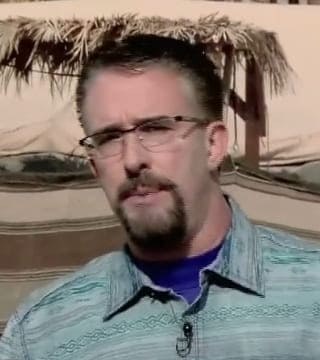
The preacher teaches from a goat-hair tent in the Judean Wilderness about the Tabernacle of David, contrasting it with Moses' Tabernacle of animal sacrifices. Drawing from Amos 9 and 1 Chronicles 16, he explains David’s tent as a place of continual praise, worship, and 24/7 singing around the Ark—without sacrifices—restored in the last days as a move of pure-hearted worship. This restoration merges old (sanctification) and new (youthful praise) to draw believers into God’s presence for freedom, peace, and joy, fulfilling prophecies like James' quote in Acts 15.
Welcome from the Judean Wilderness
I want to welcome you to Manifest right here in the Judean Wilderness in the land of Israel. Directly behind me is a goat hair tent.
Now, this entire area is an oasis in the desert, and there are tents everywhere. As a matter of fact, tour groups can actually come here and stay in tents. It would be a great place to come for your youth group, or if you’re doing a tour, to stay out in the desert, which we did last night in a dormitory right here in this beautiful area.
When I saw this tent, I immediately said, «I have to do a Manifest program from this tent, ” because when I saw it, I thought of two things.
First, I thought about the Tabernacle of Moses and how the animals were slain, and the skins were taken to produce the outer layer of the curtains of the Tabernacle of Moses and also to produce the Holy Place and the Most Holy Place.
But I also thought of something that many of you may not be aware of, and that is something called the Tabernacle of David.
The Tabernacle of David
What I would like to do today on Manifest is present to you a detailed teaching on the Tabernacle of David and what the prophets have to say about the restoration of the Tabernacle in the last days.
Let’s go right here to Amos chapter 9. In Amos 9, this verse, by the way, is repeated in the New Testament by James. Here’s what it said: the prophet said, „On that day I will raise up the Tabernacle of David which has fallen down and repair its damages; I will raise up its ruins and rebuild it as in the days of old.“
Now, if you want to know what the Tabernacle of David was, let me read to you a verse of scripture from 1 Chronicles chapter 16, and then we’re going to go into a detailed study about what the Tabernacle actually was.
In 1 Chronicles 16:1, „So they brought the Ark of God and set it in the midst of the Tabernacle that David had erected. For then they offered burnt offerings and peace offerings. And when David had finished offering the burnt offerings and peace offerings, he blessed the people in the name of the Lord. Then he distributed to every one of Israel, both man and woman, to everyone a loaf of bread, a piece of meat, and a cake of raisins. He appointed some of the Levites to minister before the Ark of the Lord.“
Now, I’m going to ask Robert Vander to come out here; he’s with us today, and he’s going to take my Bible because I’m going to go hands-free. By the way, Robert is the president of Nolesworthy Travel. He’s who we come to Israel with, and we’re having a great time—a beautiful day, an awesome day, no problems whatsoever, despite what the news media says, and having a great time. Robert, thank you so much.
Background on the Tabernacle of Moses
All right, let’s do a little bit of background here. In the time when the children of Israel were in the wilderness, you realize that God instructed them to build what is called the Tabernacle, the Mishkan, or a tent.
It was made out of three different types of animal skins; some of them were dyed specific colors. There was black, white, and red, for example, as the colors of the Tabernacle of Moses.
Instead of concentrating just on the skins and the types of skins that were used, there’s one part that I want to share with you, and that has to do with the fact that Moses' Tabernacle was basically a place of animal sacrifices and animal offerings.
There was a brass altar on the outside, and consistently, a lamb was offered in the morning and a lamb in the evening. There were peace offerings, fellowship offerings, and burnt offerings that God required the children of Israel to offer.
Now, the interesting thing about the Tabernacle of Moses is this: at no time in the five books of Moses, called the Torah of the Old Testament—those five books are Genesis, Exodus, Leviticus, Numbers, and Deuteronomy—did God reveal to the children of Israel about how to worship Him.
He only revealed the sacrificial system of the blood offerings and the different types of sacrifices and offerings that were to be brought in the Tabernacle, which would later be brought to the city of Jerusalem when the Jewish people took over the Promised Land.
Now, the question I had for the Lord years ago was this: „God, why is it that you did not reveal to Moses nor the children of Israel for 40 years the power of worship?“
Worship is an extremely powerful thing, and the Lord seemed to speak to my heart and say, „Did you see the condition of the hearts of the children of Israel when they were in Egypt? You saw how they came out of Egypt, and when they came into the wilderness headed toward the Promised Land, have you noticed the condition of their hearts? Their hearts were not even right with Me.“
And God spoke to me in my spirit, „Why should I reveal worship to a group of people whose hearts are not even right with Me, who are in unbelief and whose hearts are hardened? Why should I reveal to them the power of worship and approaching Me?“
Because God spoke to me and said, „In worship, I want people’s hearts to be pure. I want their spirits to be sensitive to Me.“
And so, not only did the children of Israel not know the keys of worshiping God in the wilderness wanderings, but they were also filled with unbelief to the point that they did not even circumcise their young men the way God commanded Moses to do.
In other words, when Joshua came into the Promised Land, those men that were born in the wilderness—I call them Wilderness babies—were not even circumcised.
Now, keep that in mind while I share with you the following: according to the scripture, we know that the Tabernacle of Moses went to a place called Shiloh. We say it in English, Shiloh, which today is in the heart of the West Bank.
In fact, several years ago on a holy land trip, we went there, and you can actually see—we’ll show you some footage of this—you can actually see the dimensions of the area where the Tabernacle of Moses once sat centuries ago in the area of Shiloh.
And then, of course, the Tabernacle in Saul’s day was placed in an area called Nob, and this is where King Saul slew about 85 of the priests when he was the king and committed a great crime against the Lord.
David’s Mistake with the Ark
But here’s the point that I want to make: you will read in your Bible a scripture that tells us that King David brought the Ark of the Covenant of the Lord up to the city of Jerusalem, and when he did so, he made an error.
The scripture tells us that he moved it on an ox cart. Now, if you want to know what an ox cart is, it has big wheels and boards. We know what the boards are, and we know that’s the boards of the ox cart. We know what the wheels are, but let’s understand a real prophetic application here.
Too many churches are run by boards and big wheels—people who think they’re really something. People that control the finances of the church, who think, „You do what I tell you to do, or else I’m not going to support it, ” and a bunch of boards that are always making the decisions.
Listen, when you put the ark, which represents the presence of God and His anointing, on top of boards and big wheels and allow them to determine the things that God is doing, here’s what’s going to happen: a man reached out to steady the Ark of the Covenant on that ox cart, and he was struck dead.
God said to David, „You’re not doing this in the divine order that I established for moving My presence.“
The Bible says that the Ark of the Covenant was to be moved by Levites carrying it upon their shoulders—two in the front and two in the back, carrying it by poles on top of their shoulders.
And see, David had not studied the divine order of God and allowed an ox cart—boards and big wheels—to determine how to move it.
When a man reached out to try to steady or control the Ark of the Covenant, God said, „You will not control My presence; My presence will be controlled by Me alone.“
And that’s where David put the Ark of the Covenant in the house of Obed-Edom, and after several months, the house of Obed-Edom prospered.
After several months in Obed-Edom, you know, I like to say it this way—and I’ve always said this as my message: I’ll just preach it like I want to. The chickens began to lay more eggs, the sheep began to have more sheep, the goats began to have more goats, and even his daughters started turning prettier, you know what I’m saying?
All of a sudden, Obed’s house is blessed, and David said, „I want to bring the Ark of the Covenant up.“
Bringing the Ark to Jerusalem
Now, the Bible says that when David went to bring the Ark of the Covenant to Jerusalem, they went six paces and made an offering; they went six paces and made another offering.
Now, I want you to notice something: there’s a blood trail behind him of animal sacrifices. I believe this is spiritually significant for you to understand that when you are moving toward God, you’re always looking forward, and everything in your past has to be covered by the blood.
In this case, it has to be covered by the blood of Christ.
So watch this: David is six paces and offering, six paces and offering. Why? Because he had not sought God after the due order; he had moved the Ark of the Covenant in an incorrect way, and now he has sought God in due order.
Now he knows exactly the plan of God and the purpose of God. He knows where God is taking him; he knows where God is leading him, and now he’s making the blood sacrifice—the blood offering—that’s covering his past as he comes forward.
Then the Bible says he gets to the city of Jerusalem. This is where it gets interesting.
Again, when David gets to the city of Jerusalem, he dances before the Lord with all of his might as the Ark of the Covenant—the ark is that gold box that represents the presence of God that was in the Tabernacle of Moses, created by Moses under the direction of God.
David brings the ark into the city of David with great dancing and rejoicing, and his wife, the Bible said, is not in the parade; she’s not there in the celebration and rejoicing.
She looks down from a window at him and mocks him for his worship of God.
Later, the Bible said that David looked at her and said, „Woman, if you thought I worshiped today, you’ve seen nothing yet! You wait until I begin to worship and set up a praise-and-worship center here in the city of Jerusalem. You’ve not seen me dance yet like I’m going to dance.“
And so, ladies and gentlemen, the amazing thing about that was that David’s wife bore him no children. In other words, she goes barren or he refuses to have relationships with her because of her cutting his worship down in front of him.
Worship was David’s heart; worship was a part of who David was. When she cut him down, she cut herself off from him.
So, in other words, you have to understand—those of you who don’t understand worship, don’t understand praise and worship, don’t understand the things of God or the things of the Spirit—be careful looking down at others who are worshiping God in a way that you don’t.
Maybe you’re not a shouter; maybe you’re not a hand-clapper; maybe you’re not a hand-raiser. But if you see somebody else doing that, always remember: you don’t know what their praise cost them. You don’t know what they’ve had to go through to have the relationship they have with God. You don’t know their past that has had to be covered by the blood in order to bring them into Mount Zion, the place of their promise and the place of their victory.
The Tabernacle of David in Detail
Now, that brings me back to this tent, and once again, we’re in this beautiful village here, and you can see this goat-haired tent behind me.
This is the kind of tent, perhaps, that David would have built, called the Tabernacle of David or the Tent of David.
So here’s what David did: if you’ve never heard this before, this is extremely fascinating. What David did was he constructed a tent.
The word „Mishkan“ is one of the Hebrew words for the Tabernacle or tent, and there’s the word „Ohel, ” which is another word used for a tabernacle or a tent.
I don’t want to go into all the definitions of the two types of tents, but nonetheless, this was a tent made of some kind of animal skin.
Here’s what David did: he pitched this tent on top of Mount Zion, and then he took the Ark of the Covenant and brought it inside the tent itself.
Now, in the scripture I read earlier from Chronicles, you will discover that David appointed a group of Levites to minister continually around the Ark of the Covenant.
You will also find that David appointed a group of singers to sing continually around the Ark of the Covenant.
Now, what a lot of people may not be aware of is this: the book of Psalms and the word „Psalms”—we think when we open our Bible and read, for example, Psalms 23 or Psalms 91 (which was more than likely written by Moses in the wilderness)—that they are meant to be read.
However, the Greek word „psalmos“ has a singing connotation. In other words, we speak to ourselves in psalms, hymns, and spiritual songs.
The Psalms refer back to the Psalms of David, which are mentioned in what we call the Old Testament.
Now, in those Psalms, it’s very interesting because you have a songbook of Israel: „Blessed is the man who walks not in the counsel of the ungodly nor stands in the way of the sinner, but his delight is in the law of the Lord.“ That was not read; that was sung.
Now, what I find most intriguing has to do with the Tabernacle of David and how, at this tent, there were singers appointed.
So here’s the picture: you would walk in, you’d come into the presence of God, and there you had the tent, and the Ark of the Covenant was in the center of the tent.
You couldn’t touch the ark; you couldn’t handle the ark, but you could go near the presence of God, and when you got near the presence of God, near that Ark, you would begin to sing.
A scribe would be sitting nearby, and he would write down the words that you were saying. That is how many of the Psalms were written—as the men were rejoicing and worshiping God; the scribes were writing down the words that were said.
Now, here’s what’s interesting: God never revealed to Moses the power of worship, but He revealed it to David.
Why was David’s generation or why was David different than Moses? Here’s the answer: David was a man after God’s own heart.
Now, we know Moses knew God face to face. We know Abraham was a friend of God, and yet God waits until the time of David to reveal the power of worship.
Do you know why? Because David’s lineage is the lineage from which the Messiah was to come. David’s lineage was a chosen lineage, a special lineage. God says, „Here’s a young man after My own heart.“
Think about this for a moment: when Samuel came to anoint the sons of Jesse with the holy oil in the book of 1 Samuel, all the sons of Jesse were standing there except one, and that’s David, who was out in the field watching the sheep.
All these sons, if I can say it this way, are waiting for a promotion to be anointed with oil to be the next king of Israel: „Perhaps it’s me; perhaps it’s me; perhaps it’s me.“
No, where is the one? There’s one missing! Samuel said, and Jesse said, „Oh, he’s out watching sheep.“
And God said, „That’s the one I want, because I want to raise up a shepherd, and any young man that is more concerned with the sheep than he is with a promotion—that’s the one that’s going to be the king. Hallelujah!“
So in other words, David was a young man who was after God’s own heart.
Now, he could play a harp. The Bible even says that he could play a harp to the extent that evil spirits would come out of Saul, and Saul was made refreshed at the harp playing of David.
So David had an anointing for music, and he carries the anointing of music into the Tabernacle.
The Shadow of the Almighty
Now, one part that I love to share with you is when David talks about, in the book of Psalms, „Under the shadow of Your wings, I will trust. I will abide under the shadow of the Almighty.“
What does the shadow of the Almighty mean? Now, you can’t see this right now, but where I’m taping, the sun is directly in front of me, and I have two cameramen standing here. I can see in front of me their shadows.
Now, you don’t see it because I’m far enough back where I’m not in their shadows, but if I approach them and get about five feet from them, I am in their shadow.
Here’s what I want to tell you: in the Tabernacle of David, it was a tent like this, perhaps this high, but inside was the Ark of the Covenant.
When the sun would shine on a beautiful day like this, it would hit the wings of the cherub. Remember, the Ark of the Covenant was a box; it had a mercy seat of gold on top and had two hand-beaten cherubs—one on one side and one on the other—facing each other as the presence of God.
This represented the mercy seat or the seat where God would come down on the Day of Atonement and give mercy to the children of Israel as the blood was sprinkled seven times on the east end of that Ark.
This is the same Ark of the Covenant that David put inside of his Tabernacle.
Now, here’s the point: as David is approaching—it’s just like my cameramen here—David is approaching, and he’s walking toward the presence of God. I see a shadow.
He cannot touch the Ark; you couldn’t touch the Ark, but you could get in the shadow.
I see the exact image of what Robbie is in a reflection on the ground.
You see, the Tabernacle was set on limestone; the posts were set on a limestone rock because Jerusalem is Jerusalem Stone. The whole city of Jerusalem, where Mount Moriah and Mount Zion is, if you look at it in its original context, it’s beautiful white limestone.
So when David pitched the tent on the white limestone, put the Ark of the Covenant in the middle, and the sun would shine, the sun would hit the shadow of those wings.
Are you listening, somebody? The shadow of the wings would be cast onto the ground of that white limestone, and David could literally get in the shadow of the Almighty.
He could not touch the Ark, but here’s what I love: Psalms 91 says that when I get in the shadow of the Almighty, a thousand shall fall by my side; ten thousand by my right hand, but it shall not come nigh unto me.
The shadow of the Almighty means no plague will come nigh thy dwelling. The shadow of the Almighty—an arrow will fly by day; it will not hit you; the terror by night will not disturb you.
We, as believers, need to understand that the Tabernacle of David was a place of continual worship.
We need to understand that the Tabernacle of David was the place of the shadow of the Almighty God.
Now, the Bible says, „I will raise again the Tabernacle of David which has fallen and heal the breaches thereof.“
In the New Testament, when the Gentiles were grafted into the Covenant, this is the scripture that James used to determine that the Gentiles are now a part of the Covenant.
Because at the Tabernacle of David, a Jew or a Gentile who believed in the true God was allowed to worship God together at the Tabernacle.
So the Tabernacle of David is a picture of the Covenant of which the Gentiles were grafted into—the Covenant that we speak of in Christ, which originated with Father Abraham when God said, „Many nations will come out of you, and out of you shall your seed be blessed.“
So what happens is this, and I want you to get the picture: the restoration of the Tabernacle of David I believe alludes to the fact that there is a generation coming up of worshipers who are after God’s own heart.
I just want to tell you something, folks: I deal with young people. We have a youth ministry, and I’m working with Pastor Mark Casto and even our own ministry.
I’m telling you there is a generation that can spend one to two hours just in God’s presence, three hours just on their face worshiping God. I’ve seen it with my own eyes.
This is the restoration of the Tabernacle of David in that we will come into God’s presence; we will hang around the shadow of the Almighty God.
When we get in God’s presence, the enemy powers will be defeated in our lives. When we get in God’s presence, we’re able to spend time in His presence and be refreshed by Him.
We will sing prophetic songs that will be interpreted. For Paul said, „I will sing with the spirit; I will sing with the understanding also.“
So in this end-time restoration of the Tabernacle of David, please understand this: Moses' Tabernacle was a place of animal sacrifice—that was the emphasis.
But David’s Tabernacle was a place of praise.
What I believe God wants to do—and I’ve preached this recently at a conference in these last days—I believe that God wants to take both the old and the new and merge them together.
It’s Malachi 4: „The spirit of Elijah will come and turn the hearts of the fathers to the children and the hearts of the children to the fathers.“
What I believe God desires to do in these last days is somehow merge the old and merge the new—merge the wonderful things of my fathers and my grandfathers, the movement of sanctification, the movement of right standing with God, the movement of knowing how to pray—with a generation that is raised up by God with a DNA on the inside of them of wanting to worship God.
Now, when we put the old and the new together and we take that which is good from the old that was taught us and take that which is new that God is teaching us, guess what we have? A perfect picture of the Tabernacle of David.
If we can get a generation to get into the presence of God, if we can get a generation to understand that alcohol and drugs are a counterfeit for what God desires to do.
I’ve often told people who are Christians: „Christians, when you’re bound by these things—when you’re bound by addictions, when you’re bound by chemical dependency, whether it be alcohol or drugs, you’re telling the world that Jesus is not enough.“
You’re saying to your friends, „You know, I serve Jesus, but He’s really not enough. I’ve got to have this and I’ve got to have that to pick me up and get me to bed at night and make me feel good.“
So, I want to encourage those of you who are watching me today to tap into not only a covenant relationship, but tap into worship.
Be a worshiper of someone who worships God in spirit and in truth.
I believe that if you will turn your heart and your attention to Him and become a true worshiper in Him, you’ll understand that when I get into God’s presence, that’s where my peace comes from. When I get into God’s presence, that’s where my joy comes from. When I get into God’s presence, that’s where my encouragement comes from.
And when I saw this tent here in the middle of the Judean Wilderness, I could not help but come and teach you the teaching of the Tabernacle of David in this beautiful village—the way it would have been back in David’s time, in the time of the Old Testament.
Now, I’ve got a brand new product offer I want to make available to you on Manifest, as we do consistently each week. These are new teachings from Israel. I hope it’s blessing your heart and spirit, and stay tuned after the product offer for a place that I may be coming near you that I would like for you to join me in a meeting.