
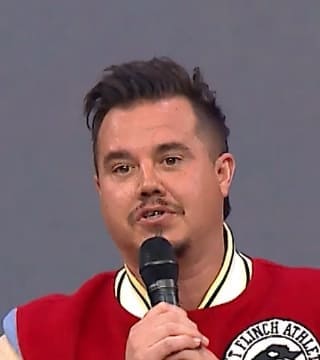
Paul Daugherty - Jesus, Jacob, and The Need of Every Human Heart (12/22/2025)
Summary
This heartfelt sermon dives into the deepest need of every human heart—to be fully known yet fully loved—using Jesus' words in Mark 12:30 about loving God, neighbor, and self, alongside the stories of Jacob and the Samaritan woman at the well. The preacher shows how Jacob's lifelong struggle with identity and self-worth mirrors our own chasing of external fixes that never satisfy, while Jesus offers living water that truly fills the void. Ultimately, accepting God's unconditional love for us exactly as we are frees us to love ourselves rightly and pour that love into others.
Jesus, Jacob, and the Need of Every Human Heart
All right, if you got a Bible, go to Mark Chapter 12. Mark 12, woo, Mark 12 verse 30. I want to welcome our North Victory North Campus, Victory Manford Campus, Victory online campus out there, and I want to title this message «Jesus, Jacob, and the Need of Every Human Heart.» Jesus, Jacob, and the need of every human—that’s the longest sermon title I’ve preached in a while, but you’re going to understand it here hopefully soon.
Jesus was asked by this very smart lawyer, «What must I do to inherit eternal life? What must I do to really walk out a Christian life?» And Jesus said, «You must love the Lord your God with all your heart, soul, mind, and strength.» And then the second commandment he says, «And you must love your neighbor as you love yourself.» No other commandment is greater than these two commandments: love God and love people. That’s the mission of the church.
But notice that Jesus said, «as you love yourself.» In other words, he was saying, «You can’t love people well if you don’t love you well.» You won’t have good relationships out here if you don’t have a good relationship in here.
The Relationship with Yourself
We talk a lot about relationships in the church, and we often focus on all the relationships out here—the marriage relationship, dating relationship, relationship with brothers and sisters, friends, and your relationship with God—but we don’t always talk about your relationship with yourself. Some of you in the room might go, «Well, Paul, that sounds schizophrenic. I don’t really have another person in me I’m friends with.» But how do you talk to yourself? How do you see yourself? How do you think about yourself? When you look in the mirror, what do you say over yourself?
Because Jesus says if you don’t love yourself well, you won’t love your neighbor well. And what the world needs now is love, sweet love. That’s the only thing that there’s just too little of. Our world needs love, and not just any kind of love, but divine love. We need agape love; we need unconditional love. Jesus said, «You will love people the way you love yourself. You will have loving relationships the way that you feel loved by God.»
If we don’t get this right, we won’t get this right. If we feel like God hates us, God’s mad at us, God doesn’t want to see us, God’s angry with us; He’s bipolar—one day He likes us, He’s got a rose up in heaven, and he’s pulling out petals saying, «I love you today,» but the next day saying «I love you not.» No, no, no, God never changes His mind about you. He loves you on your worst day, and He loves you on your best day. He loves you when you’re all together, and He loves you when you are not together at all.
The Woman at Jacob's Well
When you feel like you’re a mess, and I thought about this story in John chapter 4, how Jesus meets this woman at the well. It says, «John 4:6, Jacob’s well was there.» Now Jacob’s well was a well that Jacob had dug thousands of years before this. Jacob was the grandson of Abraham, and Jacob was a man that was a very complicated person. Jacob was someone that dealt with a lot of internal torment over the years in his life, never feeling good enough, never feeling strong enough. We’ll get to that in a moment. But Jesus goes to his well—the famous well of Jacob—and he sits there, tired from a long walk, and he meets this woman there, and he starts talking to this Samaritan woman.
As he’s talking to her, he tells her, «You’ve had five marriages that haven’t worked out. You’ve had wrecked relationships out here, and the guy you’re living with right now—the sixth man—he’s not even your husband.» This woman says, «You must be a prophet. How do you know these things about me?» Jesus is talking to her, and he says, «Why don’t you get me a drink from Jacob’s well?» She says, «Listen, Jacob’s well is the greatest well ever. Why are you, a Jew, asking me, a Samaritan woman, for a drink? Why don’t you get a drink yourself?»
Jesus says, «If you knew who you were talking to, you would ask me for a drink.» Watch what she says in verse 12. She says, «Ask you for a drink? Do you think you’re greater than our ancestor Jacob? Do you think—Jesus, do you think you’re better than Jacob?» Now, Jacob was a very popular person in the Israelite history books. He was someone that they all looked to and they all thought about. She says, «Are you greater than Jacob? He gave us this well and drank from this well himself, as did his sons and his livestock. This well is a great well.»
Jesus says this back to her in verse 13: «This well will leave you thirsty again. Anyone who drinks from this well will never have enough. Not another marriage is going to fill that void. Not another relationship is going to fill that void. Not another drink is going to fill that void. Not another drug, not another website, not another click is going to fill that void.» Jesus was saying, «As long as you keep chasing what you’re trying to fill in here out there, it’ll never be enough.»
It will never be enough. Everybody say, «Never enough.» We live in a world where it’s never enough. Never enough validation. Never enough affirmation. Never enough pleasure. Never enough feelings of excitement. It’s never enough. We got to chase more. We need more. We want to consume more. It’s never enough. But Jesus says, «Anyone who drinks the water that I give them in verse 14 will never be thirsty again. The water that I give him will be a spring of water welling up to eternal life.»
Fully Known and Fully Loved
In other words, Jesus said to this woman, «I’m what you’re looking for. I’m the only one that can fill the void inside you.» The need of every human heart is to be fully known and fully loved. To be fully known—in other words—God knows all the wrecked relationships in your life, and God knows all the ways you wrecked them. God knows all the pain in your life and all the people that caused the pain. God knows all the labels, all the words, all the lies, all the dirty thoughts, all the secret sins—He knows all of it, and He still loves you.
To be fully known—the need of every human heart is the need that Jacob had; it’s the need that this woman had, and it’s the need that Jesus came to fill: to fully know you and to fully love you. Jesus said, «You can’t love others if you don’t love yourself.»
We were sitting with Pastor Bill Johnson in the back room right after he preached last Sunday, and he was tired; we were tired. We were sitting there eating, and in walks our friend Stuart, who’s got this IV set up, and he starts pumping us with vitamins. Pastor Bill is just looking at us with cords hooked up to our arms saying, «What is going on right now? Is this what you guys do every Sunday?»
I’m laughing because we never do this. It’s rare—maybe once every couple of years that someone gives us vitamins. He’s like, «Are these steroids? Is this drugs you’re pumping into your veins?» I said, «No, it’s just vitamins.» He was laughing. By the way, laughter is medicine for the soul. Laughter is medicine.
Our youngest—well, not our youngest, but our middle child, Mac, was sitting with one of our friends here in the church, Ryan Edwards, and they were watching a basketball game. We were all there as a family, but Mac went up in the bleachers to sit next to Ryan.
Mac is just a mighty man of God. I don’t know if he’s in there; yes, he is right there in the front row. Mac is just—he has the wisdom of a full man in a six-year-old body. He sits beside Ryan and goes, «Ryan, did you know that laughter is medicine for the soul?» Ryan was like, «What? You’re six years old; how’d you know this?» You know, pastor’s kids, okay? That’s what we talk about. Ryan goes, «Yeah, that’s true.» He says, «Yeah, the Bible says laughter is medicine for the soul.» Ryan was like, «That’s true, that’s right.» He goes, «And also that means laughter will kill you.» Ryan was like, «What? This just got really dark; what are you talking about?» He goes, «Well, you know how you can overdose by taking too much medicine?»
Ryan was like, «Who knows this at six years old?» He says, «You know how medicine—if you take too much medicine, it’ll kill you?» He goes, «If you laugh too much, it’ll kill you.» You know what I’m saying? So don’t laugh too much. But we were sitting there with Pastor Bill, we were laughing. I started thinking how everybody—ministers, presidents, pastors, fathers, mothers, students, coaches, janitors—whether you work at wherever you work, we all need love. We all need to be filled with love from God. Whether you’re single, divorced, complicated, in a relationship, young or old, the universal need of the human heart is to be fully known and fully loved.
The Complicated Story of Jacob
In Genesis 25, we meet Jacob, and I said he’s a complicated person, but it didn’t start with him; it started with his parents. And it didn’t really start with his parents; it started with his grandparents. But it didn’t just start with his grandparents; it started with his great-grandparents. It’s a complicated family here. Genesis 25:21, Isaac was praying to God saying, «God, please give my wife the ability to have children,» because she was barren; she couldn’t conceive, she couldn’t get pregnant. And so God answers her prayers—be careful what you pray for; God might answer it. Once she gets pregnant, she starts having pain on the inside. Genesis 25:22 says there were two children struggling within her womb with each other; they were fighting each other before they even came out. Talk about a sibling rivalry. Before they even came out, they were already fighting. But watch what she did while the struggle was happening inside. Instead of going to Facebook, instead of going to friends, instead of going to another man, instead of going to somebody else to deal with the conflict in her, she went to the Lord about it. Somebody say, «Go to the Lord about it.»
Too often, we’re going to everybody else to deal with the internal conflict in our soul, and we all have internal conflict in our soul at times. There’s always a wrestling match in the soul—who we want to be and who we really are. The things that we desire and aspire to be, and to receive in our life, and the things that we miss out on—the disappointment of expectations that don’t get met. She’s wrestling with this, but she goes to God, and when you go to God, you’ll get the answer you’re looking for. You’ll get the answer you need—maybe not the answer you’re looking for, but the answer you need. So God speaks to her, and He says—she says, «Why is this happening to me?"—which is funny because I think most pregnant women might say that at some point in the pregnancy. «Why is this happening to me?» Ashley said this, you know, when we were excited.
Once the first child—when she conceived, when she got pregnant, I had something to do with it, and she was, you know, excited. But then the headaches, and the stomach aches, and the throwing up, and all that stuff. «Why?» You know? And I’m just like, «You’re doing great; the glow is beautiful on you.» Then the delivery of the baby—she’s in the hospital and I’m trying not to make eye contact; I’m holding her hand, saying, «You got this!» And she’s like, «Why?» And the baby came, and there is so much joy and excitement with each baby. She says, «Why is this happening to me?»
The Lord said, «The sons in your womb will become two great nations.» From the very beginning, the two nations will be rivals. What we see happening in Israel today—in Gaza, Palestine versus the Jewish people—this started thousands of years ago. Thousands of years ago, the rivalry began. Even before Jacob and Esau, it was Isaac and Ishmael. There was this division, this strife. One nation will be stronger than the other. Your older son will serve your younger son. So God gives Rebecca this prophetic word, and then the babies come out. The first one to come out was full of hair, and she did indeed have twins. So she named the first one that was hairy Esau. Then the second son that was coming was literally grabbing the heel of Esau—Jacob was grabbing his heel.
In other words, he was saying, «Me first! I want what you have! I want to be the oldest!» Firstborn rights were a big deal in Israel. If you were the firstborn, you got the inheritance; you got the legacy; you got the money; you got the cattle; you got it all. Jacob was grasping for what he didn’t get, grasping for what he wasn’t. So Jacob is holding his heel, and they name him Jacob, as he comes out—Jacob, heel grabber. Heel grabber, grasping for what he didn’t have, feeling like he’s not enough.
Esau Sells His Birthright
As the boys grew up—watch this—as the boys grew up, one became a skillful hunter—Esau. He was an outdoorsman; he was all about the outdoors. But Jacob had a quiet temperament, right? He watched Downton Abbey with his mom at home. He would sit and watch Little Women at home. He was a sweet, good mama’s boy. He just loved being with his mama. Isaac loved Esau. They were shaped by who loved them. Isaac loved Esau, and Esau became even more of an outdoorsman. Rebecca loved Jacob, and Jacob became even more of a cook and a sweet man in the house.
One day, when Jacob was cooking some stew, Esau came home, exhausted from being outside and hungry—hungry just like this woman was thirsty at Jacob’s well—hungry for something. «I need something to fix my hunger; I need something to satisfy my thirst.» We are a thirsty world. We are a dehydrated world searching for anything to try to fill the void. «I need something to fix the hunger in me.» So Esau says to Jacob, «Give me some of that soup.» And Jacob says, «Okay, you want the soup? If you want the soup that bad, sell me your firstborn rights. Trade me your identity for my bowl of soup. Trade me.»
And watch this—they both deal with self-hatred. Jacob feels like his identity is not enough: «I want what my older brother has. I need to have it in order to feel blessed, worthy, valuable, secure, good enough.» Esau struggles with his own self-hatred and his identity, too. He goes, «I would rather have a bowl of soup than have my firstborn rights.» In other words, «I don’t value who I am. I don’t think who I am is really that valuable at all.» He says, «Look, I’m dying of starvation; what good is my birthright now? Give me that bowl of soup.»
And Jacob says, «Sign it right here, sign it; swear and tell me that I have your rights,» and he does. He sells his identity for a bowl of soup.
Protect Your Identity
I remember watching the movie The Incredibles, the cartoon movie. There’s this moment where Elastigirl, the mom of The Incredibles, is talking to her daughter, and her daughter is really insecure—like, «I don’t know what to do; I feel like I’m going to make a bad decision; I feel like I’m not going to know what to do.» The bad guys come, and her mom says, «Stop it; your identity is your most valuable possession. Your identity is your most powerful weapon.» That was powerful!
When I’m watching, I was like, «Ooo, that’ll preach!» Her daughter looks at her and says, «What do you mean?» She says, «You are one of us; you are The Incredibles. Your identity is your most powerful possession; who you are is your most valuable possession.» She says, «Well, what will I do when the bad people show up?» She says, «You must protect your identity with all you have. Protect your identity.»
We have an identity crisis in the world right now. People don’t know who they are. I’m thankful for a president that announced we have two genders in our nation right now, and you can hate me for that, but the Bible says there’s only male and female. There are not 79 other genders, and God doesn’t make mistakes. We got to get bold about the Bible again, church. God doesn’t make mistakes; God made you on purpose, for a purpose. We have an identity crisis; people don’t know who they are, and they don’t like who they are. «I wish I was somebody else. I wish I was taller. I wish I was a baller; shot caller.» «I wish I was skinnier. I wish I was prettier. I wish I was handsomer. I wish I had a six-pack. I wish I was stronger. I wish I had a bigger house. I wish I had a nicer car. I wish I was richer. I wish I was more.» «I wish I had what they had.»
We have an identity crisis. «I don’t feel good in my own skin; I don’t feel good in my own clothes.»
A Wardrobe Change Story
Hey, speaking of clothes, my friend Mike Todd showed up two weeks ago, and he’s an awesome friend. He’s another pastor in the city, Transformation Church, and I’m wearing his jacket today and his shoes. Y’all are like, «How did Paul get so fly?» Mike Todd made me fly—Pretty Fly for a White Guy! All right, stop it; get this guy off stage, okay? But Mike showed up, and he was like, «Bro, you’re always wearing skinny jeans and Chelsea boots; let me help you out; I got some outfits for you.»
Mike’s got some cool outfits, and I’m like, «Mike, don’t spend money on clothes; I go to Walmart, the thrift store—like, anything nice you see me wear, I didn’t pay for. If I’m spending money, it’s not on clothes; it’s on food, okay? I like food. I just don’t spend money on clothes. I don’t like spending money; I’m a cheap guy on that.» But he was like, «Let me give you some nice stuff.» He gave me like eight pairs of shoes—this guy is a nice guy! He gave me some jackets and some pants. I was like, «Mike, what are you going to do?» He’s like, «Don’t worry; I got more shoes at home.» I was like, «Okay.»
But he wasn’t trying to change me. You know, the Bible says you should put on a new wardrobe; you should dress yourself in compassion. «Take off that old heavy garment and put on a garment of praise.» So there are a lot of good scriptures that talk about changing your wardrobe, but I also am comfortable in my own skin. I’m comfortable in my own clothes, and I want to show you just a quick video of what happened when he showed up and tried to change my outfit, and Ashley walked in; she didn’t know what was going on. Check this out.
«Oh my God, so the truth of the matter is Paul didn’t have any of y’all’s merch and wasn’t wearing anything because he said it’s not his style.» I said to Paul, «That’s not true. I said you just wear skinny jeans and Chelsea with everything.» I said, «No, is this why you’re here? The wardrobe—I’m going to come out for the panel in this?» «Don’t do that, Paul, because you’re going to play.»
I said, «Like, oh, let’s make fun of the girl who took a risk and put herself out there creatively.» I said, «I’m going to bring some stuff, 'cause I just want to see.» «I don’t know what your body is; I don’t—I’m going to bring some stuff too.» «Does this wardrobe come with a tutorial?» That’s what I’m trying to give him. «Stop it! You can’t even get up, sugar. How’s he going to give up skinnies? You’re messing it up, Paul; you’re no— that’s not it yet! You got to calm down with your energy; we’re trying to find it!» «I’m finding it; this is more of a stretch because it’s cropped! It goes with your haircut!»
«I don’t know if I can rock this!» «You’re doing it wrong now; now Ashley’s trying to make a transition for you!» «All right, all right; you can cut it off!» All right, so I appreciate Mike, but you know what I told him? I said, «I’m comfortable without all this stuff; you know, this is nice. It really is nice.» And I hope you hear what I’m saying: «I’m still going to wear it, okay? I appreciate it, but this doesn’t make me more valuable.»
I think too many people are finding value. I’m not saying he is; I’m saying our world—we find so much of our sense of identity in external things, and we’re searching maybe for a new girlfriend, new boyfriend, bigger house, nicer car, nicer clothes—spending money that we don’t even have to impress people who don’t even like us. And it’s like, «What are we doing? What are we doing?»
And we don’t know who we are; and so Jacob—unfortunately—he gets the birthrights but he still struggles.
Deception for the Blessing
In Genesis 27, his mom says, «Hey Jacob, your dad’s getting ready to bless Esau,» and she says, «If you’re going to get his blessing—'cause God had told Rebecca Jacob’s going to get the blessing—but Rebecca didn’t trust that God would give him the blessing apart from her manipulating.»
We got to be careful, parents, that we’re not trying to manipulate what we think is best for our kids our own way apart from what God has ordained for our children. And so Rebecca tells her son, «You need to dress up like Esau.» You can read it in Genesis 27. I don’t have time to unpack it, but she says, «Go cook a meal, because your dad told Esau to cook a meal. Come back in the house, and I’m going to give you the firstborn blessing; you will get the inheritance.»
So Jacob dresses up like Esau; his mom says, «You’re going to lie; you’re going to lie by deceiving your dad.» «Who you are—you’re going to lie by dressing up as someone that you’re not. You’re going to even put on goat skin hair to look and feel like Esau.» And then she tells him, «When your dad asks who you are, when he asks what your identity is, tell him you’re somebody else because that’s the only way you’re going to get the blessing.»
Can I tell you God won’t bless who you pretend to be; God will only bless who you really are? You might be able to manipulate man’s blessing in your life because Jacob gets man’s blessing, but he lives with torment in his mind for the next 24 years. See, Jacob was—by the way, I used to feel sorry for Jacob. I was like, «Jacob’s not the one that lied; his mom’s the one that told him to do it.» But Jacob was 70 years old at this moment. He was 70 years old, still living at his mom’s house, and his mom was like, «You do what I tell you to do,» and he was like, «Yes, ma’am!»
You know, like, «What, you need to grow up a little bit?» «Fail, you have to launch!» You know what I’m saying? This guy’s got to take some ownership of his life, but he’s still, you know, intimidated, he’s insecure. And I don’t blame him, though. I think his family had a lot of dysfunction: Abraham lied, Isaac lied, Rebecca lied. You know, later on Jacob would lie, and then his father-in-law Laban would lie. There was just a lot of lying, cheating, deceiving, and manipulating going on to try to get what you could get from whoever you could get it from, apart from God’s plan.
I love that God never gives up on all these liars. God never gives up on all of these—it’s true! God never gives up on you! God loves you when you’re good; God loves you when you’re bad. Half of y’all accepted that today; the rest of y’all need to get saved in Jesus' name. Listen, we don’t earn our salvation; we don’t behave our way into heaven; we receive heaven by faith through grace in Jesus Christ. It is when we confess with our mouths and believe in our hearts that we are saved, and God loves you.
Loved People Love People
And here’s what I learned is that even in my own life—and watching Grandr, as I was talking to her the other day at her house, and we were just talking about all of the years of her family and all of the family members—she was the youngest of five and growing up in Louisiana and all of this. I started realizing loved people love people really well. Loved people, say that with me, «Loved people love people really well!» The more loved you are, the more love you can give. The more loved in your identity, the more affirmed and accepted that you are in your identity, the more that you can share love in a consistent way.
An unstable love out here is a result of an unstable love in here. A roller coaster—if I am unstable in my relationships out here—if I am constantly battling worthiness and consistent kindness and consistent love and I’m short-fused and I’m suspicious about everybody and I can’t trust any men, I can’t trust any women, and everybody’s going to let me down, and I have abandonment issues—I got all this stuff—it’s a result of something going on here that’s broken.
I remember reading this book when I was in high school called «Breaking the Approval Addiction» by Joyce Meyer.
In this book, it was one of a hundred books she wrote, but she said when she was younger she was abused by her father—sexually, physically, emotionally, verbally abused. And she said, «I carried that with me everywhere I went. I carried shame.» I carried a chip on my shoulder. By the way, if loved people love people really well, hurt people hurt people really well. Say that with me: «Hurt people hurt people really well.»
It’s not «hurted people,» that’s not proper English; it’s «hurt people hurt people.» Hurt people, loved people love people. She said in her book, «My first marriage was a wreck because I married a man that was much like my father. He was cruel; he was mean, and I wanted to earn his love, and it was all performance-based, and I was never good enough.» And there was abuse in that marriage, and it ended tragically.
And then she said, «My second marriage—which is the one she’s married to now—God will use anybody however He wants to use them. Stop counting people out because they walked through divorce because they walked through something hard, something painful. This is a church where you come as you are; you come through whatever you’ve been through, and God’s going to elevate you and use you any way He wants to.» Joyce said, «My second marriage was hard because I was treating this husband with punishment for what my first husband did, and what my dad did, and I didn’t know how to love him well because I was still hurting from the previous marriage and from my childhood.»
And I carried that hurt and pain with me, and I also never felt worthy. I treated him so bad because I saw myself so bad. We treat people so bad because—by the way, you don’t love people better by hating yourself more. And you take you with you everywhere you go. Wherever you are, there you are—you can’t take a vacation from yourself. If you go to Florida, you’re bringing yourself with you! You can change your house, you can change your spouse, you can change your hair color, you can change everything, but you can’t change you. You go with you everywhere you go.
And if you don’t like you in this current season, you won’t like you in the next season.
The Story of Punchinello
And you go, «Why is this important scripturally?» Because Jesus says you can’t love your neighbor well if you don’t love yourself well. And Jacob and this woman at the well—Samaritan woman—you’re going to keep on chasing something out there that’s going to keep on hurting you in here. It’s not what people do to you.
I remember reading this book by Max Lucado called «You Are Special,» and it was about a young boy named Punchinello. It was kind of like a Pinocchio story; he was a wooden boy, and he lived in a wooden village called Wemmick, with all these wooden boys and girls. And the way that they would show value to each other was they would put stars on all the people that did great things—people that were impressive, skinny, pretty, smart, handsome—some accomplished successful things—they got stars.
And then if you messed up or you weren’t doing that well or you had a bad day, you got a dot. The dot was bad. Well, Punchinello had all these dots on him, because once he made one mistake, he made another mistake. And after a couple of mistakes, it just kept multiplying. And once people saw the dots on him, they just kept placing more dots on him: «Loser, failure, unworthy, unacceptable, not invited to our birthday party.» You know, all these things, and we don’t like Punchinello.
And they just would point at him, Punchinello. But then he met this girl named Lucy. Well, Lucy had no stars, no dots on her. And he says, «How come you’re the only one in the town that has no stars and no dots on you?» She said, «Well, let me tell you about the carpenter who lives on the hill; his name is Eli.» She said, «I found out he’s the one that made us. And when I went to his woodshop, I had all these stars, but I had a few dots too—stars because I was impressive, but some dots that I couldn’t get rid of because there were mistakes I just couldn’t pay for. But when I went to Eli, he not only pulled off the dots; he also pulled off the stars too.»
He was teaching me that their thoughts didn’t make me, so I shouldn’t let their thoughts break me. Their words didn’t shape me, so I shouldn’t let their words break me—that Eli was the one who made me, and my value and my worth and my acceptance was not in the approval of people but was found in the carpenter, Eli himself. And Punchinello said, «Take me to him! Take me to him! I got to see him!» So he goes to Eli and gets all the dots removed. He leaves Eli’s house, and he still is searching for stars.
«I just got to get some stars, 'cause removing the dots wasn’t enough.» He still felt like he wasn’t valuable unless people said he was. So he got a couple of stars, but then it wasn’t enough. He needed more. There’s never enough likes on Instagram, followers, subscribers on YouTube; there’s never going to be enough stuff out here to fill the void in here.
I could walk off this stage, and 10 of you could say, «Paul, great sermon; well done; your dad must be proud of you; Grandr must be proud of you,» and it would mean a lot. But if I don’t believe it myself, your words will only give me a few hours of a high of encouragement and validation before I go back to my own self-image. Self-image is like cruise control. If you’re on the highway and you set your car at 65 miles an hour, you might go over a hill, and it might slow down a little bit, and then you come down that hill, and it speeds up to 72, 73. But after about 20 seconds, it goes back to 65 because that’s what you set it at.
I might come out of an exciting season where there’s a lot of kind words and compliments and encouragement, but you loving me will never be enough to fill the void in my own heart. The brokenness in me can only be filled by me accepting God’s love for me and His validation for me, and this goes for you too.
Jacob's Fear and Wrestling
Jesus was telling the woman at the well because she says, «Are you better than Jacob?» Jesus was saying, «Jacob has you chasing after identity fixes that will never fix your identity. Jacob’s well is just a reminder that he tried to be like his brother because his mom said dress up.»
And Jacob did get the blessing that Esau deserved, but Esau said, «I’m going to kill you for this,» and Jacob’s mom said, «Run for your life!» You know what’s really sad? Jacob’s mom never got to see Jacob again after that because she tried to manipulate the situation. She lost the whole relationship; they never saw each other again. And Jacob would never meet Esau again until the end of his life. In his late 90s, he’d be walking down a road, and word came to him, «Your brother is headed your way with 400 soldiers.» Jacob was overwhelmed because he knew, «This is the day I die.»
He had been running from his brother for 23 years. Jacob had met God, but he had never really met himself. He had been pretending to be someone he wasn’t. He had developed all of this wealth; he had two wives; he had all these camels; he had all this stuff, but it wasn’t enough. He was still tormented by the fear that he had stolen what wasn’t his.
I remember hearing this story about this old statue that sat in Southeast Asia. I was reading this book by Tim Elmore called «Habitudes».
And this book said there was a true story; there was this old statue that was, in the early 1940s, in Southeast Asia, and it had been sitting there for over a hundred years. It was a big rock statue, and it started crumbling. It was about 40 feet tall, and it started getting ugly—a sore sight to the eyes of people that lived in that town, and people would throw their gum on it. They would throw trash on it, saying, «This is such an ugly statue.» Finally, the mayor of that city said, «We’re getting the statue out of here; it looks so ugly; we’re getting it out of the plaza.»
It was right in the center of the town where everybody walked past, and he said, «This is such an ugly statue; it’s such a worthless statue; get it out of here.» So they got big tractors, because this thing was a huge rock statue, they tied chains to it, and they were going to pull it down. As they were pulling it down out of the plaza, the rock started to crumble, and it started to fall to the ground—and inside that old ugly rock statue sat the largest piece of gold in all of Southeast Asia. It was hidden inside of something that looked hideous to everybody else.
The only one who knew the gold that was inside it was the one who put it there in the first place. He had hidden it in there to be a reminder, «No matter what you look like on the outside, no matter what you’ve walked through, no matter what people have said about you, no matter who’s labeled you, no matter what dots people have placed on you, no matter the stars, you are valuable—there is gold inside of you.» Tell that person next to you, «There’s gold inside you.» The only one who knows it the best is your Creator. The only one who’s going to show you how valuable you are is your Creator, is your Maker.
So Jacob is walking down this road about to meet his brother, and he sends gifts ahead of himself to try to pacify the anger of his brother. He’s thinking, «You know, I haven’t talked to him in 23 years. I’ve lived in torment and shame that I stole what was his; maybe I can buy his forgiveness; maybe I can pay for it.» And so he sends gifts ahead of himself, and he tells his servants, he even tells his wife, he tells all of his kids—he says, «You go in front of me.» He thought to himself, «Maybe if Esau is angry, he’ll kill everybody else before he kills me.»
I mean, look at how selfish Jacob is. He’s still self-preserving, yet God still loves him. What a complicated person that God loved Jacob in all the ugliness of Jacob’s heart.
Wrestling with God
This is the desire of every human heart: «My human heart, my human heart. I wish it didn’t run away; I wish it didn’t fall apart. My human heart, night and day—in light or dark—my human heart, at any moment, it could be torn apart.» See, all of us have a human heart that craves to be fully known and fully loved. And Jacob is there—he’s a man; he’s got an ugly heart, if I’m honest. He’s deceiving, he’s selfish, he’s manipulative.
He’s still scheming as a 97-year-old man, still trying to get his way, still trying to protect himself, putting his wife out there in front of himself, hiding behind everybody. But watch this; this is powerful. In verse 24, after he sent everyone in front of him, this left Jacob all alone. That’s where God’s been trying to get you this whole service. God’s been talking to somebody in this room; He is reading your mail. He’s saying you came with your spouse, but I’m trying to get you all alone right now in the room. You forget who’s with you right now. God’s saying, «I’m talking straight to you.»
Jacob was all alone. That’s the best place to be when God wants to talk to you. A man came and began to wrestle with him. We were watching a wrestling movie the other night with our kids, and as I was watching this movie, it was confirming. It was a true story about a young wrestler with the last name Robles. How many of you have heard this story? He—it’s like on Amazon Prime; they made a movie about him, a storybook about him. He has one leg, and he went on to become an NCAA top champion wrestler. He won the championship in NCAA wrestling at Arizona State University, but he grew up with a stepfather who was so abusive and cruel that would hurt his mom and hurt him and hurt his younger six brothers and sisters.
It’s a miracle that he made it! The movie is called «Unstoppable,» and we had to mute it several times because there were some words, so I’m not affirming this movie—don’t be like Pastor and affirm this; it’s got cuss words in it, okay? But the point of the movie was this: this boy, his stepfather says, «You don’t even know who your real dad is. Your mom got pregnant as a teenager; you don’t even know who your real dad is.» And this stepfather would abuse him. He said, «You’re not my kid. I’m just sticking around to try to help you out just for what your mom can give me.»
It was so painful to watch this, but this boy just kept on getting back up—unbreakable, unstoppable. Where does that perseverance come from? You can live with a chip on your shoulder your whole life and be resentful and cynical, but I’m telling you, you’re going to have a rough life because you live with yourself. But if you can learn to forgive even the worst people in your life, you go, «They don’t deserve it, Paul; they were abusive, they were mean, they were hurtful, they were hypocritical, they were hypocrites, Paul!»
«They pretended to be somebody at church, and they were a monster at home!» The only way we’re going to make it is love. The Gospel is not a gospel of hate; it’s a gospel of love. The only way we’re going to make it is to say what Jesus said on the cross: «Forgive them, Father, for they know not what they do.» Somewhere in this boy’s life, he found forgiveness. In fact, his coach asked him, he said, «Are you still angry over what you walked through?» He says, «No, I’m not angry. I’m kind of afraid.» «I’d rather be kind of afraid than be full of hate. I’d rather let the Spirit of God fill my heart with faith when I feel afraid than to carry a heart full of hatred because of what people have done to me.»
He went on to win the championship. But I think about here Jacob; he’s wrestling with God. He’s dealing with all these feelings of shame and sadness and heartbreak, and it says in verse 25, when the man saw that he would not win the match—in other words, Jacob wouldn’t let go—Jacob was a fighter; he was a wrestler. He touched Jacob’s hip and wrenched it out of socket. Jacob would go on with a limp the rest of his life, but the limp was a reminder that God’s grace is sufficient for you.
It’s better to live with a limp, full of grace and a firm identity, than to be standing on two feet strong, prideful, with a very unstable identity. I’d rather live with a limp and really love people and feel loved than have no limp and be a very unstable, broken man. This limp was a blessing. I think the man said, «Let me go, for the dawn is breaking.» But Jacob said, «I won’t let you go unless you bless me.»
I think Jacob knew, «I’ve been blessed, but I’ve never been blessed as me. I’ve always been blessed as somebody else. I want to be blessed as the ugly statue! I want to be blessed as the broken! I want to be blessed in all of my dirt and all of my shame and all of the selfishness.» And the man says, «What is your name? What is your name?» Finally, Jacob says who he is—he says, «I am Jacob.» He says, «Your name will no longer be Jacob,» the man told him. «From now on, you will be called Israel—loved by God, chosen by God, adopted by God—God’s special possession because you have fought with God and you have fought with man and you have won the victory.»
Come on, church! How many of you thankful for the love of God in your life? Some of you have been wrestling your whole life; God says, «I love you. I’m for you; I’m with you.» After this, Jacob meets his brother Esau, and his brother doesn’t kill him; his brother loves him. They hug each other. Jacob was so afraid. And I think Jacob’s reconciliation with his brother was a reward of Jacob’s finally surrendering to God, saying, «God, I want you to bless the real me. Here I am; here are all the pieces of me. God, I want you to fill my heart; I want you to know me and fully love me.»
The God of Jacob
I want to tell you the interesting thing: when you go into Exodus, we’ve been reading the Bible reading plan, and God talks to Moses. This is hundreds of years later in Exodus chapter 3 when Moses says, «Who should I tell them sent me to Egypt to deliver the descendants of Abraham, Isaac, Jacob, and Joseph? Who should I tell them sent me?» God says in Exodus 3:14, «Tell them I am who I am has sent you. Say this to the people of Israel: I am has sent me to you.» And Moses says, «Okay, what does that mean?» God continues, «Say this to the people of Israel: Yahweh, the God of your ancestors, the God of Abraham, the God of Isaac.»
Right here, I’m thinking he’s going to say the God of Israel, because this is hundreds of years later after Jacob, who became Israel, died. But he says, «And the God of Jacob.» I’m the God of who you are on your worst day. I’m the God of who you are when nobody else knows you, but I know you. I’m the God of the painful you. I’m the God of the hurt you. I’m the God of you when you don’t even want to call me God. I’m God in the valleys, and I’m God on the mountaintops. I’m God when you feel like Israel, but I’m also God when you feel like Jacob. I’m God when you feel like you’re a righteous person, but I’m also God when you feel like a scumbag. I’m God when you feel worthy, but I’m also God when you feel rejected. I’m God when you’re accepted by all people, but I’m also God when you feel rejected. I’m God on your best day. Aren’t you thankful God’s with you on the good days and the bad days? Come on, stand on your feet all over this place. Loved people love people really well, and hurt people hurt people really well. The more loved we feel by God, the more love we can give to the people around us. The more we get this right, the more we’ll get this right.
A Story from a Mission Trip
I remember going on a mission trip to Atlanta, Georgia, which is an interesting place to go on a mission trip. We went there to minister to the homeless people for a week, and we were out in the park. I came up to this man who was pushing a Walmart grocery cart in the park, and he had all these books and clothes. He was a homeless man who lived in that park. I said, «Sir, can I talk to you about Jesus?» He says, «Why do you want to talk to me about Jesus? Go talk to somebody else in the park about Jesus.» I said, «I just want to tell you that He loves you.» He said, «Well, go talk to somebody else.» I said, «I just want you to know God loves you.» He said, «I know that.» I said, «You do?» He said, «Yeah, I’m a Christian.» I said, «You are?»
He said, «Yeah, I used to be a really wealthy man, but then I lost everything. I lost my wife; I lost everything, and I ended up on the streets.» I said, «Tell me your story.» He said, «You don’t want to hear my story.» I said, «I do.» So we sat down at this table. He said, «Well, I know I’m here now, but I grew up in Tulsa, Oklahoma.» I said, «What? That’s where I’m from!» He goes, «No, you’re not from Tulsa.» I said, «Yes, I am!» I said, «That’s crazy! We’re here on a mission trip from Tulsa, Oklahoma.» He goes, «No, you’re not.» I said, «Yes, I am.»
He goes, «Let me tell you something. Twelve years ago, when my marriage was still intact, I had a good job. I worked for a bank; I was making good money; I had a suit and tie. I know I look dirty now, but I used to be wealthy back then.» He opens up this Bible and says, «I went to this church called Victory Christian Center.» I said, «What? That’s my church!» He goes, «No way, that’s not your church.» I said, «That’s my church!» He says, «I was at Victory in 1992. We were at the Mabee Center.» I said, «Yes, that’s where we used to have church; we now have it at our main building.» He said, «There was a pastor named Billy Joe Digh.» I said, «That’s my dad!» He goes, «That is not your dad.» I said, «That’s my dad!» He goes, «No way.» I said, «Yes way! That is my dad.»
He pulls out this old, dirty, tattered purple book that says «You Are Valuable» by Billy Joe Digh. He says, «I got this book when your dad preached a sermon called 'You Are Valuable' in 1992. I didn’t need it then because I knew I was valuable; I found my value in my job. I found my identity in how much money I made. I found my identity in the suit and tie that I wore, in the car that I drove. I found my identity in being a married man, in having a good relationship with my kids, and in being an upstanding citizen in Tulsa, Oklahoma.»
He said, «I didn’t really need the book back then; it felt elementary to me. Like, 'Oh, we know this.' Billy Joe says this every year. He’s going to talk about 'You Are Valuable.' But he said I kept that book, not knowing I would need it later on. When I lost my wife, then I lost my relationship with my kids, I lost my job, and I lost my suit and tie. I lost my car and my house.»
He said, «I went back to this book, and I just kept reading: 'You are valuable.' Ephesians 2:10: 'You are a masterpiece created by God for good works before you were even born.' Jeremiah 29:11: 'For I know the plans I have for you, plans to prosper you, to give you hope and a future.' Romans chapter 8: 'Even while you were still sinners, Christ died for you.' He said, 'You know, your dad just outlined scriptures to renew my mind. Even though I’m homeless, I’m valuable.' Man, I just started crying. I was like, 'Yes, this is it! I said you are valuable.'»
He said, 'Will you tell your dad that I still have his book? Twelve years later, I still have his book.' This was in 2005, and I said yes, I’ll tell him. I went back home and told my dad and mom, and I started thinking about how you don’t need this message until you realize you need this message.
Jesus Loves Me—this I Know
Someone asked the most powerful theological doctor of his time in the 1950s, Karl Barth, they said, 'What’s the most profound theological discovery you’ve ever uncovered?' He had written all these books; he was a very famous doctor in theology, studied Hebrew, Greek, and understood the context of Philippians, Hebrews, Romans, and Corinthians. He could tell everybody the information they didn’t know about the Bible. But they said, 'What’s the most profound thing you’ve ever discovered?' He said, 'Yes, Jesus loves me. Yes, Jesus loves me. Yes, Jesus loves me; the Bible tells me so.'
They said, 'Karl, this is milk! This is shallow! This is elementary! We want the meat; we want the substance! Give us something meaty, something deep!' He said, 'Yes, Jesus loves me. Yes, Jesus loves me. Yes, Jesus loves me; the Bible tells me so.' He said it’s the most profound thing that the creator of the cosmos—the creator of the sun, moon, stars, the planets, Venus, Mars—the creator of the Redwood Forest, the most perfect one who has never sinned, the most spotless, sacred, the one who could talk to anybody that He wants—loves me, a scoundrel like me, a wretch like me. Oh, amazing grace, how sweet the sound that saved…
He said that’s incredible. It’s the most profound thing you could find in scripture. It’s not all these things in the Old Testament; it’s the fact that God loves us. Even while we were still sinners, He died for us. He wants to have a relationship with us. Church, He loves you! He loves you! He loves you! He is for you! He is with you! He calls you valuable! He calls you His son! He calls you His daughter! He looks at Gideon and says, «You’re a mighty warrior.» He looks at the stuttering murderer Moses and says, «Moses, my hand is on you.» He looks at David and all of his sin and says, «David, you’re a man after my own heart.» He looks at all of us and says, «I love you, and I’m for you, and I have a plan for you.»
Invitation to the Altar
I want us just to close our eyes across this room. If you need that love, if you need more of God’s love in your heart and your life, I want you to raise your hand all over this room. If God is talking to you today, if He is reading your mail today, if there are some areas in your life that you just need to surrender, you need to let His love wash over your heart today, you need God to help you to love other people better, maybe you need God to help you love yourself better.
Maybe you need to change the way you see yourself, your self-image. Maybe you just need God’s love to wash you of some of the shame, the hurt, the anger, and the abuse. Maybe even the loneliness that you faced in the last year. Maybe you feel like you’ve not had the same relationships you used to have, and it’s been tough. You just need God’s love to fill some of those empty spaces in your heart. Maybe somebody’s moving, and you’re just having a hard time with it, and you just need God’s love to help you. Maybe I’m preaching to myself right now; I’ll come down to this altar too.
But if you need that today, I want you to come and receive it by faith. Leave your seat; come and join me at this altar. If you need His mercy today, if you need His forgiveness today, if you just need God’s love to fill your house, to stop some of the strife, the anger, the pride, the hurt, the jealousy, the comparison, the grasping of the heel, the desire to have what someone else has, the desire to be somebody that you’re not, God says just bring it to the altar. Bring it all to be fully known and to be fully loved. God says I can fulfill that need in your life. We’re just going to sing this song. I know it’s simple, but we’re going to get it deep in our hearts today. Paul says, «I pray that you would be rooted and established deeply in the love of God.» Let’s just sing that.
Go ahead, Lamar. Oh yes, He loves you! He loves you! He loves you! He loves you right now! He loves you right now! Not the future you, not the more improved you, not the better you; He loves you right now! He’s with you; He’s for you! The Bible tells me so. He loves you! I know! Yes, Jesus loves me! He loves you! He loves you! Yes, Jesus loves me! He loves you! He loves you! He loves you! He loves you! Jesus loves me! He loves you! The Bible tells me so! Oh yes, Jesus loves me! He loves you! He loves you! Oh yes, Jesus loves me! Yes, Jesus loves me! Yes, Jesus loves me! The Bible tells me He loves you so much! He loves you! He loves you! He loves the young, and He loves the old! He loves every tribe, every tongue, every ethnicity! He loves you, even with the sin you might have walked in here with! He still loves you! Paul said, «I’m convinced nothing can separate us from the love of God: no power in hell, no power above, no power below.» He loves you! He loves you!
This Wednesday night, I’m going to be preaching at an addiction stronghold rehab center—people that are coming out of all these addictions—and I was talking to the head guy of it, and he said, «Paul, you don’t know this, but you met one of our graduates from this addiction rehab center.» I said, «Tell me again who it was.» He said, «Well, he had been in and out of jail, used to sell meth, he was addicted to meth and he listened to your dad in the '80s. But then his dad died when he was 15, and he just walked away from God, got addicted to all kinds of things. Everything on the outside is just a reflection of what’s going on on the inside. Instead of trying to fix all this out here, we just need to deal with this in here.» But he said in our rehab center what he found was the cure for breaking free from the addiction to all the drugs and everything—even the selling of it and the lifestyle of it—was having a firm identity in the love of God. That love sets the prisoners free. Perfect love casts out all fear. Perfect love begins to break the chains of addiction and stronghold.
God, I pray, Lord, that this would not be a high; that this would literally be like a key unlocking someone from a prison cell. God, that Your word sets the captives free. God, that You came to heal the brokenhearted. I pray for anyone in the room today that’s walking with a broken heart, feeling overwhelmed by the guilt and shame or the anger of someone else’s hurts against them. I pray, God, just for healing today in this place. Healing, God! Forgiveness, mercy, and grace! Lord, let it wash over us. Let Your gospel just wash us. Let Your love just purify us. Let it wash our hearts and minds. God, I thank You that we are loved today by You, that we are accepted by You, that we are forgiven by You. Lord, that we’re adopted into Your family, that You have a calling on our lives. God, that You want to use us to fulfill a great purpose not because we’re so good, but because You’re so good, and Your goodness never fails. God, Your love never gives up.
Paul said in 1 Corinthians 13:1: «One day prophecies will stop, one day speaking in tongues will be stilled, one day everything we see here on earth in ministry will come to an end, but three things will remain: faith, hope, and love. And the greatest of these is love.» So, God, I pray, Lord, that love would be our chief aim, our purpose, God—to show love, to know Your love, to receive Your love so we can share it with others.
Just say this with me: Jesus, thank You for loving me! Thank You for loving me! Thank You for dying on the cross for me! I repent of my sin. I receive Your forgiveness. Thank You, Jesus, for filling my heart with more of Your love! Help me to know Your love, to know who I am, to know who You are. Help me to grow deep in Your love so that I can walk in it towards others. God, I thank You that You never stop loving me and Your love is enough! Your love is enough! I am accepted! I am forgiven! I am loved! I am fully known, and I’m fully forgiven! I am loved! I’m a child of God! In Jesus' name, amen.