
Michael Youssef - I Am the Bread of Life (12/18/2025)
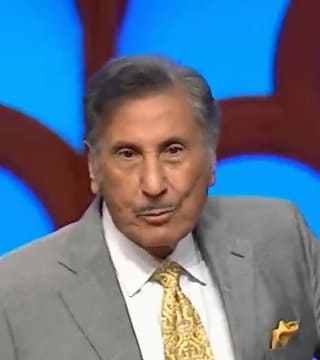
Jesus repeatedly declares "I AM" in John's Gospel, echoing God's name to Moses and claiming exclusive divinity as the Bread of Life in John 6, the only source of eternal sustenance. Unlike physical bread, He alone satisfies spiritual hunger forever, warning against compromise that risks eternity while calling believers to daily feed on Him through His Word.
The Exclusivity of Jesus' "I AM" Claims
Perhaps there are no greater claims and no clearer claims regarding the exclusivity of Jesus as we find in the Gospel of John. In the Gospel according to John, you see it and you read it very clearly over and over again. Jesus repeatedly reminded his Jewish hearers that he is none other than the very one who appeared to Moses at the burning bush, 1600 years earlier than the time of Jesus. More than seven times in the Gospel of John, Jesus said, «I am. I am. I am. I am.»
In the book of Exodus, you remember Moses, who took things into his own hands and thought that he could deliver God’s people from the slavery of Egypt his own way. He made a mess of things and then had to escape and run for his life, literally, in the wilderness. There, he confronts the pre-incarnate Christ in the burning bush. God called him to go back to Egypt and deliver His people from slavery. Moses was so reluctant; he had one excuse after another. Finally, he said to Him, «Okay, I go, I go, I go. Who do I tell them sent me?» God said to him, «Go and tell them I AM sent you.»
Can you say that? Let’s do it together: «Ego.» That is the Greek term for «I am.» This term is the greatest proof of Jesus’s uniqueness and exclusivity. This is what sets Jesus apart. Please listen to me: our greatest need is for the younger generation of church folks. I’m talking about church folks; I’m not talking about atheists and agnostics. I have other messages for them. I’m talking about the younger generation of church folks. It is time for them to be woken up from the great lie and the great deception that they are so easily buying into because of the culture and pressures we live in. Those who buy into this great lie look at it as being loving.
I’ve talked to enough people to know that they see it as accommodating. They don’t want to be offensive, and they want to be inclusive. They don’t want to offend anybody. Listen to me: knowingly or unknowingly, they are risking their eternal life. Please listen to me: compromise in politics may be fine; in relationships, it may be fine. But compromising the truth of the Gospel of Jesus Christ is deadly. When Jesus repeatedly, in the Gospel of John, said «Ego Eimi» (I am), He is warning us not to fall into the trap of this big lie of mixing Him up with all these others. He states that He is Yahweh’s only Messiah, the only God-man, the only God in human form, the only Redeemer and Savior, the only one who can assure us of heaven here on earth. Only the Christian faith has God’s only Son as the central figure and the only figure. And that very exclusivity of Jesus is what causes the arrogant, the self-serving, and the self-sufficient either to reject Him altogether or muddy the waters to the point of no recognition.
Jesus as the Bread of Life
And that’s what we are seeing with our own eyes today in John 6:35, then again in verse 48, and then again in verse 51. And He repeated it throughout the Gospel of John: Ego, or in Hebrew, «Ani,» «I am the bread of life.» I am the only life-giving bread or I am the only bread that can give you life. This term «I am» is the most important description that Jesus gave of Himself. This is the most important testimony that Jesus could give us about who He is. He was not hedging; He was not waffling; He was not accommodating. He says, «I am.» And please, please, please remember this: this is not an honorary title; this is not a symbolic title. «I am» is who He is. It should have rung bells in the ears of the rabbis, the scholars, and the teachers of the law of His day. And believe it or not, it did ring some bells, but the wrong bells in some of those rabbis and religious leaders. In fact, they became so furious with Him that they wanted to kill Him because «Ego» is an exclusive title that only God has. «I am» says that He is not just «I was» because that would make Him only the God of the past. He is not «I will» that would only make Him the God of the future. But because He is «I am,» He is the God of the past, the God of the present, the God of the future, and the God forever.
So turn with me to John chapter 6, please. This claim, «I am the bread of life,» came immediately after Jesus supernaturally, miraculously, and divinely fed 5,000 hungry people with five loaves and two fish. And don’t listen to any preacher, whether in this town or any other town, who says to you that this means they all brought their brown bags with them for lunch and shared it. That is absolutely a lie from the pit of hell. They did not share anything; they had nothing to share. Jesus fed them miraculously, supernaturally, divinely with five loaves and two fish. 5,000 people were fed in this way, and they could see with their own eyes how miraculous and supernatural it was.
Lifting Eyes to Eternal Needs
Beloved, listen to me: I have seen with my own eyes, as I traveled the globe, what hungry people can do. I have seen the desperation and clamoring for food by hungry people. Not only that—desperately hungry people would do anything for food. They would literally bow to anyone who would fill their empty stomachs. And that is precisely why, right after this supernatural miracle, Jesus immediately goes on to claim, «I am the life-giving bread.» What is Jesus doing? Listen carefully. He wanted to lift their eyes upward. He wanted them to shift their focus to their eternal life, their eternal God, and their eternal food. He wanted to elevate their vision beyond their physical needs. He wanted to direct them to what really matters. He wanted them to know and to believe that He is not just a miracle worker. He wanted them to understand that He is far greater than just feeding their stomachs. It is far greater than just meeting their earthly, physical needs. He is the only one who can give them eternal food that gives them eternal life.
As important as bread is for sustaining earthly life, as important as bread is as a staple food, as important as nutrition is for our health, there is a spiritual bread that is far more important. And remember this, and I know it’s so hard for us to comprehend now, and I understand that. Back then, the average person, which was the majority of people, survived all day on one loaf of bread—that’s it. That is all they ate all day; that is all they could get. So when you understand this in a time when we are so obsessed with food and cooking, as important as bread was for their daily living, the spiritual bread that is only found in Jesus is far more important. Without the spiritual bread of Jesus, you will not only die physically but also eternally. Without that spiritual bread, there is no hope of heaven. Without that spiritual bread, eternity would be spent in suffering and pain. Without that bread of life, Jesus, life becomes slow death and eternal agony.
The Crushing Process and the Lord's Table
And so Jesus tells the crowd, «I am.» But there is something else I do not want you to miss before I get to the heart of the message. This claim of being the only eternal life-giving bread did not even make sense to His disciples until after Jesus was crucified, died, buried, and then rose again. Every Israelite at the time of Jesus knew experientially how bread is made. They grew up day in and day out watching how bread is made. And I did too, by the way. Even though I did not live 2,000 years ago, I may appear to some of you, but I have seen how bread is made on a regular basis. These are two stones: there is a bottom stone and a top stone. They pour in the wheat, and the women crush the wheat. Even if it comes out a little coarse, they take it back and push it back in the middle, right in the center of the top stone, and grind it again and again. When it becomes flour, they take that flour and knead it. They beat it, make it into dough, break it, and then put it in a very hot furnace to be cooked.
And beloved, listen to me: that is exactly what the life-giving bread had to go through. This is precisely what Jesus, the bread of life, had to endure until after the crushing of the crucifixion, after the grinding of the crucifixion, and then after the burial and the resurrection, where His disciples could finally comprehend passages like Isaiah 28:28, «Grain must be ground to make bread.» Only then did they understand Isaiah 53:5, «He was bruised for our transgressions; He was crushed for our iniquities.» And that is why every time we celebrate the Lord’s table, we repeat the words of Jesus: «This is my body, which is crushed for you. This is my blood, which is shed for you.»
But guess what? Sadly, the medieval church lacked knowledge of biblical language. They thought that means, every time they participate at the Lord’s table, they’re munching on the flesh of Jesus and drinking the blood of Jesus. Both are forbidden in the Bible, by the way. They are forbidden in Scripture, particularly in the Old Testament. When the Lord was talking about His body being crushed and His blood being shed, it is symbolic language referring to His death on the cross. It’s powerful symbolism, and we don’t take it for granted. We don’t just walk in and eat bread and wine and then walk out. No, we understand what it symbolizes. It’s symbolic nonetheless.
And that is why only those who have placed their whole faith and trust in that crushed body and shed blood as their only hope for eternity should participate at the Lord’s table, because the Lord’s table is only for those who have completely trusted in that crushed body and shed blood as their only hope for eternity. Only they can understand the symbolism of the Lord’s table.
Continuously Feeding on Christ
But there is something also very important about this. Sure, there is a moment when a person comes and says, «I receive Jesus as the only bread of life, as the only giver of eternal life.» But sadly, many people do that and then stop. They stop. That is important; I am not minimizing that at all. But it doesn’t stop there. We must continuously, daily, even moment by moment, feed upon Christ.
Feed upon Christ’s word. Feed upon the living word of God. How do you feed your spirits on a daily basis? I know someone once said to me, «You know, I’m just so busy; I read the Bible on weekends when I have time.» I said, «Don’t give me that.» If you are honest and ask yourself how long you spend watching television or on the phone, don’t tell me you don’t have time. That is a copout. Some of you are offended. Good, because it is a copout. It’s like someone saying, «You know, I just eat on the weekends; I don’t eat all week.» «Oh no, I just read the Bible on the weekend because I don’t have time.»
How do you feed your spirits on a daily basis? By feeding on the word of God, by spending time in the presence of God daily, talking to Him, and listening to Him talk back to us through His word. Jesus said when He was able to defeat Satan during the temptation in the wilderness, in Matthew 4:4, He quoted the Scripture: «Man does not live by bread alone, » referring to physical bread, «but by every word that comes out of the mouth of God.» Jeremiah 15:16 says, «When your word came to me, I ate it.» Again, remember this is metaphorical language. Are you with me? Do you understand? He didn’t literally eat it; he just said, «I ate it.»
Menelik II was the emperor of Ethiopia between 1889 and 1913. 1913 is an important year. Just remember that. When he became aware that Christians should feed upon the word of God, he took that literally—really literally. When Menelik II had headaches or some digestive disorder, what he would do is tear a page or two from the Scripture and eat it—literally chew on it, eat it, and swallow it. In December 1913, the emperor had a stroke but survived it. I’m not surprised with all that paper he consumed! But he survived the stroke, and when he got out, he ordered his servants to feed him the entire books of First and Second Kings. So he ate the pages from both books of First and Second Kings and collapsed and died.
Understand the Scripture! Beloved, when Jesus said, «I am the life-giving bread, » that we would live on every word that comes out of the mouth of God, He was emphasizing the fact that we are utterly and completely dependent on Jesus for salvation, that we are utterly and completely dependent on Jesus for our daily life, that we are utterly and completely dependent on Jesus for thriving in life, and that we are utterly and completely dependent on Jesus for our eternal life.
The True Bread from Heaven
To be sure, people hunger for the truth; we all do. Sure, we hunger for the truth. But the sad thing is that so many people try to satisfy that hunger with other things—poisonous sawdust. But there are some professing Christians who may have received the bread of life; they may have made a commitment to Christ in their teen years or at some other point in their lives, but after that, they cease feeding on the word of God and fill their minds and hearts with false teachings, false teachers, false preaching, and self-help.
Solomon, the wisest man that ever lived, started right; he started well. So many church people start well. The new year comes, and they start well—good resolutions! He started well but then began to consume fake food: lust, idolatry, and ended up in disaster. In John 6:32, Jesus said, «My Father gives you the true bread from heaven.» Did you get that? «My Father gives you true bread.» What is He talking about? He is talking about Himself. He is the one who did not call Himself; He did not just have a vision and start preaching. He was sent by the Father. He is the bread of life that the Father sent, who is given by the Father to make us alive with Him.
Listen to me: Jesus, the bread of life, is not genetically modified bread. Jesus is not bleached flour. He is not empty calories. He is the only food that can save us eternally and sustain us every single day until He takes us all the way home safely. All the way home safely. Psalm 34:8 says, «Taste and see that the Lord is good.» And when you allow the word of God into your mind, it seeps into your heart, into your emotions, into your will. When you allow the word of God into your mental digestive system, according to the Apostle Peter, you become a participant in the divine nature.