
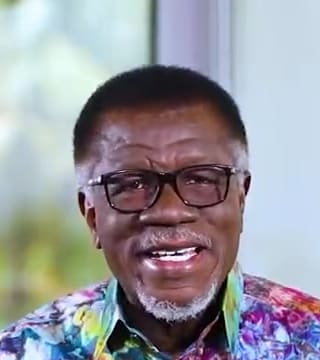
Mensa Otabil - Who Is God (11/09/2025)
Exodus 3:13. Then Moses said to God, «Indeed, when I come to the children of Israel and say to them, 'The God of your fathers has sent me to you, ' and they say to me, 'What is His name? ' what shall I say to them?»
That seems like an unusual question coming from Moses. We think that he should not be asking such a question, but he did ask such a question. When I go back and the people say, «What is the name of the God who sent you?» what am I going to say? Why did Moses have to ask that question? Because Israel has been in Egypt for about 400 years, and this is a long time from the time of Abraham-over 600 years from the time of Abraham.
So, after 400 years in Egypt, they had really forgotten about the God of Abraham, the God of Isaac, and the God of Jacob, and they were really now worshipping the gods of the Egyptians. They remembered that their fathers had a God through a man called Abraham, but they had really lost contact with this God. So Moses is asking this question for several reasons. First, Moses needed to assure himself that he was talking to the right deity. He is very much aware, having lived in the house of Pharaoh, that there are many gods who do supernatural things.
So just because there was a burning bush, and there is a supernatural act, doesn’t mean this is the true God he is talking to. Moses needed to be sure which God he was talking to who was doing these acts. This is a sign for us that just because there’s a supernatural act doesn’t mean this is Jehovah God doing it; we need to test the spirits, and that is what Moses is doing. «Which God am I talking to who is doing these wonderful works?»
For Moses’s own information, he needed to know which God or deity he was relating to. Moses also needed to go back to the Hebrews and show them the difference between this God who wanted to deliver them and the gods of the Egyptians because the gods of the Egyptians were many. There were gods that covered so many areas of life-the heavenly bodies, river bodies, gods that covered metals, gods that covered fire, gods that handled activities like farming, love, and so on. The name of a God determined the jurisdiction of that God and the power of that God.
So if this God that Moses is talking to wants to deliver the people of Israel, what is His name? Because His name will then determine His power, how much scope, and how far can He go. If He goes to meet the many gods of Egypt, will He have what it takes to confront all of them and win? Moses says, «Tell me Your name so I can assure the children of Israel that this God You are dealing with is strong enough to deliver you from whether it is the god of the Nile, the god of flies, the god of the frogs, the god of thunder, the god of hail, or the god of darkness. Is this God strong enough to deal with all of them?»
As God’s messenger, Moses needed to go back with a clear message that the delivering God was superior to the other gods of the Egyptians. So basically, «What’s your name?» is asking, «What kind of God are You? What’s Your power? What’s Your scope? Where are Your limits?» God told him something remarkable. We’ll hear God’s name tomorrow because it tells you the scope of His power.
Let us pray. Say with me, «Heavenly Father, magnify Your name in my situation. Let all the world know that You are God most high. In Jesus' name, amen and amen.»