
Mensa Otabil - Pharaoh's Heart (11/02/2025)
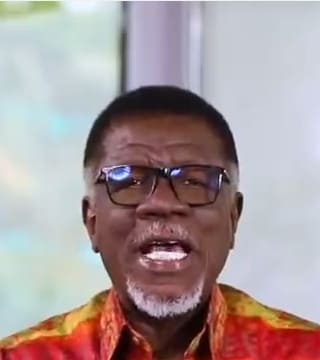
So we are looking at the story of Moses. We’re looking at how he responds to the call; he accepted responsibility and got permission. Now he’s going in the power of the Lord, and God speaks to him further. He says in Exodus chapter 4, verse 21, «And the Lord said to Moses, 'When you go back to Egypt, see that you do all those wonders before Pharaoh, which I have put in your hand. But I will harden his heart so that he will not let the people go.'»
So the Lord gave Moses specific things to do; he gave him some miracles to perform. He was supposed to turn the stick, his rod, into a snake, and the second sign was that his hand would become leprous. Then God gave him a third sign and said the rivers of Egypt would be turned into blood. So these are three things God said he should do. The first two would be done, and then the third one, the turning of the waters to blood, would begin a new series of signs that God would work in Egypt.
Then the Lord spoke to Moses about what He, the Lord, would do if Pharaoh did not yield to the first two signs that would work. He says, «I will harden his heart so that he will not let the people go.» Now this part of verse 21 has been a source of controversy for many people because it seems as if God set up Pharaoh and punished him. He said, «I will harden his heart,» and then He punished him for a hardened heart. Is that what is happening here? The question has been, if God was the one hardening Pharaoh’s heart, why is Pharaoh blamed?
To answer that, you have to read the entirety of Exodus, but I’ll take you back a little to chapter 3, which is the previous chapter, verse 19. This is what God said to Moses: «But I am sure that the king of Egypt will not let you go, no, not even by a mighty hand.» So earlier, God has said to Moses that in spite of all the signs you work, when he sees the rod become a snake and your hand become leprous, he will still not let you go; I know him. God is using foreknowledge; He is not saying that He has hardened Pharaoh’s heart at that time, but He knows how Pharaoh will behave.
So then He speaks in chapter 4 and says when you do these signs, he will not believe, and if he doesn’t believe, then I will further harden his heart. God hardened Pharaoh’s heart because Pharaoh had chosen to harden his heart. He first chose to harden his heart, and then God hardened it. Now why would God do that? If the man has chosen to harden his heart, why doesn’t God soften it? Why does God have to harden it? Well, there is a nature of God that you have to understand. When you read the Psalms, you’ll hear in Psalm 18:25–26, the psalmist says, «To the merciful, you will show yourself merciful; with the blameless man, you will show yourself blameless; with the pure, you show yourself pure; with the devious, you show yourself shrewd.» Our response to God’s call is His response to us. If you are hardened, then He’s going to harden your heart, but if you have a humble heart, then He receives you.
So Pharaoh’s attitude is that which prompts God’s response, and that’s a very important lesson for us. There are times when God gives up on people; He gives up on us because we’ve chosen a forward way, we’ve chosen a wrong way, and He gives up on us. There are many examples of that in the Bible where God gives up on people to have their way: «Do it the way you want; please yourself.» More or less, that’s what He’s saying-"Please yourself.» If you want to harden your heart, please yourself, and woe to you when God tells you to please yourself. It means now He’s left you to your own devices, and you are coming under severe judgment. That, exactly, is what He tells Pharaoh.
May the Lord have mercy on us and keep us from hardening our hearts to the extent that God says, «Please yourself.» That should not be our story. Let’s pray; say with me, «Heavenly Father, help me not to harden my heart against Your will. Give me a humble and teachable spirit. In Jesus' name, amen and amen.»