
Mensa Otabil - A Fresh Assurance (10/31/2025)
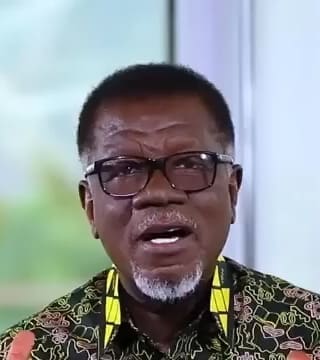
Exodus 4:6 — 7: Furthermore, the Lord said to him, «Now put your hand in your bosom.» So he put his hand in his bosom, and when he took it out, behold, his hand was leprous, like snow. And he said, «Put your hand in your bosom again.» So he put his hand in his bosom again, drew it out of his bosom, and behold, it was restored like his other flesh. God gave Moses further assurance that the Israelites would accept his mission, and he gave him the second sign that he could work before the people. These were signs that he could work almost at will to demonstrate that God had sent him. This second miracle was also a miracle of transformation, just like the first one was, transforming a rod into a snake and turning it back to a rod. This one was also a miracle of transformation, turning a harmless hand into something that was bad or harmful, and then turning it back to its original state.
Now, why did God have to do this? Remember, the rod was in the hand of Moses. The two things that were going to be needed were the rod and the hand. If God transforms the rod, He has to transform the hand that will hold the rod. He is telling Moses, «I’m with the rod, and I’m with your hand. I will transform the rod, and I will transform you.» So, God goes about to show how He will transform the two things, the rod and the hand. That tells us that when God transforms our gift, He also wants to transform us because you are the one who would deploy what you are holding. If no transformation takes place in you, then what you are holding would just be useless. So, the two have to happen at the same time.
Leprosy in the ancient world was a very deadly disease, and it was considered incurable. If you had it, you were thought of as dead. When Moses put his hand in his bosom and his hand became leprous, it’s almost as if he had died. His arm was dead. Can you imagine if Moses had leprosy? How was he going to stand before the Israelites and tell them, «God has sent me,» a leprous man? How could he stand before the Egyptians? But God says, «Yes, he became leprous, and I restored it. I have the power to give life; I have the power to take life.» That’s what God is saying. «I can make and unmake. I can lift and bring down.» It’s a message to Moses, a message to Israel, but it’s also a message to Pharaoh that God has power over him. He can make and unmake him. Later on, throughout the scriptures, you’ll realize that God used not only the rod of Moses but the arm of Moses. The transformed hand and the transformed rod were the tools that God used to deliver Israel from captivity.
So, throughout the Bible, as you read it, you realize that God uses people in remarkable ways. One of the ways in which God uses people is that He takes us, transforms us, and then uses us. So, the part of your life that was a mess, that God transformed, is the part He uses for His glory. So, I don’t know what seems like leprosy in your life. Maybe your hand is still in your bosom, and it’s leprous, and you look at your life and say, «Oh God, I’m a mess. I don’t think I can amount to anything.» God is telling you, «I can change what you have in your bosom. It looks leprous, but I can restore it. I can heal it, and I will use it.» There is a part of your life that seems rotten, but God can use it. There is a part of your life that seems disgraceful, but God can use it if you will surrender it to Him and ask Him to touch your life. He can take that which is destroyed and deploy it for His glory.
I pray that the grace of God will abound toward you, that not only the gifts you have, but you as a person will experience a transformation that will enable you to use the gifts that God has given us. Let’s pray. Say with me: «Heavenly Father, heal me of my fears and afflictions. Transform me with Your power and use me for Your glory. In Jesus' name, amen and amen.»