
Mensa Otabil - The Lord Is My Shepherd (10/23/2025)
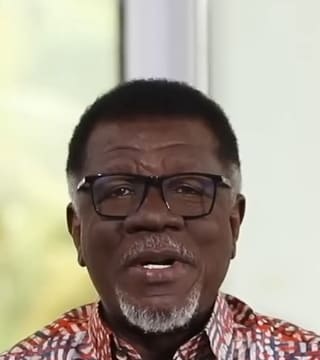
Welcome to a brand new week! This week, we are going back to the Psalms, and we're going to look at Psalm 23, a very popular psalm in the Bible. We start with Psalm 23 and the first verse: "The Lord is my shepherd; I shall not want." For most of us, this is the most well-known psalm, and it is popular because it is personal. The psalm celebrates the relationship that David had with God, the intimacy of their relationship. He draws on his experience as a shepherd and relates it to his relationship with God.
Regarding the background of the psalm, we're not sure when David was inspired to write this psalm, but it seems that he wrote it later in his life. As he looked back at his own struggles, he remembered his days as a shepherd taking care of the sheep. He saw how God had guided him and was guiding him, and so he could really see the Lord doing for him what he had done for his sheep. He starts with the phrase "The Lord," and that's a very important phrase. He could have said, "God is my shepherd," but he said, "The Lord." In the Hebrew language, "The Lord" is the proper name of God; it indicates an intimate relationship with Him.
So, he starts on a note of a personal relationship with God-not just the Supreme Being, not just the Creator of the universe, but the Lord, the one with whom he is in a covenant relationship. That's very important. Many of us know God in general terms as a Creator, the Supreme Being, or whatever we call Him, but we must have a personal and intimate relationship with Him.
David then says, "The Lord is my shepherd." Isn't it amazing? At this time, David is probably king, yet he doesn't say, "The Lord is my king." He says, "The Lord is my shepherd" because he goes to the most basic relationship we have with God-as the one who takes care of us and provides for us. So, he says, "The Lord is my shepherd; the Lord takes care of me just as I take care of my sheep."
For much of David's life, he's always been at the top. When he was young, he was the shepherd of the sheep, and as he grew up, he became the king of a nation. At every point, he was ruling over people; he was the one making decisions for them. However, at this point in his life, he saw himself in a vulnerable sense - he is not the one giving instructions; he is receiving instructions from the Lord. He made himself humble and vulnerable before the Lord.
No matter how high you go in life, no matter how high and mighty you become, you must understand there is a higher and mightier one, and He is the Lord. You have to learn to relate to Him in a very vulnerable way. "The Lord is my shepherd." Based on that, David then makes a bold declaration: "The Lord is my shepherd; I shall not want." I think he remembers how he treated his sheep. He would be the one to take care of their needs. The sheep do not grow grass; the shepherd has to find grass for them. The shepherd has to protect them; the shepherd has to fight for them. He says, "This is how I see my relationship with God. Because he is my shepherd, I have no worry. I have no anxiety." This doesn't mean that everything is perfect in my life, but I trust Him so well that I know He takes care of me.
Today, we can also say, "The Lord is my shepherd; I shall not want." We trust Him, we depend on Him, and He provides for us. Let us pray. Say with me: "Heavenly Father, You are my true Shepherd. I trust in You to take care of every situation in my life. In Jesus' name, amen and amen." Well, I'll catch you again tomorrow. I'm Pastor Mensa Otabil. Shalom, peace, and life to you!