
Mensa Otabil - Who Caused It? (10/19/2025)
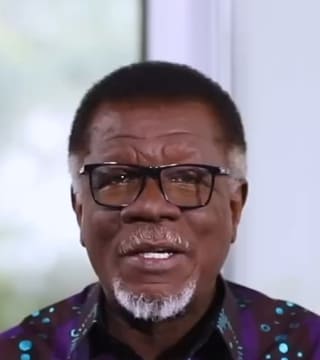
Welcome to a brand new week and to a new study as we look at the life of Jesus Christ and an encounter He had with a blind man. We will be focusing this week on John Chapter 9, and we start with the first two verses. Now as Jesus passed by, He saw a man who was blind from birth, and His disciples asked Him, saying, «Rabbi, who sinned, this man or his parents, that he was born blind?»
Now Jesus used this encounter with this visually impaired person, a blind man, to teach about spiritual blindness and the need for us to open up to God and to His grace. So this miracle is a lesson in action; Jesus is using the miracle to teach a lesson. There are a few things we want to start with as we observe these two verses from John Chapter 9. The first thing I want you to note is the phrase «Jesus passed by.» It seems like a very casual statement that Jesus is just going on His way, and when you read it, it would appear that Jesus doesn’t know what He’s doing. But everything about Jesus was intentional and purposeful.
So, although it may seem like a little stroll or a little walk as He’s moving, the passage doesn’t tell us where He’s moving from or where He’s moving to. He seems to be moving, but there is purpose in this moving. So that’s the first thing I want you to know: that even when we think what He’s doing has no purpose, there is a purpose. There is an intention behind what He’s doing. The second thing I want you to note is that Jesus saw him. In many of the miracles of Jesus, people reach out to Him, but in this particular miracle, the blind person doesn’t reach out to Jesus. Jesus is the one who initiates the recognition; He notices the man is blind.
The man is not calling for help; he’s not praying for help, but Jesus sees him. There are a couple of lessons we can learn from this. You know, because many times we teach that until we ask God for help, He doesn’t help us — that is the general rule. But there are exceptions to that rule. There are times that God helps us even when we’re not looking for help. There are times we pray, and we pray wrongly, and still God answers. There are times we don’t pray at all, and God still reaches out to us.
So Jesus saw him; He took the initiative. He’s moving by, and He saw him. The one I wanted to pay attention to is the question the disciples asked Him: «Who sinned?» The disciples also saw the blind man, and somehow they knew the man had been blind from birth; probably he was a well-known blind man. The question they asked the Lord Jesus is, «Whose problem is it? Is it the man himself or his parents?»
You know, in Jewish society, I believe that when people get into trouble, it’s because they have sinned or God is punishing them or something is wrong. Most of us believe that too, that when something is wrong in somebody’s life, it must be that he is wrong. That is how Job’s friends thought about Job’s life. So they asked Jesus the obvious question: «Whose fault is it?» You know, many times when people get into trouble, instead of helping them, we want to find out whose fault it is. We want to find out the cause of it, as if finding out who caused it will solve the problem-and know how it’s going to heal the man. Whether his father or his mother caused the blindness, it’s not going to help him.
Jesus doesn’t get into that, and we’ll find out tomorrow how Jesus responded to this question. But it is interesting that many times we try to find blame for people’s situations. Just understand that sometimes people go through hardship not because they’ve done anything wrong, but it’s just because something has gone wrong in their life. It is not their cause; it’s not from their parents; it’s just something wrong. So that’s what we learn from Jesus in these opening verses of John Chapter 9.
Let’s pray. Say with me, «Heavenly Father, I know You take notice of me. Thank You that You do not pass me by. In Jesus' name, Amen.»