
Mensa Otabil - Through The Valley of the Shadow of Death (09/27/2025)
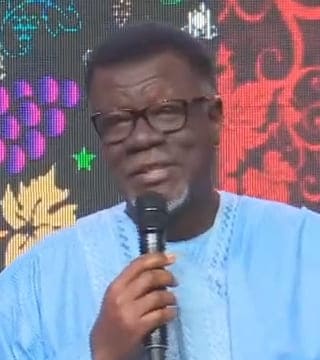
It’s a great joy to have you in church with us today, although church is in your homes and not in this large congregation in this auditorium. It’s interesting to be in the house of God this morning, even as I see more empty chairs than I have ever seen in my years of ministry. But God is a good God, and He is with us. We trust that by the end of our service today, something will touch you, something will change you, and God will speak to you and encourage you. The Word of God will bring life and light to you, and we trust God that your heart will be open as we minister His Word to you today.
It’s been quite an eventful week, an eventful month, and definitely an eventful year. Every day, every hour, our world is changing right before our eyes. We are living in very historic times. When I was a child, the biggest conversation I heard from my parents, uncles, aunties, and people of that generation centered around the Second World War. They talked profoundly about it—the war, how life was, and how it changed them. Before the Second World War, there was the First World War. These two events profoundly and radically changed the twentieth century. Those born in the twenty-first century may have no clue what I’m talking about, but the First and Second World Wars profoundly changed the world and its social structure. They overthrew monarchies and aristocrats and brought the masses into centers of power.
This current epidemic or pandemic could— and I say could, not would—radically transform the twenty-first century, but what kind of transformation, I don’t know. We have seen nations that we thought were on top of their game, who seemed like superpowers, suddenly become very vulnerable and crumble right before our eyes. That is part of the anxiety because those we trusted are collapsing. We have seen people we thought were untouchable being touched. We’ve seen fear in the eyes of leaders of nations—presidents and prime ministers—as they grapple with this level of uncertainty. Maybe this is what will bring their so-called weaker nations into the centers of power, just like the First and Second World Wars brought the vulnerable into power.
So, we don’t know; we are just watching and observing, and this could be a game changer in the dynamics of world power. But I know most of you are not thinking of these things. You are probably more concerned about whether you will live through this pandemic or not, whether your loved ones—your parents, grandparents, siblings, children, and friends—will live through this pandemic. That is what you are thinking about. For many of us in this season, we feel surrounded by death, and it feels as if death is closing in on every side.
It is very fearful to be in a place like this in your life, where there is an enemy you can’t see, and you cannot know whether you’ve contracted it or whether it’s coming for you. We have all become hypersensitive to the functions of our bodies. If someone coughs, we all feel petrified. When there is a cough, you must hold it for a long time; if you get a little headache, you amplify it in your mind. If someone sneezes, we don’t say «God bless you»; that person suddenly becomes the devil, and we want to run away from them. So we live in very fearful times. Everything has become suspicious; everything has become fearful.
So, my message today is titled «Through the Valley of the Shadow of Death.» It focuses on «through,» not «in,» but «through» the valley of the shadow of death. The text is taken from the most beloved psalm—Psalm 23—and I will read the first four verses. I will do the second part next week, but I will focus my message on the fourth verse.
Psalm 23:1-4: «The Lord is my shepherd; I shall not want. He makes me lie down in green pastures; He leads me beside still waters. He restores my soul; He leads me in the paths of righteousness for His name’s sake. Yea, though I walk through the valley of the shadow of death, I will fear no evil, for You are with me; Your rod and Your staff, they comfort me.»
Very powerful words. The Holy Spirit even inspired these words through the experiences of King David. David started out his life as a shepherd and later became a king. His life as a shepherd influenced his understanding of God. He saw God through his experiences. He saw himself first as a sheep in God’s pasture, and when he became a king, he saw himself as a shepherd over Israel. He had what we can call an upward and a downward shepherd experience. Upwardly, God was his shepherd, and he was also a shepherd for those below him. He looked up to God as a shepherd to guide him, and he trusted Him to order his steps.
David’s view of God as shepherd was mirrored by Christ Himself, who called Himself the Good Shepherd and is also described as the Great Shepherd and the Chief Shepherd. David understood danger, both as a shepherd and as a king. Every day of his life, he faced much danger all around him. That is where the psalm imagery comes from: «Even though I walk through the valley of the shadow of death, I will fear no evil.»
The phrase «the valley of the shadow of death» is very interesting. Let me define three important words. The first one is «valley.» A valley is a place of deep depression; it is low. David lived in Judah, a hilly country, and every hilly country has valleys. It was in these valleys that he sometimes took his sheep. Unfortunately, in David’s day, these valleys were rife with thieves and wild animals. So when a shepherd took his sheep through these valleys, they were exposed to danger. The valley represents a place of depression.
The second word is «shadow.» A shadow is a place of darkness and gloom; it necessarily blocks out light. When there is a shadow, light is absent. For there to be a shadow, light must be out of the way. So David talks about a shadow.
The third word is one we all hate: «death.» Death here represents a state of despair and destruction. The shadow of death, therefore, is when you feel the presence of death all around you. When David spoke about the valley of the shadow of death, he was not imagining; he was talking about a real place. It was a place he had taken his sheep through many times, and he himself had been through the valley of the shadow of death many times, both as a shepherd and as a king.
Today, I feel like the days we live in resemble the valley of the shadow of death. It seems as if we are all in a low place; even the most carefree people have become very cautious. Everyone seems to be low; it’s a valley of the shadow of death. Yes, it appears real, because if you lived in Wuhan, China, you would feel as if you are living in the valley of the shadow of death. If you lived in the Lombardy region of Italy at this moment, you would feel like you are living in the valley of the shadow of death. If you live in Spain or Iran, you would feel like you are in the valley of the shadow of death. If you lived at this time in New York— the proverbial Big Apple, the city that never sleeps, where everybody wants to experience peace—if you lived in New York today, you would feel like you are in the valley of the shadow of death.
Of course, if you live in Accra, Ghana, Lagos, Johannesburg, or Dakar, Senegal, or some other African city, you may not feel like you are in the valley of the shadow of death, but you sense it creeping in. We are not sure how it will hit us. For each one of us, we can relate to David’s valley of the shadow of death.
What do you do when you are in that place? How did David behave when he was in that place? There are three statements that David makes in the valley of the shadow of death. I want to bring these statements to your attention because they reflect his attitude when he was in that place, and they can be our attitude when we feel we are in the valley of the shadow of death. If you feel this way in the streets of Accra, Lagos, Johannesburg, or New York, I pray these words will encourage you and lift you to a higher level.
The first statement David makes in the valley of the shadow of death is: «I walk through.» Not «I sit in,» not «I lie in,» not «I stop in,» but «I walk through.» That is my encouragement to you: we are walking through; we are not here to stay in this valley of the shadow of death. We are walking through this valley. It is a process, a transition. The phrase «walk through» means there is an entrance and there is an exit; there is a coming and then a departure. So, yes, it is the valley of the shadow of death, but it is not our burial place. It is not our end; it is not where we will lie down. We are walking through it.
There is an entrance, but there will certainly be an exit. God did not bring us here to die in this valley. Three weeks ago, we thought China would die in the valley, but just last week, we have seen China emerge from the valley of the shadow of death. They didn’t stay there; they walked through, and we will walk through as well. We will come through this valley. We will not stay here; we will not be buried here. We will walk through.
It’s a terrible time; it’s an anxious moment; it’s a fearful moment. It’s a time when you feel like, «Oh God, the world is coming to an end!» May I assure you that the world is not coming to an end? We will walk through the valley of the shadow of death. Don’t settle in the valley of despair. Don’t immerse yourself in fear. Don’t fill your mind with so much fear that something else kills you, aside from this dreaded virus. Don’t let your blood pressure run too high—it’s not good for you at this time. We will walk through the valley of the shadow of death, and that was David’s declaration.
Every morning when he went through the valley of the shadow of death with his sheep, he would tell them, «There may be some lions here, there may be bears here, and there may be thieves here. We will be in danger, but we will walk through this.» When he experienced the valley of the shadow of death as a king, he would wake up and tell himself, «It’s a dreadful morning; it’s a fearful morning, but I’m going to go through it.»
That is what I want to speak to you about this morning: that you will walk through it. If you’re not scared to tell the neighbor next to you, say «We will walk through it.» Of course, I’m not going to ask you to shake someone’s hand and say that, but you can tell yourself, «I will walk through this valley. We will walk through this valley, and we will come out. We’ve entered, but we will exit.»
It’s very important. China has come out of it; Italy will come out of it; Iran will come out of it; Spain will come out of it; the U.S. will come out of it; Ghana will come out of it. We will walk through this valley. It’s a valley, but we will walk through it.
The second statement that David makes, which is very important and I pray will help you, is: «I will fear no evil.» Not only will I walk through, but as I am walking through, I will fear no evil. That is David’s response to danger: «I will fear no evil.» It doesn’t deny evil; it doesn’t say there will be no evil; it doesn’t say there’s no virus. It doesn’t say there’s no danger; it says it is there, but I choose how I respond to it. It accepts the reality of evil but does not succumb to evil.
It acknowledges the reality of danger but does not succumb to danger. Yes, we will sanitize our hands; yes, we will have to keep our social distances; yes, we have to be very careful about surfaces and cleaning them. We must take all those precautions and be diligent about it. But while doing so, we will fear no evil. We will fear no evil, and we won’t allow fear to dominate us. Yes, there is danger; yes, there is trouble; yes, we are uncertain about the future; but David says, «I will fear no evil.»
It is a statement of choice—the choice we make as people to refuse to live in fear. I know it’s very easy to tell someone not to fear when danger is so real and so near. Fear usually presents itself as anxiety, and in this season, we are all in information overdrive. We are reading all kinds of stuff; people are sending things through WhatsApp, emails; people are sharing dreadful pictures—some true, some not—and because we are all anxious, we are consuming so much information.
Fear comes through what you hear and see. As you open your ears and eyes to too much information, you are clogging your mind with fear. Does it mean we should not be informed? No, we should read! But we must choose how much information we consume. Just as there is social distancing, I think there is a need for information distancing. Choose how many articles you read. Decide, «I will read three articles today; I will watch only one news channel to get my information; I will get highlights and that will be all.» For the rest of the time, fill your mind with the Word of God, spend time praying, listen to inspirational music—just allow something else to get inside you instead of being obsessed with information about this dreadful virus.
So, «I will fear no evil» is a choice. I have to choose not to fear evil. We have to choose to live by faith. One moment, we may seem full of faith and very hopeful. Maybe we hear that chloroquine can help the situation, and all of a sudden, we are very hopeful, and everybody has put their faith in chloroquine. That’s a good thing, but what if tomorrow we hear that the chloroquine won’t work? How are we going to handle that?
Don’t swing from one extreme to the other. Just stay focused; you will get through this, and you must choose: «I will fear no evil. I will fear no evil. I will fear no evil.» God keeps us in perfect peace when our minds are stayed on Him. Rest your mind, rest your thinking, and bring your thinking into submission so that fear does not kill you before the virus even comes close.
I will fear no evil. So David, while in the valley of the shadow of death, responds: «I am walking through; I will fear no evil.» But that’s not all; he also makes a very important third statement, which I will conclude with. This third statement is the foundation for the first two statements. The reason he says, «I will walk through,» and «I will not fear» is based on this third statement: «For Thou art with me.»
The Lord is with me. He says, «Thy rod and Thy staff, they comfort me.» Sometimes, when we read the Bible, we read words like «rod,» «staff,» and «shepherd,» and because this was written over three thousand years ago, we may not fully understand the symbolism of these words. The shepherd of David’s time always carried two instruments. They didn’t have guns; they didn’t have repellents—some of the things we have today. They only had the rod, which is a stick, and the staff, which is a stiff stick with a crooked end.
The rod was used to drive away the enemy. So when a fox or some other animal wanted to attack the sheep, the shepherd would use the rod to beat off the animal or scare it away. But there was another instrument—the staff. The staff was not for the enemy; the staff was for the sheep. What the staff did was to guide the sheep, preventing them from getting into trouble.
So there are two things happening: defense from the enemy as well as protection of the sheep. David is saying that God is with him. How does he know God is with him? Because God is keeping the enemy away from him, and He is keeping him away from the enemy. It doesn’t just happen one way. Many times when we’re in such danger, we think, «Oh God, protect us.» Yes, He is able to protect us, but He also wants us not to draw ourselves into danger.
For example, how do we know God is with us? Isn’t it amazing that we are aware there is a virus out there, and we are scared of it? But we now know how to keep ourselves safe. It’s not as if you can imagine the people who lived during 1918 when the Spanish flu struck; they didn’t fully understand everything about how pandemics work or how viruses operate.
When the bubonic plague came or the black death came in medieval times, how did they handle it? They didn’t even know about germs. They didn’t understand the concept of how to avoid infection. Now, we know how to protect ourselves—by rod and staff. There are things we have to do to push away the enemy and to avoid harm.
David says that is what comforts him: that God, in the midst of danger, has given us tools to be protected from destruction and danger. When we hear about flight bans, quarantines, and border closures, it is part of God’s process to keep us safe. The rod and the staff—the virus doesn’t just get people; it doesn’t have that power. It cannot just invade your room or home; it doesn’t just hide in you and destroy you. Thankfully, it has to be brought to you, or you must take it to someone else. Isn’t that amazing?
We know how to stop it! «Thy rod and thy staff.» God says, «If you want to avoid danger, I’m going to provide you with the means to keep danger away, and I’m also going to give you the ability to keep yourself out of harm’s way.» That’s why we are all washing our hands, sanitizing, and keeping social distance. Let’s heed that advice! You know, we can pray as much as we want, but if we ignore the rod and the staff of God’s protection, we will be in danger.
David did not say, «Oh, I won’t fear because You are with me, and that’s it.» God will protect me! I can live dangerously as I wish! No! He said, «Thy rod and thy staff, they comfort me.» God provides the tools to keep the enemy away and to keep me away from the enemy.
Take this time seriously—I don’t know how all of this is going to play out in Ghana. All I can say is that it could come to a critical four weeks—probably three to four weeks of critical importance. We have to do everything we can to allow the rod and staff to work, and if we can do that, we will see what happens when God protects us in the time of danger.
That will be my message for next week—how we experience the comfort from God, the Lord is with me. We are not just saying, «I fear no evil.» We are saying, «God is with me.» In what ways is He with me? His rod and His staff will comfort us.
I want you to note something about the psalm: from verse one, when David says, «The Lord is my shepherd; I shall not want,» and up to verse four, where he says, «I will fear no evil,» God does not take away the evil. He doesn’t. The evil is present, but in the midst of evil, life is still being led.
There is danger, but in the midst of danger, life has been left. We can live wholesome lives, full lives; we can live overcoming lives even in the presence of danger. He is able to keep us safe, and I pray for you and your loved ones that this danger we hear of, even though it’s a valley of the shadow of death, we will only walk through it. May Ghana walk through it; may Africa walk through it; may the world walk through it.
And not only will we walk through it; we will not fear. Fear has torment! We will not fear, and I pray that you will not fear. May God keep your heart; may God keep your mind; may God protect your thoughts; may God surround you with peace—peace for your family, peace for your children, peace for your grandchildren, peace for your grandparents who are vulnerable, peace for the elderly. May God surround us with His presence and give us peace all around, and may God comfort us with His presence.
One thing we can be sure of is that He will never leave us nor forsake us. Even when we don’t believe in Him or care, there are people who don’t care about God; yet God cares about you because He made you. He has a commitment to you. It’s like a father who cares for his child, even if the child decides not to care for him.
You, God cares for you; He loves you; He will protect you, and His rod and His staff will comfort you. I want us to pray for a moment, and I want you to pray that God will help us to go through this. Just pray and ask God, «Lord, help me to go through this. I don’t want to stay in this valley of the shadow of death. I don’t want to die in this place.»
Just talk to Him; He hears you. I want you to pray for your loved ones that they will all go through this valley of the shadow of death. We will emerge a couple of weeks from now; maybe months from now we will come out and be able to hug one another. Help us, Lord, to walk through.
I want you to pray and ask God to keep you away from fear. Fear has to protect your mind. Keep your heart at peace. Talk to Him about your fears, your anxieties, your worries. Fear is very real, and I want you to pray and thank God that He is with you, that He is with me, and that He has given us so much knowledge to deal with this pandemic. We are not ignorant people; we have formed.
May the Lord help us. Father, we thank You for Your Word of assurance to us, for Your word of encouragement—that, Lord, in this present danger, we will walk through this valley. We will enter and exit. We will come and we will go. May You help us to walk through. And, Father, may You keep fear away from us—in our conversations, in our social media postings.
May You help us to overcome fear, and may You, O Lord, help us to know You are with us all the time. I pray this in the matchless name of Jesus Christ, the Son of God, the King of Kings and the Ruler of the Universe. May His peace protect you and guide you throughout this journey, and may He bring us safely out of this valley of the shadow of death. In Jesus' name, Amen and Amen. If God blesses you, why don’t you say Amen to that? Give the Lord a mighty shout and clap, wherever you are, in your home or wherever you are. May the power of God reach out to you and bring life to you.