
Mensa Otabil - This is JESUS (09/27/2025)
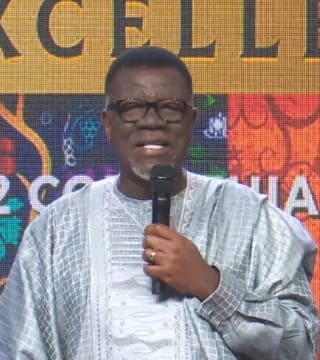
My message is titled «This is Jesus,» and it is an answer to a question that was asked on that first Palm Sunday when Jesus was entering Jerusalem. The crowds were all around him, and people were asking the question, «Who is this?» That is the question we are going to answer: Who is this man who dares to enter Jerusalem at this time? He’s not a king; he’s not a political leader; he’s not a rich man. He doesn’t have much, but he has the audacity to enter Jerusalem. Who is he? The text is from Matthew’s Gospel, chapter 21, verses 9 and 10, and we read these words: «Then the multitudes who went before him and those who followed cried out, saying, 'Hosanna to the Son of David! Blessed is he who comes in the name of the Lord! Hosanna in the highest! '» And when he had come into Jerusalem, all the city was moved, saying, «Who is this?» So the multitude said, «This is Jesus, the prophet from Nazareth of Galilee.» This is Jesus, and that’s my message for today.
The word «Hosanna» is frequently used, even outside of Palm Sunday. People use it either to name a church or to declare something in their lives. It’s a Hebrew word meaning «save now.» Normally, when people said «Hosanna,» they were making an appeal; they were crying out. It was a cry of oppressed people who felt that they were pushed down, people who were disadvantaged. At this time in Israel’s history, they were under Roman occupation. The Roman Empire had occupied Judea and Samaria, and the Jews were not feeling free in their own nation, so they were crying for a deliverer. They believed that the deliverer would be a military captain who would come and throw off the Roman Empire from their necks. So «Hosanna» is a cry of oppressed people everywhere asking for salvation. «Save now!» «Hosanna» is also a cry for quick deliverance; it is not a request for something to happen over a period of time or a process. When the people cried «Hosanna,» they meant, «Save us now! Save now! Not tomorrow, not next year, but save now!»
In the days of Jesus, «Hosanna» meant different things to different people. Those who were crying «Hosanna» felt that Jesus was going to go into Jerusalem and overthrow the Roman governor. Some thought Jesus would change the religious system, while others believed Jesus would heal them. Different people had different expectations when they said «Hosanna.» But the interesting thing to note here is the passage where they said, «Hosanna in the highest.» In other words, they were saying, «Hosanna comes from the highest,» and when they say «the highest,» they meant «the Most High God.» The people understood that Hosanna only comes from God—deliverance only comes from God.
I believe the days of Jesus can be likened to our days. In those days, it was the Roman Empire, but in these days—especially now, in this first quarter of the year, in the last few months—we face an unseen oppressor that is affecting all alike, oppressing the rich and the poor, presidents and common people, different races and age groups. It’s a virus, and all over the world, people are crying «Hosanna.» We may not use the words, but that’s what the world is crying for—"Hosanna! Hosanna! Save us! Deliver us!» But to whom are we crying out «Hosanna»? In the days of Jesus, they cried «Hosanna» to the Son of David. These days, we’re crying «Hosanna» and we don’t know who should deliver us.
Science has failed us. We thought science had advanced so much that it could solve problems with a snap of the fingers, yet here we are, with all our scientific development, unable to deal with a tiny virus in front of us. One reason people are anxious at this time is that we have trusted in science. Hosanna to science! But science doesn’t seem to know what to do. Governments have failed us; we thought governments were powerful—the United States, Russia, China, the United Kingdom, and Germany are supposed to be the rulers of the world; they know how to fix problems, but they can’t. We cannot say «Hosanna» to government. Wealth has failed us; people’s money does not seem to make a difference now. Even the church has failed; we cannot say «Hosanna» to the church because the church cannot save us.
So whom are we crying «Hosanna» to? We must learn from the first story: when they cried «Hosanna,» they did not cry «Hosanna» to Pilate or to Caesar or to the Pharisees or to some powerful system. They cried «Hosanna» to a very unlikely person. His name was Jesus, Jesus, Son of David. Who is he? They said he’s the prophet from Nazareth of Galilee. Remember, when Jesus was introduced, the question was, «Can anything good come out of Nazareth?» The most unlikely personality! He had no government, no money, yet he is the one they cried «Hosanna» to. He is the deliverer. Who is this? They answered, «He is Jesus.»
So the question I want to ask you today, as we remember this major historical occurrence in our Christian lives, is: Who is Jesus to you? Jesus has many titles. The people who cried «Hosanna» referred to Jesus as the Son of David. He is sometimes called the Son of God; he is also called the Son of Man—a paradox. He’s the light of the world, the bread of life; he is the way, the truth, and the life. He’s the Good Shepherd, the bright morning star, the Ancient of Days, the fairest of ten thousand. You can describe him in many ways, but who is this Jesus?
I’m going to discuss Jesus in four main ways. First, he is Lord. When Jesus was going into Jerusalem, he asked his disciples to go to a village, untie two donkeys, and bring them to him for him to ride on. This was a very important journey. Jesus did not go on a horse; he rode a donkey, showing that although he was transporting himself, it was not in majesty—it was in humility. Jesus said to his disciples, «If anyone asks why you are untying these donkeys, tell them that the Lord has need of them.»
Who is Jesus? He is Lord. The Greek word for Lord is «kurios,» which means «he to whom a person or thing belongs.» He is the owner and possessor of everything; he has full control. He is both the creator and ruler of this earth. We think we own it. By now, we should know we do not own it. We think governments own it; they do not own it. A virus is teaching us that. Even the church does not own it. There is only one owner: God Almighty. Jesus is the Son of God; he is both the creator and the ruler. The Bible says all things were made by him, and without him, there is nothing made that is made. He is popularly known as the Lord of lords; his lordship is above all lords.
He was Lord before he was born; he was Lord at birth because kings bowed to him, and prophets recognized him. In his earthly ministry, demons bowed to him. He was Lord even in death; he rose from the dead. He is the possessor and disposer of all things. Who is this? He is Jesus, and he is Lord. He has servants who do his will; he has people who obey him. When we say Jesus is Lord, we are saying he is our owner, and saying Jesus is Lord should not be a mere creed. Truly, when we say Jesus is Lord, it means we will go where he tells us to go and do what he tells us to do. His purposes overrule all arguments; he said to them, «If they ask you who said you should untie the donkeys, tell them the Lord has need of them.» His purposes prevail; no argument or circumstance can overrule the purpose of God for your life—not even a tiny virus that has perplexed everybody. That virus is not Lord; Jesus is Lord. He rules over viruses, destinies, governments, and your life. He receives worship, honor, and adoration.
It’s amazing what happened that day when people spread their clothes on the ground for him to walk on. They saw him as their leader; they submitted to him. Isn’t it amazing? He never ran for elections, never became a big celebrity—he was from Nazareth of Galilee. Those names may not mean much to us, but it’s like someone storming into Accra or New York or London, a major metropolis, bringing the city to a standstill, and everybody asking, «What’s happening?» The answer? «There’s a guy who entered town,» and all traffic is jammed. Where is he from? «He came from a village in the backwaters of our country.» How could a village man, a village carpenter now called a rabbi, bring the world to a standstill? His name is Jesus. He’s the ruler; he’s Lord. He can shut down and he can open; he can bring everything to a standstill, and he can say, «Let there be.»
But that’s not the only thing about Jesus; who is this Jesus? He’s a lot, but he is also a servant, and that’s the paradox about Jesus. He can embody two opposites at the same time. He can be lion and lamb; he can be the beginning and the end. He is both Lord and servant. Jesus is not just one thing; he says, «I am the Alpha and the Omega.» He begins and he ends. We must travel from the beginning to get to the end. He is at both ends at the same time; he doesn’t have to travel the distance—he is there at all times. He is the Alpha and the Omega. What he begins with you, he will end with you, and I declare he will bring you to a good ending. This year will end well for you. He who began with you will Omega you; he will bring you to the end.
He is a servant and a Lord at the same time. He submitted his will to his Father’s will. Jesus was fully aware of what lay ahead of him in Jerusalem. While the people thought it was a party, Jesus knew he was going to be crucified. He knew he would be tortured and betrayed, yet he entered with audacity into that destiny.
Now, how would we behave if we knew we were entering a place and had foreknowledge that, upon entering, we would be killed? Would we go? Would we enter confidently? No reasonable human being would do that. Jesus predicted, «When I go to Jerusalem, I will be betrayed, crucified, and buried, but I will rise again,» and yet he went to Jerusalem because he rules over all circumstances. When his will was subjected to God, he was ready to trust God with his destiny. He left his throne and glory to come to us.
The verse says, «Tell the daughter of Zion, behold, your king is coming to you.» What a powerful statement! He’s a king who comes to us. Normally, we go to the king; we seek the great man. But the passage says, «Your king is coming to you.» Instead of us looking for him, he is looking for us. Instead of us pursuing him, he is pursuing us. When he entered Jerusalem, he was looking for you; he was looking for me. The king was on a search expedition. The king seeks you; he seeks for the lost.
You know, many times when people view sinful individuals, we look at them and speculate, «God will punish you; God will destroy you.» We think God takes pleasure in destroying people, especially people who disagree with us or insult us. Maybe someone unfairly treated you, and your instinct is that, because you feel hurt, God is hurt too. But be careful not to equate your feelings with God’s feelings. God’s mercy towards people is beyond our understanding. His mercy is unimaginable.
Remember, Jesus was crucified, and while they were driving nails into his hands, he prayed, «Father, forgive them, for they do not know what they do.» They knew what they were doing, but Jesus said, «Father, forgive them; they are ignorant.» God’s mercy cannot be measured by our anger and frustration. Just because we feel hurt doesn’t mean God feels hurt. God’s mercy goes unconditionally to the undeserving. He is a king who seeks to redeem his people, not destroy them.
Our «Hosanna» is to Jesus. When he comes seeking, he comes to seek and save that which was lost. Don’t equate your anger with God’s anger. He is the king who comes seeking the lost. Jesus is not only a king; he is also a prophet.
Verse 11 tells us that the multitude said, «This is Jesus, the prophet from Nazareth of Galilee.» He approached his mission in the name of the Lord. Jesus carefully chose all his actions in line with prophecy. Everything he did fulfilled prophecy. His life was lived purposefully. Being a prophet didn’t just mean he revealed secrets; it meant he understood God’s secret purposes and lived to fulfill them. That’s why they called him a prophet—because everything he did was prophetic.
Even going into Jerusalem as he did was in fulfillment of prophecy. He did everything well; he was a prophet. He knew the mind of God, the will of God, and he acted in accordance with it. His birth was prophesied; his life was prophesied; his death was prophesied; and his resurrection was prophesied. Jesus did not live his life to chance, and I pray your life will not be left to chance either. You should live according to God’s predetermined purposes. God’s Word says, «You shall not die, but you shall live to declare his glory.» That is your word; you must live in accordance with that.
He gives us angels charge over us wherever we are. That is God’s promise. He surrounds us with loving-kindness; that’s his assurance to you. Goodness and mercy shall follow you; that is God’s word. When God speaks to you, your work is to align your life accordingly. That is what Jesus did, which is why he was called a prophet. I believe you will live your life prophetically.
Yes, we’ve been surprised by what the world is facing. None of us anticipated this. Anyone who claims to have known was clueless because if they had known, they would have prepared. The fact is, God sometimes hides his purposes from us and later reveals them. But no matter what we didn’t see, we see his word, we see his promises. So, we do our part: we attach our lives to the Word of God and ensure that everything we do aligns with his prophetic word.
You will live, and you will come through this; you will have a testimony because that is what God is saying about you. Jesus is Lord, Jesus is servant, Jesus is a prophet, and finally, Jesus is a savior. Who is this? He is the Savior! «Hosanna! Save us now!» Did he save? Yes, he saves to the uttermost.
He didn’t save them on that day, but a week later, on Good Friday, they spread his arms, nailed him to the cross, crowned him with thorns. Blood oozed from the top of his head to the soles of his feet. He was covered in blood—from head to toe. Jesus was not doing that for himself; he had the power to resist. He did that because that act was a saving act. He was saving mankind from the top of our heads to the soles of our feet. That is why today we can claim him as our Savior. He is our Savior from sin; he is our Savior from sickness; he is our Savior from our own mistakes and fallen nature.
After Jesus had gone through Jerusalem that day, he entered the temple, cleaned it up, and said, «My house shall be called a house of prayer.» The Bible says they brought the blind and lame to him for healing—and he healed them! He is the Savior.
Today, if you want him to save you, he will save you. He will hear your cry—"Hosanna!"—and save you from sin and your own fallenness. He will save you from your mistakes, from the sins you’ve inherited and committed. He will save you from your bad temperament. He is the Savior.
But he doesn’t just save us from sin; he saves us from sickness. The Bible says, «By the stripes he bore on his back, by the whipping he endured, we are healed.» We can claim healing. He saves us from a life of hopelessness. We can look into the future with great promise because he lives, and we live also, and we can face tomorrow.
I present to you Jesus Christ: he is Lord, he is servant, he is prophet, and he is Savior. Two thousand years ago he entered Jerusalem. Today, we welcome him back to the earth, to the nations of the world—from the North Pole to the South Pole, around all the continents. We welcome him into New York, into Italy, into Spain, into Iran, into Germany, into Accra, into Lagos; we welcome him into Harare, Zimbabwe; we welcome him in Johannesburg; we welcome him in Cairo; we welcome him in Senegal; we welcome him in Dhaka. We welcome him to every city that has pain. Jesus, you are welcome! Blessed is he who comes in the name of the Lord!
May you arise and ride into our cities, into our nations, into our families, into our homes, and into our lives. May you bring Hosanna to the world. We mark this day as a day of Hosanna for planet Earth. Redemption will begin to flow in our nations, in our cities, and in our countries. Salvation will flow, deliverance will flow, help will flow, and life will flow.
We speak to the nations of the world: Hosanna to the Son of David, who rides triumphantly to deliver us. I pray you will experience his Hosanna. The Son of David, the King of Kings and the Lord of Lords, will intervene in your life and bring restoration.
We speak over our nation, Ghana, and every other nation. The same Jesus, the same Jesus will enter our cities and bring salvation and deliverance. I want to pray with you before I close my message for today because today is a very profound day. We join our hearts with Christians in all nations; most of them are shut down, locked down, listening to messages like this online. Presidents are doing it, servants are doing it; everybody is unifying.
But I trust that Jesus wants to enter your life. If you don’t know him as your Lord and Savior—maybe you know a church, or you know a pastor, you attend church and you do nice things—you may have gone to church all your life, but Jesus is not the church. Jesus is bigger than the church. It is not about how many times you’ve been to church or how much offering you give.
Jesus is the Son of God, and he must be in your heart. Is he there? If he is not, why don’t you invite him? Bow your heads wherever you are, and I’ll lead us in a very simple prayer. If you truly want Jesus in your heart, then pray this prayer with all sincerity. Stay with me:
«Heavenly Father, I come to you today just as I am. I am a sinner; I cannot save myself. I ask you, Father, have mercy on me. Save me, save me, save me! Jesus, Son of God, save me. Have mercy on me. Forgive me of my sins; wash away my sins. Come into my heart; live in my heart. Be my Lord and my Savior from today. I boldly proclaim Jesus is Lord, and he lives in my heart. Thank you, Father, for hearing my prayer. In Jesus' name, Amen.»
If you prayed that prayer sincerely, I believe God heard you. I believe that a new journey is about to begin in your life, and the same Jesus who two thousand years ago rode triumphantly into Jerusalem will enter your life and change it forever.