
Louie Giglio - Alarmed, Determined (12/13/2025)
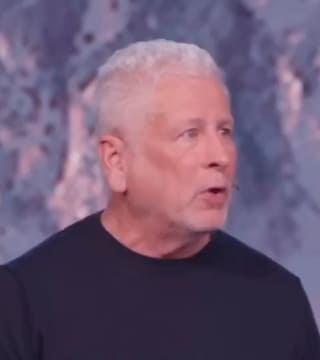
Louie Giglio draws from the historical account in 2 Chronicles 20 where King Jehoshaphat, facing a vast invading army, felt alarmed and desperate but resolved to inquire of the Lord, fasted, fixed his eyes on God, and led the people in worship—resulting in God fighting the battle for them and turning the place into the Valley of Blessing. The core message is that in desperate times, we should be alarmed yet quickly turn to God in prayer and faith, put praise first, and trust Him to fight for us without needing unwise alliances.
Introduction to Jehoshaphat's Desperation
I want to take us to a desperate man who could have been anybody, but today it’s a man named Jehoshaphat. We’ve preached about him a lot at Passion City Church, and if you’ve been around church, you’ve heard his story before. There’s a lot of desperation in this moment, and I want us to capture some principles from it so that if you’re in a place where you feel desperate, you’ll know what to do. If you’re in a circumstance or a situation where you feel what Jehoshaphat felt and what the people of Judah felt, you’ll know what to do because you’ve seen God come through for someone.
God didn’t put Jehoshaphat’s story in Scripture just for our entertainment, information, or education. He put it there so that we could learn from this story so that when we’re in desperate times, we’ll know what to do. I have some points today, but the talk isn’t just me saying, “Okay, here’s what you do. Do A, then do B, and do C.” It really flows from what we’re going to read today. So take some notes; take your phone out and jot some things down as God highlights them for you because it’s really beautiful to see what happens. Jehoshaphat was in a position that a lot of us find ourselves in. He was in a place where things were coming against him that were bigger than his ability to solve.
This is all happening, by the way, in about 850 BC, and where we’re going to pick up in 2 Chronicles 20, if you have Scripture, is in the city of Jerusalem. So, can we just frame all this historically? This isn’t just a Bible story; this is a historical story. This is the king of Judah, Jehoshaphat, in Jerusalem in 850 BC.
The Threat and Initial Response
As we open up in chapter 1, it says this — in verse one, it states, “After this, the Moabites and Ammonites,” and we have a lot of “-ites” and names in here today. Don’t lose the plot because of them. “And some of the Meunites came to wage war against Jehoshaphat.”
Some people came and told Jehoshaphat, “A vast army is coming against you from Edom, from the other side of the Dead Sea. It is already in Hazazon Tamar, that is, in Engedi.” Alarmed, Jehoshaphat resolved to inquire of the Lord, and he proclaimed a fast for all Judah. That’s a posture, a position. That’s what we talked about last week. Prayer is a posture more than it is formulating some sentences that we say to God. It’s truly a posture of the heart and our lives.
Background on Jehoshaphat
Now, who is this guy Jehoshaphat? Let me just take us back for a second so that we can know who he is before we jump into the story. So, let’s go back a few chapters. In chapter 17, Jehoshaphat, his son, talking about Asa, succeeded him as king and strengthened himself against Israel. He stationed troops in all the fortified cities of Judah and put garrisons in Judah and in the towns of Ephraim that his father Asa had captured. The Lord was with Jehoshaphat because he followed the ways of his father David before him. His great-great-great-great-grandfather, I think I got the greats right, was David and then Solomon, and then his great-grandfather, then his grandfather, and finally Asa, his father.
So, he’s in a lineage of people who have sought the heart of God. He did not consult the Baals or the false gods, but sought the God of his father and followed his commands rather than the practices of Israel. The Lord established the kingdom under his control, and all Judah brought gifts to Jehoshaphat so that he had great wealth and honor. His heart was devoted to the ways of the Lord. Furthermore, he removed the high places and the Asherah poles from Judah. Then when you fast-forward to chapter 18, it says, “Now Jehoshaphat had great wealth and honor.” We just saw that. He allied himself with Ahab by marriage.
Now, Ahab was the king of Israel, and Jehoshaphat was the king of Judah. Ahab was the worst; he was married to Jezebel. If you remember, he’s the one who came against Elijah on Mount Carmel and all of his prophets. Ahab was a wicked man who worshiped Baal and the Asherah and other idols and false gods. But now this man, who followed God and loved God and wanted to follow in the ways of his dad, made an alliance with Ahab through marriage. Why? He just wanted to strengthen himself. So we see now if you read chapter 18, a battle ensues. Ahab draws Jehoshaphat into it because of this alliance.
They went out to war against the word of God, which came through one prophet while hundreds of false prophets said, “You should go.” Ahab said, “Go put him in jail and only give him bread and water until I get home safely.” The prophet looks at Ahab and says, “Yeah, you’re not coming home safely.” But they went into battle, and Ahab was killed. They came after Jehoshaphat in battle, but he was spared by God. When Jehoshaphat, king of Judah, returned safely to his palace in Jerusalem, Jehu the seer, the son of Hanani, went out to meet him and said to the king, “Should you help the wicked and love those who hate the Lord? Because of this, the wrath of the Lord is on you. You are favored.” We will even see later that God is with you. However, there is some good in you, for you have rid the land of the Asherah poles and have set your heart on seeking God.”
I am backing up so you can know who Jehoshaphat is. He’s not a perfect guy; he didn’t get it all right. But he does have a heart after God. It isn’t the main message today, but it seemed obvious to me when reading this text. Looking back at Asa, his father, the pattern of these kings, even those who loved God, was to shore up their ranks by making alliances with people who were not for God.
As I was preparing, I kept wondering, is there someone in the gathering today that there’s a little side message for you? Don’t make that alliance. Is there someone about to propose to someone who’s not of God? Don’t do it. Is there someone about to go down an aisle with someone who’s not of the ways of God? Don’t go down the aisle. Don’t make that alliance. Is there someone saying, “I don’t know. I know these people aren’t the right ones to get into this deal with, but we need them.” Don’t. This is what we will see today. The underlying message of Jehoshaphat in 2 Chronicles 20 is that God will come through for you. Don’t make an alliance with a wicked king.
Jehoshaphat's Prayer
Here’s the story: a vast army is coming. They’re already at the Dead Sea and in Engedi. Look at verse 3. Alarmed, Jehoshaphat resolved to inquire of the Lord, and he proclaimed a fast for all Judah. Let’s read the whole chapter. The people of Judah came together to seek help from the Lord. Indeed, they came from every town in Judah to seek Him. Then Jehoshaphat stood up in the assembly of Judah and Jerusalem at the temple of the Lord in front of the new courtyard and said — here comes his prayer — “Lord, the God of our ancestors, are you not the God who is in heaven? You rule over all the kingdoms of the nations. Power and might are in your hand, and no one can withstand you.” I’m telling you, that is an opening line that pleases the heart of God. When you put that as the preamble to whatever the rest of your prayer is, not only are you positioning your mind with right thinking and really good theology; you’re getting the attention of heaven.
“Our God, did you not drive out the inhabitants of this land before your people Israel and give it forever to the descendants of Abraham, your friend?” He’s just recalling the moment when Joshua brought the people across the Jordan River, and God led them in to possess this promised land. They’ve lived in it and built a sanctuary for your name, saying, “If calamity comes upon us, whether the sword of judgment, plague, or famine, we will stand in your presence before this temple that bears your name and will cry out to you in our distress. When we are desperate, we will cry out to you, and you will hear us and save us.”
But now, let’s recap. I know you already know, but let me just recap for you really quickly. Here are men from Ammon, Moab, and Mount Seir whose territory you would not allow Israel to invade when they came from Egypt. In other words, God said, “Leave these people alone.” So, they turned away from them and did not destroy them. But as a result, see how they are repaying us by coming to drive us out of the possession you gave us as an inheritance. Our God, will you not judge them? For we have no power to face this vast army that is attacking us.”
Have you ever felt like that was your prayer? “God, I don’t know if I’ve got what it takes to withstand this news coming at me.” “We do not know what to do, but our eyes are on you.” Can we just read that out loud together? “We do not know what to do, but our eyes are on you.” Let’s read it again. “We do not know what to do, but our eyes are on you.” All the men of Judah, along with their wives, children, and little ones, stood there before the Lord.
God's Response and Victory
Then the Spirit of the Lord came on Jahaziel, who let’s just skip down, was a descendant of Asaph, and he stood in the assembly and said, “Listen, King Jehoshaphat and all who live in Judah and Jerusalem, this is what the Lord says to you: Do not be afraid or discouraged because of this vast army, for the battle is not yours but God’s. Amen. Tomorrow, march down against them. They will be climbing up by the pass of Ziz, and you’ll find them at the edge of the gorge in the desert of Jeruel. You will not have to fight this battle. Take up your positions, stand firm, and see the deliverance the Lord will give you, Judah and Jerusalem. Do not be afraid and do not be discouraged. Go out to face them tomorrow, and the Lord will be with you. Amen.”
Jehoshaphat bowed down with his face to the ground, and all the people of Judah and Jerusalem fell down in worship before the Lord. They were desperate. Some Levites from the Kohathites and the Korahites stood up and praised the Lord, the God of Israel, with very loud voices. Early in the morning, they left for the desert of Tekoa. As they set out, Jehoshaphat stood and said, “Listen to me, Judah.” He’s just repeating what he’s already heard from the prophet. “Listen to me, Judah and people of Jerusalem. Have faith in the Lord your God.” When the armies are coming, have faith. When you are alarmed, have faith. When you’re concerned, have faith. When you’re afraid, have faith. “Have faith in the Lord your God, and you will be upheld. Have faith in His prophets, and you will be successful.”
After consulting the people, Jehoshaphat appointed men to sing to the Lord and to praise him for the splendor of his holiness. As they went out at the head of the army, saying, “Give thanks to the Lord, for His love endures forever.” Now, we’ve talked about this a lot here, but what a picture. Do you see this? We have three armies banding together, crossing into our land, seeking to destroy us. We have a word from God. We’re going to see the salvation of God. We don’t have to fight; God is going to fight for us. And we’re going to believe that by putting the worship team in front of our army. Christian Mel, guys, if you can, Brett, if you can step to the front, and Kenny, can you step forward? Ched, can you? Yes, guys, please go up to the front. What are we going to sing? You’re thinking they’re going to sing, “We’ve heard from God, and you are doomed.” No, they’re going to go singing, “Give thanks to the Lord. His love endures forever.” We have hostile forces approaching. “Give thanks to the Lord. His love endures forever.” Amen.
As they began to sing and praise, the Lord set ambushes against the men of Ammon, Moab, and Mount Seir, who were invading Judah, and they were defeated. The Ammonites and the Moabites rose up against the men of Mount Seir to destroy and annihilate them. In other words, they got all confused. After they finished slaughtering the men from Seir, they helped destroy one another. When the men of Judah came to the place that overlooks the desert and looked toward the vast army, they saw only dead bodies lying on the ground; no one had escaped.
So Jehoshaphat and his men went to carry off their plunder, and they found among them a great amount of equipment, clothing, and also articles of value, more than they could take away. There was so much plunder that it took three days to collect it. On the fourth day, they assembled in the Valley of Barakah, which means blessing or thank you, God, gratitude, where they praised the Lord. That’s why it’s called the Valley of Barakah to this day. Don’t you love when some things just make sense? Then, led by Jehoshaphat, all the men of Judah and Jerusalem returned joyfully to Jerusalem, for the Lord had given them cause to rejoice over their enemies. They entered Jerusalem and went to the temple of the Lord with harps, lyres, and trumpets. This was a celebration.
Look what happened next: The fear of God came on all the surrounding kingdoms when they heard how the Lord had fought against the enemies of Israel, and the kingdom of Jehoshaphat was at peace. For God had given them rest on every side. They didn’t need an alliance with some wicked king to have rest on every side. And God got all the glory.
Principles for Desperate Times
I’m observing a few things. Number one, Jehoshaphat was rightfully alarmed. If we go back to verse 3, when he heard the news, he was alarmed. When you hear the news, don’t go, “That doesn’t affect me. I’m not bothered by that.” When you hear the news, you should be concerned. You should be alarmed. You should go, “What? Can you say that again?” He was alarmed, and it’s okay as a human being following God and trusting in God and believing in God to be alarmed. But his desperate concern was different than what often happens in our lives where, when the armies are coming, it’s not just a desperate concern; we quickly capitulate into fear and dread. “Oh my gosh! Oh my word! I don’t know how this is going to work out. Where’s God? What’s happening?”
What God is saying today is to be alarmed. Look at how Jehoshaphat’s alarm is really quickly followed by a determined action. Thank you, Lord, for this very determined comma. Alarmed, Jehoshaphat resolved to inquire of the Lord. As soon as he was desperately concerned, his instant reaction was, “I’ve got to find God. I’ve got to seek God. I’ve got to hear from God.” How do you hear from God? You proclaim a fast for all of Judah—this is backward thinking, by the way. This is what we talked about last week. This is why we know that we don’t fight with the weapons the world fights with. Because no worldly army hearing that three armies are coming would declare a fast. “I know, let’s not eat for a minute and get weak!” But Jehoshaphat wasn’t thinking like humans think; he was thinking like a follower of God thinks. He proclaimed a fast, and all the people came together to seek help from the Lord.
When we’re alarmed, resolve to inquire of God and create a window of time in your life where you can hear from God. Then he called on heaven. I would encourage you, if you memorize Scripture, to memorize this prayer and get it into the fabric of your life, into your mind, into your thinking, and into your spirit. So when the alarm bell comes, you’ll have already woven into your spiritual DNA a blueprint for a way forward. He called on God, and he says in verse 12, “For we have no power to face this vast army.” That’s desperation. Desperation comes from the word hopeless. In other words, it’s saying, “I don’t know.”
For us, the connotation for a believer in an almighty sovereign God is a little different than that of a human being saying, “We’re desperate,” meaning, “We’ve lost all hope.” No. We’re desperate, meaning we don’t see, in our own strength, any hope here. Fortunately, that’s not all we have. We have His strength. So this is what Jehoshaphat is saying: “We have no power to face this vast army that is attacking us. We do not know what to do, but our eyes are on you.” To which I say, “Jehoshaphat, no, you did know what to do.” I understand what you’re saying; I get the context of what you’re talking about. You’re saying that in your own strength, power, and ability, you don’t know what to do. But you do know because you inquired of God. You called a fast. You called on heaven, and you got the attention of the Almighty and fixed your gaze on Him. You knew what to do!
So, what to do is that, “Lord, we’ve got this incredible circumstance happening around us, and we don’t know what to do.” That’s not where we end. We say, “God, we don’t have what it takes. We don’t have the answer. We don’t have the resource. We don’t know, God. But we’re going to lock our gaze on you. We’re going to fix our eyes on you.” What a prayer! A few chapters before, when his father Asa was in another one of these situations, he made an alliance with another wicked king and had a prophet come to him, Hanani the seer. Remember, it was his son who came to Jehoshaphat in Jerusalem.
The seer came to Asa, king of Judah, and said to him, “Because you relied on the king of Aram and not on the Lord your God, the king, the army of the king of Aram has escaped from your hand.” He goes on to explain a little bit of all this context and says, “Yet when you relied on the Lord, He delivered them into your hand. For the eyes — do you know this verse? For the eyes of the Lord range throughout the earth.” Growing up, the translation we were reading said, “the eyes of the Lord roam throughout the earth.” What is He looking for? The eyes of the Lord range throughout the earth to strengthen those whose hearts are fully committed to Him.
Interesting that that verse was a prophecy given to Jehoshaphat’s dad. Now we see Jehoshaphat living out what it means to say to God, “Are you not the God of heaven? Do you not rule over all the nations? Can anyone withstand your purposes and your plans? Our eyes are fixed on You.” I know that in that moment, the eyes of the Lord roaming throughout the whole earth locked onto Jehoshaphat, and God said, “I am happy to show myself strong on behalf of this man and these people, all of Judah and all of Jerusalem, gathered in this moment because their eyes are fixed on Me.” He knew what to do. He was alarmed, but he inquired. He was alarmed, but he stopped. He was alarmed, but he called on heaven.
When he called on heaven, he didn’t offer solutions; he just said, “You’re a sovereign God.” Sometimes, when we’re alarmed, we’re like, “God, do you see what’s happening here? You’re going to need to do A, B, C, and D,” instead of just going, “God, I know you see what’s happening, and I don’t have solutions. I just know that you’re a sovereign God, and I put all my hope and all my trust in You.” And heaven answered. Heaven answered and said, “God’s going to fight for you.” I want to say that to you today: God is going to fight for you. If you’re putting your trust in Him, He’s going to fight for you. In fact, He is fighting for you. You’re going to sleep tonight. He’s going to fight for you tonight.
When you run out of your energy, He’s going to keep fighting for you. You’re going to reach a moment where you think, “I don’t have any more solutions.” And God’s going to say, “I’m still fighting.” You’ll say, “I can’t see you fighting,” and He’ll respond, “I know, but trust me, I’m fighting and I’m working. I’m on the case, and I am on the side of right. I am on the side of truth and justice. I love you, and I’m for you. I gave my life for you. I’m with you, your purpose, your plan, your destiny. I’m still on board with that. I’m fighting for you.”
To be able to lay down and say, “God, I can’t fight anymore, but thank you that you’re fighting for me. I don’t see how it’s working out, but thank you that you are fighting for me.” For somebody to say, “How are you doing?” you could say, “I don’t know, but I have this weird peace over my life because I believe God Almighty is fighting on my behalf.” “Well, how do you see that happening?” I don’t know, but I believe it. I have a great role model in this king from Judah back in 850 BC, and I’m trying to track along because God showed me how to walk in faith and not by sight.
The armies were still coming; they were still organized and apparently had a lot of heavy equipment with them. The prophet said, “You’re not going to have to fight.” When he said it, Jehoshaphat put his face to the ground. How can you put your face on the ground when armies are coming, and you’re not looking around? That’s trust. That’s trust; that’s having blinders on to everything else and going, “I just want to focus totally on the sovereign God who told me he’s going to fight for us, and we’re going to go, but he’s going to fight. We’re showing up in the morning, but he’s going to fight. We’re coming to the battle, but he’s going to fight.”
Replacing Fear with Faith and Naming Places of Blessing
A few more things, and we’re done. They replaced fear with faith. Sometimes we try to replace fear with either masking it by whatever it is that we go to for comfort or by trying to muster up some internal courage bigger than what we’re facing. The antidote to fear isn’t masking it by going to our addictions or whatever other thing of comfort we go to when we’re afraid. The antidote to fear is also not trying to muster up courage. The antidote to fear is faith — believing God. We saw that in the text. “Do not be afraid. Do not be discouraged.” Why? Because God has spoken, and in faith, we move.
In Psalm 56:3, David said, “When I am afraid, I put my trust in you.” Not, “When I’m afraid, I bulk up.” When I am afraid, I put my trust in you. Is anything making you afraid today? Put your trust in God. Their faith became sight, and they named the place the Valley of Blessing. Has anybody ever been through the Valley of Blessing before? Has anybody ever gone out to fight, and the Lord fought for you? Just checking. Has anybody been at the point of saying, “I don’t know,” and then God came through? Amen. Wherever that is, if you can go to that memory right now, whether it was a doctor’s office, a meeting, an arbitration, or you were at home and alone and got a phone call, if you can remember that moment, name it. That is your garage of blessing and thanksgiving because that’s where we got the call that God came through.
We have a three-car garage at our house. One on the left is called the garage of Barakah; the one on the right is the one where we got the call that God came through. That’s the one I backed out of at 4:45 in the morning on the morning my mom died to head to the hospital. I backed out of the Bay of Barakah. See, we don’t name our places, and we should. I had a cubicle up there; I don’t work there anymore, but when I drive by that building, I always think of that little cubicle at the end of the corridor by the copy machine where I used to work. That’s my cubicle of Barakah. That’s where I got the email that God came through.
We don’t name our places, and then we forget what He has done. When we’re alarmed, we don’t inquire of the Lord; we panic because we didn’t remember to name our places. If we named our places, almost every week of our lives, we would go somewhere significant. “That’s the Burger King of Barakah!” Please don’t tear it down. They’re taking down the Burger King of Barakah! I’ll have to now know that the condo built on top of that Burger King is the condo of Barakah because that’s where we were in the drive-thru when we got word that God came through. Name those places — how many Barakahs do you have in your life? A hundred? A thousand? Name them because you’re going to need them.
Life typically doesn’t just throw one challenge at you. It usually comes in waves. You might say, “If it’s not one thing, it’s another.” Please be human and be alarmed, but go to Barakah as quickly as you can. “My God comes through.” So, what am I going to do right now? In this minute, I am going to call on heaven. Thank you, Jamie McDonald, for showing us how to do that. I’m putting praise at the front. On my way to meet with them, on my way to the hospital, on my way to the settlement, I’m bringing praise and will arrive saying, “Give thanks to the Lord, for His love endures forever.” I don’t know what I’m going to find in the Valley of Tekoa, but I’m coming with a song of praise to the God who is faithful in Jesus' name. That’s what you do when you’re desperate. Anyone here desperate?