
John K. Jenkins Sr - Preach That Again (01/24/2026)
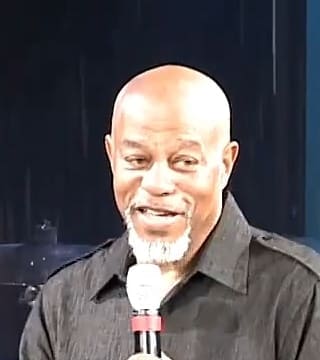
In Acts 13, Pastor John Jenkins shares how Paul’s sermon led unbelievers to beg for the same message again and nearly the whole city to show up next week—because Paul boldly preached forgiveness of sins and justification through faith in Jesus alone. After 34 years of ministry, the preacher says focusing on these truths has meant someone accepting Christ every single Sunday, urging us to stop debating side issues and simply tell people their sins can be forgiven and they can be made holy by trusting Christ.
Opening Prayer
Father, thank You for the privilege and the opportunity of being at Destiny Church. Pray that You take these next few moments and speak to our hearts and allow Your truth to prevail and Your name to be exalted. Pray that You put a hedge around this place, Father. Bind and rebuke every distracting spirit and have Your way this day. Save somebody. Reclaim some lost soul. Plant somebody in Your vineyard. Encourage some heart. In Jesus' name, amen.
If you have your Bibles, I’d like you to open your Bibles to Acts chapter 13. If you have your paper Bible or your iPad, iPhone, or any other—I want to be an instrument. And I want to preach for just a few moments. It’s 11:58. I promise I’d be finished by 2:30.
Y’all supposed to say, «Take your time, Pastor.» But it’s too late now. Y’all can’t say it now. This is a passage that has impacted my life in a significant way.
As a matter of fact, it has impacted my life in such a way that once I learned what I’m about to teach you today, I discovered—I’ve been the pastor of First Baptist Church of Glenarden for 34 years this coming November—34 years.
And once I learned what I’m getting ready to share with you today, I cannot remember a Sunday in 34 years of being the pastor of First Baptist Church of Glenarden—I cannot remember a single Sunday where no one accepted Jesus Christ on a Sunday.
I have to tell y’all—like I told the crowd yesterday—don’t play, hate—learn the game that the player is playing. In 34 years, I cannot remember a single Sunday.
And it’s a rather significant insight for me to share with you today because I know everybody in here knows somebody in your life—in your family, your coworker—somebody that needs Jesus in their life. Everybody knows somebody who needs to be transformed and changed.
The Impact of Paul’s Sermon – Unbelievable Response
And I’m about to teach you today what it is that I learned that has made a huge difference in my personal life and the life of our church. And it begins at chapter 13, verse 13.
And let me read—just follow with me today. If I have a subject, I’ll give it to you at the end—if I have one. Oh, I may let you make up one to go along with this message today.
Verse 13 of chapter 13—are y’all with me? Chapter 13, verse 13. I’m reading from the only authorized translation of the Bible—the New King James translation.
Pastor Paul, what translation you use on Sundays? A bunch of them. A bunch of them. We’re going to get you saved yet, Paul Shepherd.
I’m reading from the New King James. 13:13—beginning of verse 13: «Now when Paul and his party set sail from Paphos, they came to Perga in Pamphylia; and John, departing from them, returned to Jerusalem.
But when they departed from Perga, they came to Antioch in Pisidia, and went into the synagogue on the Sabbath day and sat down.»
Are y’all with me? «And after the reading of the Law and the Prophets, the rulers of the synagogue sent to them, saying, 'Men and brethren, if you have any word of exhortation for the people, say on.'»
Get the picture. Y’all got it. Paul and his party of people have gone into the synagogue—they’ve gone into the Jewish temple one particular Sabbath.
And after the reading of the Prophets, the pastor said, «Men and brethren, if you have any word of exhortation for the people, say on.»
It reminds me—when I was growing up, we used to ask guests to stand and give their name and what church they came from. Do we got any old folks here that remember back in the day when we used to do that? We don’t do that anymore. That’s right.
And here’s why: because it says verse 16: «Then Paul stood up and motioning with his hand said…» And then for the next 26 verses, Paul preaches.
We don’t let people—we don’t get a mic to people no more. We don’t ask them to say anything anymore. We don’t know what they’re going to say.
This might be the reason Paul preached a sermon. But when Paul finished preaching, something unbelievable happened—something spectacular, something amazing, something strange, something unbelievable transpired.
Matter of fact, two things happened—two remarkable things happened after Paul finished preaching. And it just—it blew my mind what happened.
The Gentiles' Response – Begging for More
So what had happened after he finished preaching—and if you want to see what happened, go down to verse 42. Slide down to verse 42. Say, «I got it» when you get it.
Listen to this: «So when the Jews went out of the synagogue, the Gentiles begged that these words might be preached to them the next Sabbath.»
The Gentiles said—the unbelievers, the people who would just come into the synagogue—asked Paul, «Can you come back next Sunday and preach the same sermon?»
Now, I’ve been preaching for 50 years—ain’t nobody ever asked me to preach the same sermon. Can you imagine that? Somebody said, «Can you come back and preach the very same message next Sabbath?»
That’s not the only strange—that’s not the only unbelievable thing that happened. There’s something else that happened that’s strange too.
Verse 44: «On the next Sabbath almost the whole city came together to hear the word of God.»
Am I the only one that’s shocked at this? Almost the whole city—almost all of Mountain View—came to hear the word.
That’s like saying almost the whole city of Glenarden came to hear the word of God. Almost everybody came.
Now the question I want to raise with you today: what did he say? What is it that the man said for 26 verses?
What is it that he said that caused the people to ask the sermon to be preached again—the same sermon—next Sabbath? And for almost the whole city to come—almost everybody came?
Everybody made their way to the church. What did he say?
What Paul Preached – Forgiveness of Sins
What he said is something that’s not being said in a lot of churches today. And that’s what I want to talk about with you for a few moments.
What he said was so profound, so impacting, so amazing, so powerful. And I’m sad because I’ve gone to a lot of churches—I’ve been to a heap of churches in my 64 years of life.
Go ahead—lean over—I know you’re shocked. Lean over to your neighbor: say, «He don’t look old at all.» Go ahead, tell him. He looks so young. Go ahead, tell him. I’ll be 65 October 11th. Write that date down.
Yeah—it was something. All these churches I’ve gone to—I’m not hearing it a lot. I hear a lot of things, but I don’t hear being said what he said.
And as a matter of fact, I don’t even hear it around conversations around coffee tables and in dining rooms where they’re talking about church.
Amen. Y’all ever been around places where people talk about church? Y’all know—I’m trying to drag this thing out as long as I can before I tell you what it is that I want to tell you.
Y’all supposed to say, «Just go ahead and tell us what it is you want us to know. Why you dragging it out, Pastor? Why you got to keep on talking about—just tell us.»
I’m going to tell you when I get ready to tell you. What did he say?
He said two significant things that people are not declaring and saying today. We tell them everything else, but we don’t tell them what Paul said.
And it’s all concluded—when he got through all of this preaching—it concluded with him saying something profound in verse number 38. Hallelujah.
In verse 38: «Therefore let it be known to you, brethren, that through this Man is preached to you"—here it is—"the forgiveness of sins.»
Did that go over y’all’s head? I need to talk about it because we talk about everything but forgiveness of sins.
We tell people that they got to live by certain rules and laws—they can’t do this, can’t do that, can’t go here, can’t go there, can’t say this, can’t say that.
We talking about everything else: can a woman preach? Can a woman pastor? We talk about all kinds of things. Did you speak in tongues? What name you got baptized in? What day you go to church?
We talk about everything except that you can be forgiven of your sins. I’m preaching whether y’all know it or not. I’m preaching today.
That’s what he said. He said, «Through this Man—through Jesus—has brought to you the most important message.»
The Need for Forgiveness – Everybody Needs It
And here’s something that I know about everybody in this building: I don’t care what color your skin is. It doesn’t matter your economic status. It doesn’t matter your educational achievements.
It doesn’t matter how high you are on the totem pole of the job where you work. It doesn’t matter what community you live in, the size of your house, the kind of car you drive—whether you drive a gas guzzler or an electric Tesla. It doesn’t matter what kind of car you drive.
One thing is true of everybody in this building: you have done something for which you need forgiveness of sins from God.
I know y’all try to act like y’all looking at me like y’all ain’t never sinned—and you ain’t never done wrong—and you ain’t never made a mistake—that you ain’t never lied, you ain’t never cussed, you ain’t never drank—you acted like that.
But the truth be told: you a jacked-up joker. You done made some mistakes. You have done some things.
We have all sinned and fallen short of the glory of God. But the great news I have is: there is a fountain filled with blood drawn from Emmanuel’s veins—and sinners plunged beneath that flood lose all their guilty stains.
I’m telling you—been to a lot of churches—that’s not what they’re telling people. It’s not what they’re preaching. It’s not what they’re saying. It’s not what they’re declaring. It’s not what they’re making known.
They’re not making people know that their sins can be forgiven.
And you know what’s so powerful about the forgiveness of sins? Forgiveness means two things.
When God forgives you, number one: it means He pardons you. He issues you a pardon. He says He’s going to treat you like you didn’t even do it.
I don’t know—because y’all acting like y’all ain’t never done nothing. Y’all—this crowd getting on my nerves about right now. Some of y’all got neon lights blinking that you’re guilty—guilty—on your head.
We’ve all sinned—we’ve missed the mark. But God says, «I’ll pardon you. I’ll treat you like you never did it. I’ll forgive you. I’ll wipe the slate clean. I’ll look at you and love you.»
And even though you just as wrong as you can be, there’s something about the blood of Jesus that wipes the slate clean.
It means not only are you pardoned—it means He frees you—gives you a freedom from the power of guilt and shame.
Oh, I feel a shout coming on me today—because we’re guilty. We feel shame. The devil wants to hold us in bondage.
But thanks be to God—when Jesus died on the cross, He washed our sins away.
You know what? I need to tell somebody here today: I don’t care what you did, when you did it, how recently you did it, how often you did it.
I don’t care what you have done—the blood of Jesus will forgive you of your sins.
Oh, that makes me shout down in the depths of my soul.
Pastor Shepherd—I’m looking at some of these people, and they just sitting down looking at me just like this.
We’ve all sinned. Yes, sir. I feel tension in the room. Somebody saying, «Well, that was a long time ago, Pastor, when I sinned.»
I know some of y’all got some skeletons in your closets—but some of y’all got some fresh bodies laid up in there. You drug it in there last week—drug it in there last night.
Y’all ain’t hearing me preaching to you today. I wish I had somebody who understood what I’m trying to say to you today.
It doesn’t matter what you’ve done. Doesn’t matter when you did it. Doesn’t matter how often you did it—how frequently you did it—when you did it. Doesn’t matter.
Jesus has made it possible for you to be forgiven.
Now, I don’t know who I’m preaching to—but I know you’re here today. I know you got the guilt and the shame.
But I’m here to remind you that the blood of Jesus forgives you.
What am I trying to say? Now I’m trying to say: you don’t argue with people about stuff that don’t matter.
Don’t argue with them about whose—Cain’s wife was. People talking about who is Cain’s wife? Who cares? It doesn’t matter.
The most important thing is: you need to know that we serve a God who has made it possible for you to have a personal relationship with Him—because He died on the cross so you could be forgiven of your sins.
Thank—I’m almost finished. Y’all perpetrating. Y’all don’t mean that. No, you don’t. Sir. Yes, sir.
That’s not the only thing he said. So here’s my point: don’t—let me—don’t let me go past this point. I’m almost—almost slipped up and went past it.
Stop arguing with people about stuff that don’t matter. Tell your sons and daughters—tell your husband—tell your wife—tell your cousins—tell your neighbors.
I don’t know about all those questions you want to ask. I don’t want to debate whether a woman can be a pastor or not.
I don’t want to debate whether or not what name you got baptized in. I don’t want to debate whether you spoke in tongues or didn’t speak in tongues.
All that doesn’t matter. All I want to tell you is: you can be forgiven of your sins.
Everyone has sinned and fallen short of the glory of God. Everybody in here deserves to go to hell.
Look at your neighbor: say, «You deserve hell. You’re guilty. You should have went to hell. Do not pass go. Don’t collect $200. You should go straight to hell.»
You should go straight to hell—you such a jacked-up joker, a messed-up sinner. You missed the mark. You’ve done wrong. You’ve missed the mark of God. You ought to go straight to hell.
Y’all ain’t got to like me. I’m going home after today. Tell them that they can be forgiven.
Do y’all got that point? That’s what—let’s debate that. Let’s talk about what you did that you need forgiven for.
But that ain’t the only thing he told them too. Look here—look. I’m almost finished—it’s my third close here.
Justification Through Faith – Made Holy by Jesus
Not only did he preach—he says, «Through this Man is preached to you the forgiveness of sins.» That’s Jesus.
«And by Him everyone who believes is justified from all things from which you could not be justified by the law of Moses.» Hallelujah.
Y’all missed another place to shout amen. Not only does God forgive us—He justifies us.
Now, justification is a theological term. And you know what it means? I’m glad you asked the question.
Justification means God renders you innocent and holy. That went over your heads.
I know it’s hard to believe. I know you can’t comprehend that—as nasty as you are, as jacked-up as you are—that somehow God has the supernatural ability to make you innocent and holy.
Oh, I feel a shout down in my sanctified soul—to think that somehow or another the God that we serve is such an awesome God that He looks at my life and makes me innocent and makes me holy.
Oh, I feel a shout down in my soul. I want to give God the praise that somehow or another He made me acceptable to a holy God.
He took the blood of Jesus and cleansed me and brought me to a holy place.
Hold up—hold up—hold up. You know what He did? I learned that what He did is that He took what the law couldn’t do—what singing in the choir couldn’t do—what sacrifices couldn’t do—indulgences couldn’t do—working couldn’t do—religious activity couldn’t do it.
Being an usher couldn’t do it. Being a deacon, deaconess, or a trustee can’t do it. Being a pastor can’t do it. Getting baptized can’t do it. Paying tithes can’t do it.
Go on and preach, Pastor. None of those things could do for me what Jesus did for me. He justified me.
Oh, I’m justified. I’ve been made holy. I’ve been made clean. I’ve been made innocent by the blood of Jesus.
He brought me before the throne of God and made me holy.
Somebody high-five your neighbor and say, «I might not look like it, but I’m holy. I don’t always act like it, but I’m holy. It may not seem like it all the time, but God made me holy.»
By putting my faith alone in the death and resurrection of Jesus—He justified me.
Now I’m almost finished—it’s my third close here. Number three: I used to teach that justification meant that God treated me just as if I never sinned.
But in my theological studies—in my education—they taught me in the seminary that that was downplaying what justification is.
Because to say that God treats me just as if I never did wrong takes away a significant piece of what justification means.
Because justification means—not just that I didn’t sin—not that I wasn’t guilty—it meant He made me something—something that I couldn’t be.
Being made holy is greater than I could have made by just not sinning. Do y’all understand what I’m saying?
He made me holy. Look at your neighbor: say, «You don’t look holy, but thanks be to God—He’ll make you holy.»
Go ahead—tell them: «I heard what you said. I heard that conversation. I know the thoughts in your mind ain’t holy. I know the words that come out of your mouth ain’t always holy. I know the desires of your heart are not always holy.»
But thanks be to God—in spite of how much of a failure you have been or what you’ve done—He elevates you to a status of holiness.
And I don’t know where y’all are—you don’t have to beg me to thank God. You don’t have to ask me to give God the praise. Nobody has to pump me up.
When I think of what God has done for me—my soul cries out, «Hallelujah. Thank God He made me holy—holy, holy, holy, holy, holy.»
I don’t deserve it, but He made me holy. I shouldn’t be in that category, but He made me holy.
I give God the praise and I give Him the thanks and I give Him the glory. He has put me in a status that I would never achieve in my own strength, might, or power. He made me holy.
Do I have anybody in the building that’s glad that they’re holy? Is there anybody in the building that’s glad they’ve been forgiven?
Anybody here today that’s so glad that God did something for you that you could not do for yourself?
The law of Moses couldn’t do it. The laws of the church couldn’t do it. But thanks be to God—Jesus has made me holy and forgave me of my sins. Amen and amen.