
James MacDonald - Freedom from Religion (01/08/2026)
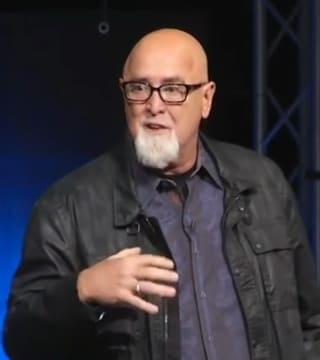
Summary:
The preacher argues that many churches are plateauing or declining not because Jesus or the Bible lacks power, but because what’s offered is often «religion"—rules without biblical basis, hypocrisy, and externals—that turns people away, much like dogs rejecting unpalatable food. Drawing from Luke 18:9-14 and the parable of the Pharisee and tax collector, he teaches that true freedom in Christ comes from rejecting man-made rules and self-righteousness. The core conclusion is that genuine Christianity is a personal relationship with Jesus, not religious performance, and believers must avoid binding others with extra-biblical standards or judging by appearances.
The Dog Food Story
Hey, so there was this guy, right? So there was this guy, and are you allowed to talk in church down here? Right? Yeah, okay, good. So there’s this guy, and he was a salesman for a dog food company. Yeah, yeah, well, that was his job. He was a salesman for a dog food company, and actually, he became the head salesman for the dog food company.
He was at the national sales conference for the dog food company, and he got up to motivate. Just imagine I’m the sales director, and y’all are the salespeople getting dog food into every corner of the nation. He stood up and he said this: He said, «The name of the company is Kennel Ration, » and he said, «Who makes the best dog food in the country?»
And then he said, «Then why aren’t we selling more dog food than anybody else?» And of course, the place just gets quiet. One guy over on this side puts his hand up, a guy from the South, and he goes, «Fact is, sir, the dogs don’t like it.»
The Problem in Churches
Eighty to eighty-five percent of all churches in North America have plateaued or are in decline. Think of that. What’s the problem? Is Jesus not awesome? Is the word of God not powerful? What’s the problem? The fact is, the dogs don’t like it.
The fact is that the experience with God through His Son, Jesus Christ, that is offered in most churches, is so laden with religion, hypocrisy, and rules, and things that don’t square up with the life, ministry, and message of Jesus Christ that where it is failing is not at the point of power, not even at the point of proclamation. Where it’s failing is at the point of practice. The actual people are not living the message as the message has been given to us.
Freedom from Religion
So if you believe, as I believe, that Jesus died not only for our forgiveness but rose from the dead to live His life through us, one of the things that Jesus said very prominently is, «Whom the Son sets free will be free indeed.» What we desperately need to be free from in the Church of Jesus Christ is from religion.
That’s the title of this message: «From Luke 18: Freedom from Religion.» And before we even get into the specific package, let me say that we have big buildings, a beautiful one. If you agree with this being a beautiful facility, say Amen. And we have slick programs, sharp brochures, and fancy plans.
But what the world sees in most churches is the fact that they don’t like it, and Christianity makes little or no sense. Instead, it’s just laden with what I’m going to use in a very negative, pejorative way: religion.
Defining Religion Negatively
And if you’d like to draw things down, just so you know what I’m talking about, make note of a couple of these things. By religion, throughout this message, I mean rules without reasons, rules without biblical reasons. «Why do that?» Well, they’ve got these rules, but it’s not in the Bible, but we’re so worked up about it, but it’s not in the Bible.
I don’t know how you feel, but I find what’s in the Bible to be a pretty significant job description. How many people have actually studied the Bible and said of themselves, «I wish there were more rules»? Anyone? Anyone’s like, «Man, it’s not enough. It’s just not enough.»
I find our hands up if you consider it adequate; the biblical concept is sufficient, and not the religious people, though. It’s not enough. They want to add more. So by religion, I mean rules without reason, without biblical reason; programs without a purpose; systems without the substance, which is Christ; form without function; organization; politics; pettiness. The dogs don’t like it.
The Parable in Luke 18
So here they come. I’m free from religion when I’m ready. I’m free from religion when five things. Let me just read it to you. First of all, in Luke 18, a Luke chapter 18, starting in verse 9, speaking of Jesus, it says He also told this parable to some who trusted in themselves that they were righteous and treated others with contempt.
Two men went up to the temple to pray, one a Pharisee, the other a tax collector. The Pharisee, standing by himself, prayed thus: «God, I thank you that I am not like other men—extortioners, unjust, adulterers, or even like this tax collector.» Well, what makes you think you’re better than him?
«I fast twice a week; I give tithes of all that I get.» But the tax collector, Jesus said, standing far off, would not even lift up his eyes to heaven but beat his breast, saying, «God, be merciful to me, a sinner.» I tell you, this man went down to his house justified rather than the other, for everyone who exalts himself will be humbled, but the one who humbles himself will be exalted.
Refuse Man-Made Rules
And so, this is a parable: a story with a meaning from the life of Christ. I’m free from religion when five things. Drop this one down: I am free from religion when I refuse to bind others with man-made rules. Now, I know you have a faithful Bible teacher as your pastor, so I hope you’re accustomed to looking in the Bible.
Well, everything I’m asserting here you should be seeing in the Bible. I didn’t sit in my office and go, «What profound things we could lose?» to come up with five things. No, I was studying the Bible to come up with them and see where I got the first one.
I’m free from religion when I refuse to bind others with man-made rules. That’s in verse 9. He told this parable to some who trusted in themselves that they were righteous and treated others with contempt. They trusted in themselves they were righteous.
The word righteous there means pure, clean, without sin. And yet Romans chapter 3 says that there is none righteous, no, not one. So think about the person Jesus is talking about who considers himself righteous while the Word of God says there isn’t such a person. There’s none righteous, no, not one.
Justification by Faith
The word salvation, another word for salvation, is the word justification. And the word justification, if you can look to a time in your life when you’ve turned from your sin and embraced Jesus Christ by faith, then, and I hope you can, and if you haven’t, you can do that right now.
But if you look to a time when that did happen for you, you would say, «I was saved, » or another thing you would say is, «I was justified.» The word justified means it’s a legal term; it means to be declared and treated as righteous.
Now, Christians prone to religion, someone say like me, I wear the most religious people there are. Just get that straight. And that’s what we’re trying to keep off ourselves all the time. We want the genuine, real, personal thing with Jesus, and we don’t want the religious trappings that roll up on us all the time.
Self-Righteousness and Contempt
And so, when we understand that in Christ we are declared and treated as righteous, it is remarkable how quickly that morphs into, «I am righteous.» Well, that’s not what salvation is. Salvation is declared positionally and treated by God as though, but not actually. Not actually.
Let’s see this guy here; he well says right in the text, it’s so clear: he trusted in himself that he was right. Well, Jesus actually has given the reason for the story. He was surrounded by a crowd of people trusting in themselves that they were righteous.
And see, the quickest test of a person who is self-righteous is how they treat others. Check yourself! Check yourself! They treat others with contempt. There’s the ticket right there. The New King James says «despised.» The New American Standard is good; it says «viewed others with contempt.» NIV says «looked down on.»
It means literally to make nothing of, to belittle another person. And if you look down, if you watch the news and say, «Oh my gosh! Look what she’s doing. Oh, can you believe it? How could they?» and you see yourself as this is everywhere.
I’m not looking for the guy in the fourth row over here, all right? This is in your row this morning. You know, immediately I see a couple people go, «No, it’s closer than you think.» So if I’m free from religion when I refuse to bind others with man-made rules, then I’m struggling with religion when I’m doing that.
Christianity as Relationship
Notice there in the text there are two different words translated «others» here. The first one, they viewed that themselves that they were righteous and treated 'others.' That word «others» there, better translation some of you might have is «the rest.»
So this Pharisee was in a very exclusive club for God’s choice servants. Current membership: A1! We haven’t been able to find anyone else who really qualifies to be. I mean, I’m open to applications, all right? Somebody wants to say, «I want to be part of your club.» I would consider it, but so far no one has actually been accepted to the club.
So note this or be reminded of this, loved ones, but I just wish I could take hold of each one of you and really look into your eyes and just say to you, «Christianity is a relationship.» You have a relationship with Jesus that is personal, daily, and much more frequently.
If you follow him through faith in Him, you’ve been given the authority to be called one of His children, and you have a relationship with Jesus. That’s Christianity—the totality of it and everything that flows from that. And religion is not even thinking about that; religion is thinking about how good I am and very quickly how much better I am than others.
Religion vs. True Salvation
And so Jesus was not down with this at all. So he told them this parable so that the ones that were trusting in themselves—see, at the end of the day, the most religious people aren’t—they’re not even really saved. Because to be saved is to reject the trusting in myself and to embrace that only Christ can save me and to fall upon His mercy.
What’s really interesting is how many Christians trust Jesus Christ for salvation in total dependence, and then set about to sanctify themselves. «Oh yeah, he had to get me on the salvation boat, but since I’ve been on here, let me tell you something: I got things in ship shape.» Oh, do you? Or do you really?
It may just be a cultivated religious viewpoint that does not square because you can see the people that Jesus is going for. These people are—are you looking at the text, the Bible study, right? Verse 9—the people that trusted in themselves, they looked at themselves, «I’m righteous, I’m righteous.» And again, the truest test of that is treating others with contempt.
The Danger of Empty Rules
The problem with the system of rules is that you can keep every one of the biblical rules and still be dead in your heart toward God. You can go to church; you can carry your Bible; you can serve. But listen, in your heart, you’re dead to God.
The worship doesn’t move you; the sermon doesn’t convict you; you don’t change. When was the last time God took you to the mat with the full weight of who He is? When was the last time you had an earth-shattering, window-rattling, life-altering encounter with the God who made you, where you were undone and humbled in His presence?
I won’t speculate about the season of time, but I will tell you if it is substantive, if it is significant, if it has duration, the blockage is religion. It’s the form.
Reject Externals as Yardstick
So more on freedom here. Let’s get into the actual parable. That’s just the opening. I’m free from religion when I refuse to bind others with man-made rules. And then this, in verse 10 and 11: I’m free from religion when I reject externals as a spiritual yardstick.
We should see that starting in verse 10. Two men went up to the temple to pray, one a Pharisee, the other— and this is the other word for «other, » it’s a completely different word. It doesn’t mean «the rest»; it means, actually, in Greek, «heteros, » from which we get our word «heterosexual.» «Heterosexual» means oriented to a person of the opposite sex.
And the word translated here means «another completely different, opposite person.» Two men went up to the temple to pray, one a Pharisee, the other a tax collector. And how many here this morning are religious people with a form without a function, with rules without reasons, sitting in a row worshiping with a member of my family?
The Pharisee’s Pride
And I’m the religious person, and they’re the other person of a very different kind who has something going on, a personal dynamic current with Jesus Christ. Notice two men went up into the temple to pray, one a Pharisee, the other a tax collector.
Verse 11: the Pharisee stood. It says, some translations of mine say «standing by himself.» It’s interesting, that word «stood» there could—again, we just, the English language, this is going to just freak you out, but the English language is not the best language on the face of the earth.
Are you okay? You’re going to storm out now? Leave at once altogether? It’s not the best language. There are other languages that have more tenses, more communication. And this word for «stood» is different than we’re going to see in a moment. This means literally to take your place.
It’s like, in a minute, I’ll be standing over there. See that spot right there? That’s my spot. That’s it right there. That’s my spot. I’m going to go take my spot right now. That’s what that actually is. He took his place, not sneaking in the back door and hiding up in the back. No, no, no, front and center, where I belong at the front.
A Horizontal Prayer
No offense whatsoever. It’s interesting; I see a number of elders and pastors sitting in the front here today. Pray for them to be convicted by this message. It surely can’t be about you. So he’s actually—you could just see the pride in the way that he takes his position.
Back to the text, the Pharisee, standing by himself, prayed. One translation puts «he prayed before» the «by himself, » which I think might be better. It’s prayed actually thus within himself. When you see the prayer, you’re thinking it’s kind of like he’s praying.
I mean, I hate to say it, but it’s almost like he’s praying to himself. Now, before we’re too hard on him, true confessions in church: how many people have ever been in a context, in a circle, in a place with some people where you were so self-conscious about your praying that you were thinking more about what you were praying, how people were hearing it, than thinking about God listening? Be honest if that’s ever happened to you.
Okay. Super, super, super self-righteous group right here in the middle! And, honestly, everywhere else—well done. Just kidding. And so he’s actually almost like he’s praying to himself, which is just a remarkable thing. He stood thus within himself, a very horizontal prayer, trying to be heard by others, not to be heard by God.
NIV actually translates that that he prayed about himself. But anyway, the Pharisee, standing by himself, prayed thus, or like this: «How’s this for a prayer opening? God, I thank you.» That’s a good start. Gratitude is a great place to start, but it’s going in the ditch right now.
Judging by Appearances
That’s crazy what he’s saying! I’m going to just try to imagine this. «God, thank you that I am not like other men.» I know what you’re thinking: «The hours on the treadmill to generate this?» Yeah, I’d say that laughter went beyond—it might have gotten into hurtful territory.
What a thing to pray! «God, I thank you, me.» No, God, merely, «O God, better than everybody else. Thank you, God, that I’m there with the wisdom that you showed making me awesome like you.» Wow! He’s focused on externals—that’s really what it is!
He’s not even thinking about his heart. «I’m a Pharisee; I’m big about the Bible.» But by focusing on externals, he’s ignoring what God cares about most. He’s valuing what is worthless; he’s devaluing what is priceless. He’s putting people into categories that the Bible never mentions.
I’d like to think of this as like a yardstick. He is measuring people! I saw you out in the hallway; your security guy! I’m not scared! Lift up your voice and say that’s awful! That is awful! Do you know what you know about somebody by looking at them? Hold up. How—what do you know about somebody by looking at them?
You know nothing about somebody by looking at them! How dare you form an assessment of another person! Like, how evil—how completely contrary to the heart of God! And yet isn’t that what we do? We look at a person’s background; we look at a person’s race; we look at a person’s economic status; we listen to them speak and form some judgments.
We learn about a failure and say, «Not with my kids! Not them!» as though somehow the biggest problem we have to ward off in raising our families is out there and not right in here. Nothing will propel your children into the world faster than religion!
A Compelling Testimony
I would say the number one single reason why I’m standing here today as a follower of Jesus Christ is because every time I came home as a kid, I saw my mom sitting at the kitchen table leading the neighborhood women to Christ.
I knew she wanted it for more than just us; she believed it was for everyone, and that was so compelling to me. We want our kids to follow Jesus for our own peace of mind instead of for their eternal destiny. We want our kids to follow Jesus because of what others will think if they don’t. And what is that if it isn’t religion?