
Jack Hibbs - Our Greatest Threat Today (01/23/2026)
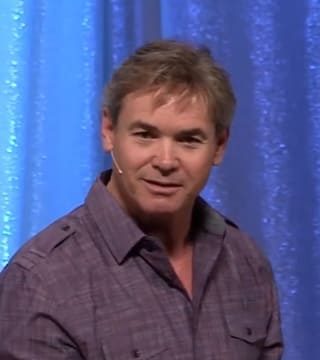
Our Greatest Threat Today
Grab your Bibles tonight and turn, if you would, to the book of Isaiah—Isaiah chapter 17 tonight. And I’m looking forward to getting to this chapter because of the opening verses. And I’ll do some justice to that.
Here’s the neat thing about not having to spend too much time in the opening verses that are very, very famous in Isaiah 17—but I don’t have to spend too much time on them right now. Because what’s going to happen, I believe, is that in the not-too-distant future—I mean in short order—we’re going to be able to come back on one of these Wednesday nights or Sundays, and we’re going to be talking about what’s going on in the world with Isaiah chapter 17 open.
I believe Isaiah 17 is yet forthcoming in the world that you and I are living in. And you’ll see why in a moment as we look at this.
Isaiah chapter 17—the title of the message tonight is «Our Greatest Threat Today.» Will you mark that down? Our greatest threat today.
You might be surprised as to what that greatest threat really is.
Our greatest threat today—in Isaiah chapter 17—many Bible scholars over the years have thought and taught that this is a description of not only a historical portion of the book of Isaiah regarding Damascus, Syria, and Israel—but it had a greater, more broad application, which we do know is true. And that would be that it’s got a greater end-time fulfillment.
So when you look again at Isaiah—a famous book for knowing or understanding the near and far fulfillment policy of the Bible—there are near fulfillments, which events took place in the prophet’s day or in the prophet’s lifetime, and then a far fulfillment, which was a greater end-time event.
Isaiah chapter 17 is yet again another good example.
You’re going to hear in a moment about Damascus becoming a ruinous heap—something that, by way of a city and of a geographical location, the Bible describes it as being someday ultimately obliterated—gone.
Now Damascus has been attacked many times in history, but never has it been obliterated. And yet Isaiah 17 teaches that there’s going to come a day when it not only is obliterated, but no human will ever be able to be there again. It’s going to be abandoned—who knows how long—but the Bible says for a great, great amount of time.
It’s never gone through that before. Damascus—one of the oldest—one of the oldest cities in the world. Syria boasts that Damascus is the oldest city in the world. But then the Jordanians boast that Jericho is the oldest city. Now Jericho is on the West Bank of Israel—so—but certainly it’s an old city. Thessalonica is one of the oldest cities in the world as well.
But Damascus is an ancient city—no doubt about it. But in all of its lifespan, it has never been wiped out.
And so what can we conclude? The Bible’s always true—you know that. It’s going to be wiped out.
Are we seeing the stage being set in our day that Damascus is going to be wiped out? Something’s going to happen in Damascus according to the Bible.
And by the way—it’s amazing because in Matthew chapter 24—when Jesus prophesied—if you guys remember, you Bible students, you prophecy buffs—you remember when the disciples came to Jesus and said, «We want to show You all the magnificent construction of the temple"—like He had not seen it before. It’s kind of funny.
But they’re walking around bragging about it. And Jesus interrupts their little field trip with a real quencher. He says, «Do you not see all these stones?» «Oh yeah—we see them all right.» «Oh Jesus—some of these stones, You know, are two, 300 tons.» «Oh yeah—yeah—I know.»
Jesus says, «I tell you—not one stone shall be left upon another but that shall not be thrown down.»
They were shocked. And so He left that location and went over to the Mount of Olives. And Matthew 24 tells us that they went over following Him. And then they asked Him privately, «Lord—tell us—when will these things be? And what will be the sign of Your coming and the end of the world?»
And Jesus went on to teach about the end-time events.
But when Jesus said, «Not one stone shall be left upon another"—it’s the exact Greek word that is found here in Isaiah 17 regarding Damascus being devastated. Not one thing in Damascus will ever be able to be stacked upon another. It’s all going to be torn down someday.
That has not yet happened, ladies and gentlemen. If you can get in an airplane tonight and fly to Damascus—you’ll be crazy to do that as a Christian—but you can go. It’s still there.
But something is coming.
And yet—you might be surprised again tonight what the greatest threat really truly is.
The Burden Against Damascus
Isaiah 17:1—and for you who are note-takers—get ready to mark the spot that we’ll camp out in tonight and extract out of this chapter.
He says, «Behold"—or «The burden against Damascus. Behold, Damascus will cease from being a city"—and again the language is forever—"and it will be a ruinous heap.»
The word «beheaded» comes from this word «heap.» It’s going to be cut off.
Now that’s not a beheading like we see today—this is the lopping off of its authority in the Middle Eastern world.
Ladies and gentlemen—for an army to be truly victorious—I think the picture of this is going to be vividly in your mind in a moment—you can defeat an army in the Middle East, but the army that you just defeated is not officially defeated until its government is decapitated. That’s how they think—the government must be decapitated.
And they do the symbolism of that. And they have throughout Old Testament period—the Amorites, you name it—all of the «-ites"—the Philistines included—that when they attacked a king and his kingdom, they defeated the kingdom, and then who was almost always the last one to die? The king.
And how do they do it? Cut his head off. And they would parade around the head. And that was the announcement—absolute defeat. Right here—look—absolute defeat.
When King Saul—do you remember when King Saul was attacked, and the children of Israel were being routed, and Jonathan was killed—do you remember what they did to the king? King Saul—they cut his head off, didn’t they?
And they took his head to Beth-Shan. We’ve been to Beth-Shan where they posted it at the gate.
And then of course—remember David invaded, and they wound up getting King Saul’s head because Israel was saying, «There’s no way that we’re going to be put on display like that.»
That’s how that world thinks.
When 2001—we were under attack—our financial institution was attacked, our military institution was attacked—the Pentagon—and the other aircraft that went down in Shanksville, Pennsylvania, was destined to hit the Capitol—not the White House. Not the White House—I don’t know if you know that or not. It’s not—this is not a secret what I’m telling you.
But the Capitol was the target of that flight—was it Flight 93? Yeah—that went down in Shanksville. It was supposed to fly into the Capitol Building.
Why? Decapitate the American finance. Decapitate the American military—the Pentagon. Decapitate the American voice—leadership—the representatives—that Congress, the Senate that we have.
And two private jets that were later routed by two F-15 Strike Eagles out of Eglin Air Force Base—again this is not secret what I’m telling you—two private jets went after the king—that is Air Force One.
That’s why you couldn’t find George Bush right after the attacks. Did you know that? Remember that? Remember all the press was asking, «Where’s the president? Where’s the president?»
Air Force One had headed out over the Atlantic. Two private Learjets had gone out after Air Force One. They would not respond to radio communication. And two F-15 Strike Eagles shot those planes down out over the Atlantic.
Again—that’s not secret.
Why? You have to decapitate the king.
That was a well-orchestrated attack on a greater and vaster scale than what we had been thinking.
That’s the way they think.
So as we look at this—in verse 2 it says that the cities of Aroer are forsaken. They will be for flocks which lie down, and no one will make them afraid.
Verse 3: «The fortress also will cease from Ephraim"—that’s another name for Israel—"the kingdom from Damascus.» So Israel’s going to suffer, but Damascus is going to be obliterated. «And the remnant of Syria—they will be as the glory of the children of Israel,» says the Lord of hosts.
In that day it shall come to pass that the glory of Jacob—another name for Israel—will wane. Whatever is going to happen to Israel in the future—now it happened in small scale in Isaiah 17 and Isaiah’s day—but it’s going to happen again. Israel is going to suffer.
And the fatness of his flesh will grow lean. It shall be as when a harvester gathers the grain and reaps the heads with his arm. It means it’s not a very efficient way of harvesting. It shall be as he who gathers heads of grain in the Valley of Rephaim.
Yet gleaning grapes will be left in it—like the shaking of an olive tree—two or three olives at the top of the uppermost bough, four or five in the most fruitful branches.
So very—whatever Israel is going to go through—whenever Damascus is—listen—this is kind of cool—you say, «What is he talking about?» Whenever Damascus—whenever that happens—it’s obliterated—Israel is going to suffer. Israel survives, but it’s going to suffer.
Is this a war? Is this an exchange that’s going to take place? Is it something where—does Israel attack Syria, or does Syria attack Israel, and in retaliation something happens to Damascus?
We can only speculate. But what’s very interesting is the reasons why this happens.
Verse 7: «In that day a man will look to his Maker, and his eyes will have respect for the Holy One of Israel.» Doesn’t mean they’re believers—it means that the God of Israel’s got their attention.
«He will not look to the altars, the work of his hands. He will not respect what his fingers have made—nor the wooden images nor the incense altars.» This is all reference to paganism.
Now here’s where we’re going to launch from tonight.
«In that day his strong cities will be as a forsaken bough and an uppermost branch which they have left because of the children of Israel. And there will be desolation.»
Verse 10: «Because you have forgotten the God of your salvation and have not been mindful of the Rock of your stronghold.»
I want you to mark down verse 10—why is this happening?
So as we look right now—you and I are living in a moment of time—truly—I’m not playing with you people—this is exciting.
Damascus is—at this moment—the Middle East has fallen apart. It’s completely on its ear.
Don’t be surprised if you wake up some morning and find out that some sort of limited either biological or chemical or nuclear exchange or something has happened to make Damascus a ruinous heap that can never be inhabited again—because it must happen according to Bible prophecy.
So in my opinion—again this is one reporter’s opinion—if anything is going on in Syria that is destabilizing the country, you need to pay attention to Syria. You need to watch carefully—and especially with what’s going on there right now.
Most of the good people that were in Damascus—it used to be one of the largest Christian populations in the Middle East—one of the largest—has completely changed in the last 10 to 12 months. Most of them are dead or gone.
Really the only people hanging around Damascus now are either people who couldn’t get out or really, really bad terror types. The city and the nation has been devastated—and it’s not over by no means.
Keep your eyes on the news. Do any of you watch news? I know it’s not the funnest thing in the world—let’s be honest.
If you watch international news—raise your hand if you want to. That’s pathetic. I mean—the rest of you—what are you doing? I mean—you need to find out what’s going on, man. It’s amazing.
But again—that’s not the threat. That’s not the threat.
Have you noticed in the Bible how many times the Bible tells us to remember—to remember?
Look at verse 10—Isaiah 17:10 says, «Because you have forgotten the God of your salvation and have not been mindful of the Rock of your stronghold.»
The Bible tells us—don’t forget. Don’t forget.
Because Israel had forgotten. And Damascus was once—you guys—a Bible land location. Remember—remember that. It’s shifted obviously in 2000 years—it’s been a Christian stronghold up until 10 or 12 months ago.
But God says—don’t forget.
The Bible tells us in 2 Peter 1:12—"For this reason I will not neglect to remind you always of these things,» says Peter, «though you know and are established in the present truth. Yes—I think it is right as long as I’m in this tent"—that’s what he called his body—the tent—"to stir you up by reminding you.»
We need to be reminded over and over again.
The Bible tells us and encourages us to remember what great things God has done or to remember what tremendous things God has promised.
Jude 1:5—Jude says, «But I want to remind you—though you once knew this—to remember what God has said.»
Christian—do you remember what God has said? Are you always—listen—are you needing to remember what God has promised you?
We need His help in remembering. As I get older—I definitely need His help in remembering.
But listen to what Jesus said in John 14:26—Jesus says concerning the Holy Spirit—the Helper—He said, «Whom the Father will send in My name—He will teach you all things and bring to your remembrance all things that I said to you.»
To remember.
God is judging both Israel and Damascus because of His righteousness—because of His defense for Israel—yes. But listen—He’s scolding the mind that forgets Him. He disciplines those who—and He’s speaking about those who know Him—to forget.
You say, «How can we know Him and forget?» Listen—you and I struggle with this all the time. We forget Him almost daily in things.
Church—we’re guilty of forgetting God.
Do you ever worry? Are you ever prone to panic about something? «Oh—what’s going on?»
Listen—when we ask things like «what’s going on"—we have forgotten that God’s right in the middle of it all. We forget that.
We are motivated in Scripture to remember—over and over again.
In the book of Romans chapter 15—Romans 15:4—listen to this: «For whatever things were written before were written for our learning—that we through the patience and comfort of the Scriptures might have hope.»
Hope is directly connected to remembering hope. In fact—you can’t have hope unless you remember what was promised.
And the apostle Paul writes to the Romans, and he says, «Listen—everything that’s been written in the Old Testament—that was written for our learning—to give us hope.»
But you’ve got to remember that. You’ve got to know it.
More than ever—and again—before we dissect this—2 Timothy 3:16—what a great, great verse. 2 Timothy 3:16 is—"For all Scripture is given by inspiration of God"—the word means God-breathed—God breathed it out—"and is profitable for doctrine, for reproof, for correction, for instruction in righteousness.»
The Bible—given to us—we’re to remember it. We’re to look back at the promises, and they should bring hope to us.
So number one—as we look at this in verse 10—our greatest threat today is not a nuclear exchange. Our greatest threat today is not North Korea’s hydrogen bomb.
It’s not now that Iran has ICBMs to launch a strike against the east coast of the United States, Canada, or Europe—that’s not the biggest threat.
The biggest threat is not the cyber attack that just took down the Ukraine—causing all of its power to go out—they link that—it’s not it.
It’s not an EMP bomb. As crazy as the border issue is—that’s not our greatest threat.
Believe it or not—there’s something worse. But it’s not what you think.
Remember What God Has Done
Number one—it’s time for you and I to remember what God has done for us.
When we forget what God has done—that’s the greatest threat.
When you and I forget what God has done—then we lose all hope. We wind up thinking that we can do this on our own—that we can go without God.
Verse 10 says, «Because you have forgotten"—circle the word «forgotten"—"because you have forgotten.»
We can become very guilty of forgetting God’s work of salvation in our lives.
I know it sounds almost crazy—but I’m guilty of it. Perhaps you’re guilty of it.
When we wind up becoming so—listen—so used to being saved—so used to being a Christian—that we wind up becoming complacent in our Christianity.
«Are you going to go to heaven?» «Are you going to—yep—going to heaven.» «Okay—listen—really—I’m glad for you.»
When’s the last time that you shared that wonderful, amazing truth about your life with somebody who’s not going to heaven?
I mean—think about it.
See—we can forget God because, «Hey—I’m comfortable.» You know—when you’re comfortable, you don’t think about much of how others are uncomfortable.
I’m a big fan of having nurses and doctors. If I’m hurting or sick—I want my nurses and doctors. I want to have them have suffered personally.
I don’t think you should be a doctor until you’ve gone through some surgeries yourself. If you’re a nurse—you should—before you can graduate as being a nurse—you should get stuck with a bunch of needles first. Don’t you think?
Someone say amen to that.
I mean—I want compassion, man. I want tenderness.
You know—when the doctor says, «This is going to be a little uncomfortable"—let me tell you something—whenever they say, «This might hurt a little bit"—it is going to hurt like you can’t believe.
We can forget how saved we are and how good God has been to us. And when we do that—listen—one of the signs—one of the evidences of that—is that we don’t tell people about Jesus anymore. We stopped evangelizing.
I told you—I was with Greg Laurie today. He had a statistic—95% of Christians 35 years of age and under—95% of Christians 35 years of age and under have not shared their faith with anybody else.
I don’t understand that. If what you have is so good—how can you not tell people?
The answer is—what they have ain’t so good.
Listen—if you have Jesus, and He has transformed your life, and you know it—you got to tell people. You got to tell them. You got to tell them.
You know what—and we have no excuse. «To—pure—that’s kind of harsh.» You think it’s—you really?
Well—listen—we can know all about someone on Instagram and tweeting and Facebooking. If we can do that—can’t we tell people about how amazing God is?
But we have forgotten—have we not forgotten? We have forgotten.
Do we talk much about God? Or are we transmitting more about what we ate for lunch?
Think about it—what do we talk about the most? «Oh—those Dodgers—those Dodgers or Angels or whatever.»
You know what—you know what—whatever you see. «Well Jack—what about you?»
I know—what about me? I’m—listen—I’m throwing us—we’re all into this pot together.
We can forget God. We can admit—I’ve never—I’ve not forgotten God—but we have forgotten Him. We have forgotten about the great things He’s done for us.
We should be boasting—Americans should boast the most about our God. We’ve been given the most. We are a spoiled people.
Look—in California—we’re pumped up, man. We got rain. We’ve had rain. We’ve had some rain. It rained like four inches. We’ve got floods. «When’s it going to stop?»
So funny—God’s been good to us. He doesn’t have to be.
The book of Deuteronomy 6:12 says, «Then take care lest you forget the Lord who brought you out of the land of Egypt—out of the house of slavery.»
Can’t we all say amen to that?
God brought us out of—what? What did He bring you out of? Was it bondage? Was it slavery? Was it sex, drugs, and rock and roll?
Think about it—my goodness—David Bowie died this week. And I thought, «Whoa—David Bowie.» I used to listen to that guy. I liked him—I mean I liked his music. I didn’t like his lifestyle.
And I heard on the news report that he died with all of his family around him. And I thought, «Well—that’s sweet.»
I just hope—I just hope David Bowie heard the gospel and responded yes to the gospel.
You know—wouldn’t it have been great?
«See Pastor—don’t you know that that guy had all kinds of weird sexual relationships with people?» Yes—I know.
Have you thought about those things you’re guilty too then, right? We’re all guilty.
Jesus came to save the guilty—just turn to Him.
And listen—when we forget what God has washed us of—we have a tendency to look at other people—"Well—what’s whatever that person…»
Wait a minute—they may be lost. They might be going to hell without Jesus.
To forget—the word means here—is to slip or to let slip away. The picture is amazing—it’s to go up to the dock with your boat and to throw—watch this—put your boat on the dock. You get off the boat, and you take the—any sailors in here—whatever you know the rope—whatever it’s called—and you don’t tie it to the cleat. You just throw it on the dock, and you walk away.
What—what would that boat be there when you come back? It’s going to be gone.
That’s what that word means—is to just slip away. To forget—God just slips out of our thinking—just slips—day after day—just a little further away.
Very easy, isn’t it? Get busy.
How many times does that happen in people’s lives?
The Bible tells us in Hebrews chapter 2 verse 1—"Therefore we must give the more earnest heed to the things that we have heard—lest we drift away.»
It’s easy to drift away.
Forgetting God—drifting away from God—looks like this—listen—we leave God out now of our thoughts. We think somehow it’s a private area, and God’s not in there anymore. Or we can think whatever.
It looks like this—leaving God out of our actions. We can do Christian things and not have them dedicated to God.
Think of it—you can go out witnessing, or you can go out—you can do anything—but if you’re not—if it’s not devoted to God—it’s just a religious act, right?
We forget.
Forgetting God looks like this—we leave God out of our relationships. «Well—I know that she’s not a Christian—but she’s really cute.» Or «She’s a great cook.»
«And I know she’s not a Christian—but we’ve been dating for a while now.»
And God says, «Listen—I want to spare you a lot of pain. Don’t be unequally yoked.»
But it’s like, «Well—you know what—I’m going to choose right now to leave God out of my relationships.»
That’s not a good thing to do.
Forgetting God looks like leaving God out of our liberties.
Wow—I saw a commercial tonight just before I came here. I was putting my shoes on—I was watching the news. And there was some cruise ship commercial about how—something—the guy singing and some song about how we can do anything we want—we can live any way we want—we can do whatever we want. It’s all about what we want.
And I don’t know about you guys—but everything I’ve ever wanted for myself—almost exclusively—has not been that good of a thing. It didn’t turn out so good—like really.
And this song’s just going on—there’s people on the cruise ship—"I got what I want.»
Listen—I don’t know, man—you raise your kids like that—give them whatever they want? No—you know better, huh?
You just raise up little Satan there. You know—it’s not good.
Liberties can be—when we forget God in our liberties—they become traps.
I mean—we have freedom in this country that was blood-bought by our founders and those—and true liberties have tremendous responsibility.
And then we forget about God—and «whatever you want—you can do whatever you want—I can do whatever I want"—and it just—"every man does what is right in his own eyes.»
Forgetting God—listen—looks like leaving God out of our time.
«We don’t have time—sorry God—it’s no time.»
We need to be careful—we need to watch out.
Remember What God Has Saved You From
What we need to do also is look at this fact—the greatest enemy and threat that we have today is number two—it’s time for us to remember what God has saved you from.
He has saved us from so much.
I mean—I know it’s hell—hell, right? It’s hell.
But it’s more than that—He saves us all the time. He saves us—He leads us—we have no idea.
Yes—ultimately He saved us from hell. Yes—is it hot in here? It’s hot—hell.
But He’s always—we—I don’t think we have an idea just how much He is saving us from catastrophe and disaster.
But of course—ultimately He saved us from hell itself.
He says there—"because you have forgotten the God of your salvation.»
And this is key—Jeremiah 13:25 says, «This is your lot—the portion I have measured out to you,» declares the Lord, «because you have forgotten Me and trusted in lies.»
Listen—"because you have forgotten the God of your salvation.»
When we forget God in these aspects and moments of our lives—we forget that He’s the God of our salvation.
You could—listen—you could go into the world, and you’ve got a Christian upbringing or you’ve got Bible knowledge—but you forget the fact that God saved you out of a horrific life and a horrific direction. And He has saved you from so much—ultimately hell.
But the amazing thing is—we can go down a road and forget the fact that He’s the God of our salvation—and we lose sense of spiritual urgency.
And Jeremiah—God spoke to Jeremiah and said, «Listen—here’s the deal—because you have forgotten Me—it’s going to get really tough for you.»
And when you forget God—you begin to entertain lies.
This is human nature, ladies and gentlemen—none of us are exempt from this.
If we forget God—do you remember Jesus said at the communion—"Do this in remembrance of Me»?
To be Christ-focused in our day-to-day living—lest we forget God.
Lamentations 3:21—Lamentations 3:21 says, «But this I call to mind—and therefore I have hope.»
That’s interesting—what’s he calling to mind? «The steadfast love of the Lord never ceases.»
Do you need to hear that tonight? I need to hear that tonight—"The steadfast love of the Lord never ceases. His mercies never come to an end.»
That is something to memorize.
And you know what—in memorizing these promises like that—like Paul said in Romans 15:4—you’ll have hope. You’ll have hope.
This is how you have hope—hope—you grab on to—but you’ve got to have something substantial to grab on to to give you hope. And there’s nothing greater than God’s Word.
Have you ever wondered how believers—how did the oldest believers ever remind themselves?
And you think about that—you say, «Well Jack—you know—they had the pillar and the fire and the cloud and the glory.» No—no—no—only one generation had that.
What about David? David—living over 10 years in the wilderness as an outcast fugitive—a guy who had been promised the kingdom by God—it’s not happening.
Can you imagine what would you do? Kind of—he was like in prison—10 years in the desert. Think about that—how did he survive? Would you have survived?
Think of pastors right now in prison—how does he survive? Hope—hope in what?
I’m so tempted to—"Oh—I’ll just say this"—his only hope is in the Word of God—not some fancy book, okay? Or some mantra—"I am happy—I am strong.» You know—if that works—then listen—ship a bunch of those books to the persecuted church.
No—you know what? They wouldn’t even read it. They’d say, «Send me a Bible. Give me a Bible—give me the eternal Word of God—that is spiritual power.»
So this is what they did—this is what David did. This is fun—get ready to write this down. You’re going to want this.
I have prescription pads that I write—when I’m—I’m serious—when I have a counseling session with people—I have a prescription pad. I made it myself—it looks amazing. It’s probably totally legal.
But it looks real. Someone’s talking—and so it’s like, «Okay—I’m—write it down.» And at the end of the hour—it’s «Here you go.»
I’m serious—here—it’s very—it’s better than the shot, right?
And this is one of those verses that’s just—it’s always a great prescription.
Psalm 42:1—"As the deer pants for the water brooks, so pants my soul for You, O God.»
Listen—this is a man who’s very depressed. This is a man who’s an outcast.
«My soul thirsts for God—for the living God. When shall I come and appear before God? My tears have been my food day and night—while they continually say to me, 'Where’s your God? '»
«When I remember these things—I pour out my soul within me. For I used to go with the multitude—I went with them to the house of God—with the voice of joy and praise—with a multitude that kept a pilgrim feast.»
«Why are you cast down, O my soul?» Listen—this is cat Christian—"Why are you cast down, O my soul? Why are you disquieted within me? Hope in God—for I shall yet praise Him—for the help of His countenance.»
«O my God—my soul is cast down within me. Therefore I will remember You.»
That’s a prescription to keep you from forgetting God.
That is our greatest threat today—as individual believers and as a church—forgetting God.
When you get the raise at the company or the promotion—or your kid gets home safe—and it’s like, «Wow—that was close.» Or «Man—you know—I—yeah—I worked hard this year—God brought him or her home safely.»
God gave you the ability to work hard that year—and just thank You, God. Remember Him—remember Him and thank Him.
And when you’re down—listen—we all need this. This is why we need—we’re social creatures. Don’t try to be unsociable—we need people—believers in our lives.
When—listen—when someone’s down—we should go up to them now. And look—let’s be honest—don’t come up to me and say, «Are you all right?» People do that a lot—and they always like—and I’m thinking, «What’s a—do I have like—»
Because I don’t have much—my—I just got in trouble yesterday with this—I don’t have feeling on my face. I can cut myself shaving—I can bleed to death—I can’t even tell.
It’s like—"Check—you’re bleeding.»
I had food on my face yesterday—my daughter goes, «Can’t you feel that?» I can’t feel a thing—it’s just dead as can be. I don’t know—over the years of—I don’t know.
But it’s just numb. And—uh—why am I saying this? Because what was I saying? I’m—started thinking—"Yeah—why is it so numb?» What was it? What—that’s not it.
No—I’m kidding—anyway—let me get back to the Bible. That’s always good—back to the Bible.
When you’re down—when you’re down though—when you’re down—you take this. And we have to remember this—I got it—we have to remember one another.
We can’t just come up to somebody and say, «Are you—are you okay? Are you all right?» Don’t do that.
Go up to them and say, «Hey—you know what—are you okay? Because here’s the deal—I want you—I want to—you—I want to give you this verse.»
Don’t ask me how I am—if you’re concerned enough—"Are you okay?"—come up and say, «Are you okay? Because I think you ought to read Psalm 42.»
Give me something—give me a prescription, will you?
And you need to preach to yourself—that’s what David’s doing. He went like this—"Why are you so downcast, O my soul?» Talking to himself—"My heart is heavy within me—what’s up?»
He’s giving himself the Word of God.
We need to do this—not only with ourselves but with each other.
That’s how they made a change in their lives—they got the Word inside of them. They seized it with a tenacity—they took it with them into battle.
Listen—we’re all prone to this. We have to be careful about forgetting God.
It comes vividly home in Revelation 2 verse 1—Revelation 2:1—Jesus is speaking, and He says, «To the angel of the church at Ephesus write: These things says He who holds the seven stars in His right hand—and He who walks in the midst of the seven golden lampstands: I know your works and your labor, your patience—and that you cannot bear those who are evil. And you have tested those who say they are apostles and are not—and you have found them to be liars. And you have persevered and have patience.»
What a great report card, right?
«And have labored for My name’s sake and have not become weary.»
«Nevertheless"—verse 4—"I have something against you—that you have left your first love.»
I mean—they had great works, man. I mean—that was an active church—very busy church.
But Jesus says, «You know what—behind the scenes—your hearts are cold.»
Look at verse 5—verse 5—first word—what’s the remedy for a cold heart?
You have a—don’t raise your hand—but you have a cold heart tonight as a Christian? Are you cold towards Jesus? Are you kind of like, «Well—whatever»?
Listen—your heart’s cold—you’ve left your first love.
What’s the remedy?
«Remember"—verse 5—"remember therefore from where you have fallen.»
Go back—figure it out—do some little—do some pathology—do a little crime scene investigation. Find out where did you commit this crime in your heart against God—and leave Him somewhere.
Go back to that spot—pick Him up.
Can you imagine—Jesus—somewhere in maybe in your life—Jesus is a couple blocks down the street, and He’s like, «Hey—you made that turn so fast—I fell out. You forgot—you forgot about Me. You’re so busy.»
«Remember therefore from where you have fallen—and repent—and do the first works. Or else I will come to you quickly and remove your lampstand from its place—unless you repent.»
Change your mind—that’s what it means—change your mind. Go back—love Me again—from a hot heart—from a true heart.
This is a dangerous thing—we forget God. And we can be very spiritual-looking—very busy—and forget Him.
Be Mindful of the Rock
The next thing I want you to see is that verse 10 says that you need to be mindful of the Rock of your stronghold.
Wow—the Rock of your protection.
It’s time for you and I to remember what God is by nature—He is the Rock. He’s the strong Rock.
The word «mindful» here means—it’s an amazing word—it means to mark or to etch into the memory. That’s vivid, isn’t it?
It means to mention to yourself over and over again—talk to yourself—bring it up over and over again.
And I wrote that down today—looking at that—looking up those words. And I had to almost chuckle because you and I live in a day and an age where we can get away with this easily—to repeat and talk to yourself about the promises of God and the things of God.
We can sit in our cars—nobody’s around—or be walking around—and we’re talking and talking. There’s not another person with us.
And—listen—20 years ago you would have been arrested in public for being a lunatic—"That guy’s gone crazy—he’s just talking to himself walking around.»
Now we have technology to where we’re talking to people driving—we are constantly talking and all this stuff.
Hey—look—listen—we can sit in our cars right now and just be talking to God—and look completely normal. «Oh God—I need You. Lord—strengthen me. God—help me.»
Over—to etch it in to our hearts and our minds.
The nature of God is to give that to us—He loves that. There’s no salvation outside of Him—you know that.
We’re learning that on Sundays also.
Hosea chapter 2 verse 13—Hosea 2:13 says, «I will punish her"—that’s Israel—"for the days of the Baals"—false worship—"to which she burned incense. She decked herself with her earrings and jewelry and went after her lovers—but Me she forgot,» says the Lord.
Yikes—don’t want to do that.
God by nature loves—isn’t it amazing that God would write this? He says, «Man—you’re breaking My heart.»
He cares—He’s a person.
In Psalm 18—Psalm 18:1—the Bible says, «I love You, Lord—O Lord my strength. The Lord is my rock and my fortress and my deliverer—my God, my strength in whom I will trust—my shield and the horn of my salvation—my stronghold.»
Verse 3: «I will call upon the Lord—who is worthy to be praised. So shall I be saved.»
Wow—that’s a great portion of Scripture to memorize.
God is all these things to me—He’s the Rock—the stronghold—the very place—He’s the one to go and seek shelter in time of need.
And then quickly—it’s time for you and I to remember what God is about to do.
This is important to me—this is important to us.
God is about to do something, Christian.
Here’s the deal—do you believe that?
Listen—the more you know history—God’s history—the more you know God’s Word in the past and the promises He’s made—the more hope you have for what’s about to happen tomorrow and the day after and for the rest of your life.
Because you know He keeps His Word.
Too many Christians today have no real hope—they have no real confidence—because they don’t know anything about what their God has done in the past.
People are missing it—we need to change that in our lives.
God is about to do something—does that excite you? Do you want to be involved?
What’s You going to do? I don’t know—I don’t care to know—it’s probably better I don’t know. But I just want to be ready when He does it.
«Lord—don’t pass me by.»
Does that kind of terrify you—that God would pass you by?
Can you imagine if God says, «Man—I’m about ready to do something—but you—you really don’t want to be used.»
«Oh no—God—use me—whatever You’re going to do—use me.»
«Yeah—oh man.»
Because you have forgotten the God of your salvation and have not been mindful of the Rock of your strongholds.
Hosea 13:6—and we’ll end quickly—Hosea 13:6 says, «But when you had eaten"—listen America—listen Christian—"but when you had eaten and were satisfied"—this could be our greatest threat today—"you became proud and forgot Me.»
«So now I will attack you like a lion—like a leopard that lurks along the road—like a bear whose cubs have been taken away.»
You don’t mess with a bear who’s lost her cubs.
«I will tear out your heart. I will devour you like a hungry lioness and mangle you like a wild animal.»
«You are about to be destroyed—O Israel—yes by Me—your only helper.»
You hear His heart—that’s strong—they forgot Him.
Proverbs 23:5 says, «Will you set your eyes on that which is not? For riches certainly make themselves wings—they fly away like an eagle toward heaven.»
Wow—hey—what’s the thing—is the lottery tonight? How do you know—$1.5 billion—biggest one ever.
You know what—I looked at that this week—and uh—we’re too rich.
You say, «Oh no—no—no—poor people…» Did you know mostly poor people bought tickets?
Still—too rich—if that’s how we spend our money—are you kidding?
If we decided to—you know what’s our national debt now? 19 trillion.
You know—here’s 1.5 billion—I know that’s like nothing compared to—but it’s like we’re just throwing money away. And it’s not even—it’s not even their money—it’s not even our money to throw away. It’s God’s—God’s going to hold us accountable for it in the end—"What you do with what I give you,» the Bible says.
Now—what—someone’s going to win this. I don’t have the data—you can look it up later. But for example—if you win and you’re in New York—you have to pay something like $577 million in taxes.
What’s that—it’s 50%? Is that hilarious?
You don’t get that—the government gets a whole bunch. And if Bernie Sanders gets elected—he’ll get all—they’ll get—the government will get all of that. And you have to take out a loan and pay even more for the taxes.
It’s hilarious—absolutely hilarious.
But the Bible says—watch out—you forget God when you get rich—and your money will sprout wings—fly away.
Wow—wow.
Church—we have got to be very careful that in all of our busyness—we’re all busy, you guys—we live in very terrifying times—that we need to be very diligent about our walks—very serious.
We need—we need to take our Christianity just very, very systematically—and go after God—go after Him.
So many times in the Bible God said, «You went after Me like a lover in the wilderness.»
It’s amazing He would talk like that—for us to determine—"That’s it, Lord—strip away from me…»
Can we pray that prayer? «Lord—strip away from me things that distract.»
Are you—do you feel brave tonight? Do you want to have some courage and say, «Now Lord—and anything distracting me from getting close to You—take it away—or restructure that in my life.»
«God—Lord—if something is in my life and it’s competing with You as a priority—knock it down—cut down that tree—or remove that idol.»
«God—if there’s something where my affections are divided—if there’s something in my life which is the real underlying reason why I’m following You—I’m a fair-weather believer—I’m following You because it’s been real good—and if I’m not true—make me true.»
Think of that—are you following Jesus tonight because it’s okay? Because when persecution breaks out and it’s not okay—will you still see Him so valuable and so precious? Will your heart be so hot for Him that that would be a small price to pay—because He has given us eternal life?
Serious things—don’t forget God—it’s easy to do.
Prayer
Heavenly Father—we confess to You tonight that we’re prone to forget You in our busyness. We’re prone to forget You on the baseball field or at the beach or on the construction site. We’re prone—we get so into the things of this life, Lord.
And we’re asking You tonight to change us. Lord—we don’t want to make these missteps at this late hour. We want to be ready to meet You.
So search our hearts, O God—try us and see if there be any wicked way in us. Lead us, Lord, in the way everlasting.
We commit our lives to You now. We look up—we’re ready. Jesus—come.
And until You do—use us to the full.
And we’re asking You tonight to change us. Lord—we don’t want to make these missteps at this late hour. We want to be ready to meet You.
So search our hearts, O God—try us and see if there be any wicked way in us. Lead us, Lord, in the way everlasting.
We commit our lives to You now. We look up—we’re ready. Jesus—come.
And until You do—use us to the full.