
Greg Laurie - Spring Cleaning (02/05/2018)
- Watch
- Donate
- Become Partner
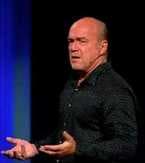
Pastor Greg Laurie draws from Jesus cleansing the temple to call for "spring cleaning" in our lives—removing sin, distractions, and barriers that hinder true worship and keep people from God, while highlighting Jesus' tears over rejection and righteous anger at exploitation, urging us to let Christ fully reign as Lord every day.
The Great Divide: Neat Freaks vs. Messy People
Well let's turn in our Bibles now to Matthew chapter 21. And the title of my message is Spring Cleaning.
And I want to start with a quick poll. How many of you are very organized, neat people? Raise up your hand. Sometimes you're... Wow, a lot of them. Okay. Sometimes you're referred to as neat freaks, right? Okay.
How many of you are messy people? Raise up your hand. See? I'm one of you.
Well, my wife and I, we're like polar opposites in a lot of areas. And this is one of them. She is very organized. She is very neat. I am messy. And I am always surrounded by clutter. I have a hard time throwing things away. I hang on to them. I save them. I might use that one day. And, you know, I'll need this another time. And I'll save clothes that I've had for so long, you know. Well, it'll come back again someday. And, well, you know how that goes.
And so my wife is always cleaning. And I'm always making messes. So we're really a great pair, actually. Because it gives her something to do. And it gives me someone to clean up after me. Sorry, that didn't come out right.
But my wife is so neat that sometimes she will clean even before we're finished eating. She'll make a meal. And I'm eating. And she's already, like, putting the food in the sink. I'm, like, still eating off of my plate. You know, once she made the bed while I was still in it. I was gone for a week. No one knew where I went to.
The Greg Way vs. The Kathy Way of Cleaning
Well, look, there's a right and there's a wrong way to clean things up. There's the Greg way. And there's the Kathy way. That's my wife's name. The Greg way pretty much is summed up in this statement. Never do today what you can put off until tomorrow. It's the motto of the procrastinator. You know, just deal with it at another time, basically. Throw it in a drawer. That's a great thing for me. Just throw things in drawers. And now I look at things in drawers and I'm afraid to even look in there. There's so many things in there.
The Kathy way is to organize it properly. I sweep it under the rug. She picks the rug up and cleans up underneath it and so forth. Well, look, there's a right way and there's a wrong way to deal with messes. There's the Greg way, which is, by the way, the wrong way. And there's the Kathy way, which happens to be the right way.
Now let's apply that to our life a little bit. Some will take the Greg approach to cleaning, which is just do a few exterior changes, but never deal with the significant problems on the inside. Others will take the Kathy approach, which is get to the core of the problem, the source of the mess, and it must be removed.
Now, I've said all these nice things about my wife. Let me say something slightly critical. I got in the car she drove last night, and it smelled like onions. And I said, you ate in the car on the way home. She had kind of hidden it from me. She had gone through Der Wienerschnitzel. It's just one of her favorite places. And I said, look, I don't care, but an onion got loose. And so we went and we tried to find the onion. And she thinks she found it, but I've been smelling onions all day long. You know, it's trapped in that car. So we've got to get... we've got to find that stinking onion, and it's got to go away.
And in the same way, when there's a stink in your life, now there's a source to it as well.
Jesus Cleanses the Temple
I bring this up because here in Matthew 21 is the story of Jesus cleaning the house of God. Jesus going into the temple and driving out the money changers. This all happened in the aftermath of Palm Sunday, where the Lord rides into the city of Jerusalem to the cheers and praises of the people. Then he goes into the temple and drives the money changers out.
Now I'll explain a little bit more about what these guys were actually doing, but let's just say, as just sort of a preview, that they were preying on the people instead of praying for the people. They were taking advantage of people and keeping them from God. So this angered Christ, and he drove them out.
Now, by the way, this is the second time he cleansed the temple. The first time in the Gospel of John, he came in with a whip. I like that, because that sort of flies in the face of the caricature of Jesus as meek and mild and never being bold and aggressive. And I'll explain what that actually means. But there he drove them out with a whip. And this time he goes in, and he cleans the temple again.
And I think there's a parallel between that and our own life. You know, when we come to Christ initially, we ask for his forgiveness, and he pardons us of all of our iniquities. He even says there are sins and iniquities I will remember no more. We're told in Corinthians, if any man be in Christ, he is an altogether different kind of person. And all things have passed away. Everything becomes fresh and new. And what a wonderful thing it is to realize that God has forgiven you of all of your sin.
But a little time passes. And sometimes some of those old sins find their way back into your life again. That little sin, or at least you call it that, begins to grow, and it becomes a problem.
The Pet Scorpion Story
Well, I read a true story about some guy in England who had a pet scorpion that he named Twiggy. Now, first of all, why would anyone have a pet scorpion? I mean, I've had all kinds of pets over the years. I've had dogs, and I've had birds, and I've had fish, and I've had every kind of reptile from lizards to turtles to snakes. I've even had some amphibians like salamanders and newts and so forth. Not Newt Gingrich, just newts, you know. But I've never had a scorpion. Might also have never had a cat. But I'd have a cat before I'd have a scorpion, for sure. I mean, why would anyone want this creature? It's known for pinching and attacking. It's very aggressive.
Yet this guy who lives in England has a scorpion. Here's what's even stranger. Every night, according to this article, this man would kiss his pet scorpion goodnight. Now, it's weird enough to have a pet scorpion, but who kisses a pet scorpion goodnight? This guy did.
Well, one night he took little Twiggy, put him in his hand. The scorpion went to kiss him, and Twiggy gave him a pinch on the lip, and he screamed in horror, and Twiggy... That's Twiggy's brother. An overweight scorpion. So Twiggy jumped in this guy's mouth, I'm not making this up, and gets him on the tongue. And the man said, when he was interviewed, he couldn't believe that Twiggy would do this.
Well, okay, the first thing that comes to mind is, what kind of idiot kisses a scorpion? But I could just as easily ask, what kind of idiot underestimates the power of temptation? It's the small things that always turn into big things, isn't it? Then we're shocked when it turns around and bites us and hurts us.
So it was with the temple. Little messes turn into big messes. So Jesus comes to clean house. He cleansed it once, but the money changers were back, so he cleanses it again. So let me now ask you, does your temple need cleansing? Are there some things in your life that shouldn't be there right now? Some sins, some vices, some bad habits that have found their way back into your life, or maybe there are things that you never did, but you've started to do that are sinful.
When Backsliding Makes Things Worse
You know, one of the strange things is when people start to drift spiritually and then ultimately turn their back on the Lord, sometimes they're worse off than they were before they became Christians in the first place. We're told in 2 Peter 2:20, these people escape the wicked ways of the world by learning about our Lord and Savior, and they get tangled up with sin and become a slave again, and they're worse off than before.
Listen, don't think this could not happen to you. Nobody falls away all at once. It's always little things turning into big things. Thus, we need constant cleansing. Back to the Kathy way of cleaning. Clean it now. Now, don't let it turn into a big, giant, stinking mess. Deal with it now. And maybe we need to deal with that.
Jesus Weeps Over Jerusalem
We're going to see how the Lord dealt with the problems in the temple. We're going to see two very significant emotions on display in the life of Jesus in this chapter. We're going to see Jesus weep, and we're going to see Jesus angry. And I'm very interested in knowing why God would weep, what would break the heart of God. We'll see what it is in a few moments. And then we're going to see what makes God angry as well. And let me just say that anger is not always a bad thing. There is a place for righteous indignation. But the Bible simply tells us that Jesus was fully God and fully man, and so we see his emotion.
Now, before we read the text, let's get sort of the background. There was an excitement in the air. The fame of Christ was spreading. There was a sense of anticipation that something big was about to happen. And the people believed that Jesus, the Messiah, was going to overthrow Rome. Now, that is because they had a misunderstanding of the role of Messiah. Scripture does promise that one day Messiah will come and right all the wrongs and establish his kingdom on earth. But Scripture also teaches that Messiah would come and suffer and die for the sins of the world. Somehow, the Jewish people did not understand this, and they just thought Messiah would come and take over. And they were under the control and tyranny of Rome, so they really wanted deliverance. And they thought Jesus was going to bring it to them. They thought Jesus was going to, through a militant overthrow, drive the Romans out of Judea, and the Jews could rule their own land again.
But much to their surprise, Jesus did not come to deal with Rome's army, which he could have dealt with easily, trust me, though it was the most powerful military force on the earth, he goes into the temple and drives out the money changers. And it just reminds us, when God wants to fix a country, he always deals first with his people.
You know, we already dealt with this in our series called Hope for America, and we pointed out that we're so quick to place the blame for our country on the politicians, or on the people that produce entertainment, or on the secularists, or the liberals, or whoever else we want to blame for the problems. But God says, you know, when a culture starts falling apart, it's my people. And we looked at 2 Chronicles 7:14, where God says, if my people, which are called by my name, will humble themselves and pray, and seek my face, and turn from their wicked ways, then I will hear from heaven, and forgive their sin, and heal their land.
In the same way, Jesus deals with the wrongs in the temple. That's what he always will do. So, we come now to Palm Sunday, and Jesus is riding in to the city. But he knows what's happening. Jesus knows he is coming not to take over and rule and reign as a militant Messiah. He knows he is coming as a suffering Savior. Jesus knows what he's up to. He knows it's time to openly say, I am the Messiah.
Jesus' Triumphal Entry and Tears
So, let's read about it now. Luke 19, verse 37. Then as he was drawing near the descent of the Mount of Olives, the whole multitude of the disciples began to rejoice and praise God with a loud voice for all the mighty works they had seen, saying, Blessed is he that comes in the name of the Lord. Peace in heaven and glory in the highest. And some of the Pharisees called out to him from the crowd, Teacher, rebuke your disciples. Jesus answered and said, I tell you that if these would keep silent, the stones would cry out.
Now as he drew near and saw the city, he wept over it, saying, If you had known, even you especially, in this your day, that things made for your peace, but now they are hidden from your eyes, for the days will come upon you when your enemies will build an embankment around you, surround you, enclose you in on every side, and level you, and your children within you to the ground, and they will not leave in you one stone upon another, because you did not know the time of your visitation.
So here's Christ now, riding into the city of Jerusalem on a donkey. The people lay the palm branches at his feet, hence Palm Sunday, and they cry out the words, Hosanna to the son of David. Jesus knew what he was doing. He was doing something that would draw attention to himself, which is interesting, because up to this point, you might say Jesus flew under the radar a little bit. When he would do a miracle, he would say, tell no man. Keep this to yourself. When people would press him to declare his messiahship, he would say, my hour has not yet come, but now his hour has come. Now he is headed for the cross, and he rides a donkey.
Now that doesn't mean a lot to us. So we think, well, why did he ride a donkey? Because we don't think of donkeys as glorious animals. I mean, we think of a beautiful horse, you know, a Persian steed would be more appropriate. I mean, this is sort of like, you know, the conqueror coming into town in a fiat, you know, or riding in a vest. No. But actually, that's not the way it was at all. Looking back historically, we know that in these days, when a king would enter a city, he would ride a war horse in order to convey that he was powerful and he was conquering. That's the way a king would come. But if that king happened to be a beloved king who was loved by the people, he would enter the city riding a donkey. This spoke of benevolence. Here comes the king. He's accessible, but you're declaring you're a king.
When Jesus got on the back of that donkey and rode into Jerusalem to the praises of the people, he was saying two things. To the Romans, he was saying, that's right, boys, I am a king. And to the Jews, he was saying, that's right, folks, I am your Messiah. This was a very intentional thing that he was doing. He was publicly declaring his lordship and messiahship, and he was also fulfilling Bible prophecy because scripture said in Zechariah 9:9, your king comes to you riding upon a donkey. And so he's doing that. He is fulfilling prophecy. And the hour is coming when he's going to fulfill other prophecies.
We look at all the prophecies that have already been fulfilled that spoke of the fact he would be born in Bethlehem, conceived in the womb of the virgin, that he would ride into the city on a donkey, that he would be crucified on a cross, that he would rise again from the dead, all fulfilled exactly as scripture said. And now we have a whole grouping of scriptures that speak of what is yet to come, like in Matthew 24 that says that there's going to be war and conflict around the world. There's going to be an economic meltdown. There's going to be the regathering of the Jewish people in their homeland. And then they're going to be scattered. And they're going to be brought back together again. And then they're going to be isolated. Then they're going to come under attack. Just as surely as those prophecies have been fulfilled, these prophecies are going to be fulfilled. But next time he's not coming on a donkey, he's coming on a white horse. According to Revelation 19, and every eye will see him.
It's also worth noting that when Jesus came into town on Palm Sunday, he was a wanted man. I don't know if there were posters around town, wanted Jesus, the Nazarene, you know. But he was a wanted man. And effectively, a contract had been put out on his life. The chief priests had said, if anyone saw where Jesus was, they should report it, that he might be seized and arrested. So he comes forth publicly, but not as a helpless victim, but as a great Victor. He was in control, and everything was right on schedule.
The people of misunderstanding say, Blessed is he that comes in the name of the Lord, verse 38. Another gospel tells us they cried, Hosanna, which means save now. So this appears to be a very happy day. The disciples' hearts must have been leaping with joy, as it seemed as though the people were beginning to understand what they had known all along, that Jesus was the Messiah, that he was the King. They probably felt vindicated. But things were going to go south quickly, because he was going to be arrested and crucified. Now that was all part of God's plan, but the disciples didn't know that.
But here's what was happening. The people wanted Jesus as their King, but on their terms. They wanted a Messiah that would conform to their plans, instead of they conforming to his plans. They wanted Jesus to destroy Rome, not their cherished sins or their hypocritical, superficial religion. There's a lot of people like this today. They'll sing the praises of a Jesus that will give them wealth, success, and happiness. But they recoil from a Christ that would require obedience, commitment, and death to self. And they have a false concept of God. They say, well, I think God is this, and my God is this way. And, you know, I don't believe in the God that would judge, or a God that would bring repercussions for sin. I believe God is just loving and gracious and all accepting and so forth. And so effectively, they're customizing God. Like he's an app on an iPhone or an iPad. You know, why can't we have an iGod, right? That does what we want him to do when we want him to do it. We want to be in charge.
This is demonstrated in statements like this. Well, I'm mad at God. Really? Oh, yes, I'm mad at God. Why? Well, he disappointed me. I've even heard people say, I need to forgive God. I think statements like that are crazy. You say that, man, you're like El Pollo Loco, okay? You are the crazy chicken. Who do you think you are to say you're mad at God? Romans 9:20 says, Who in the world do you think you are to second-guess God? Do you for one moment suppose any of us knows enough to call God into question? Clay doesn't talk back to the fingers that mold it, saying, Why did you shape me this way? Listen, you are the Clay. He is the Potter. You are the sheep. He is the Shepherd. You are the branch. He is the vine. You are the recipient. He is the giver. He is God. And you're a punk. We all are. We need to understand that.
Now, I understand when people say they don't understand why things happen to them in life. I don't think there's anything wrong with saying I'm sad. Even that I'm disappointed. Even to say I don't know why and I'm asking God. But to say you're mad is foolishness to me. Some will say when Christ is such, well, you know, I lost my faith over that. Really? Then you probably never had real faith to begin with. Because the faith that can be lost is no faith at all. The faith that cannot be tested is the faith that cannot be trusted. And if your faith cannot sustain you through a time of crisis, then your faith is not legit. Okay?
So, don't tell me you're mad at God and you're trying to forgive God. You just need to understand that God is in control and he has his ways and we don't always understand them. The Bible says the heavens are high above the earth, so are God's thoughts above your thoughts and his ways above your ways. See, Jesus was not going to meet their personal expectation. Johnny Cash has a song called Your Own Personal Jesus. You maybe have heard it. And the idea of that is kind of a God that does what you want him to do when you want him to do it. But that's not the Jesus of the Bible.
Listen to this. God is able to do what he pleases with whomever he chooses whenever he wishes. It's here on the screen. God is able to do what he pleases with whoever he chooses whenever he wishes. He doesn't need our permission. So, the problem here now, as we're going to see, is Jesus was not going to do what they wanted him to do. So, you're going to see how fickle this crowd was. On one hand, they're praising him. Hosanna. And then just seemingly moments later, they're turning on him. The same people that cried, Hosanna, on Palm Sunday, cried, Crucify him, only hours later.
Jesus Cleanses the Temple
So, now Jesus comes, and we read that he weeps. He weeps openly. Now, this is the second time Jesus wept openly. The first time was at the tomb of Lazarus. There he wept, quietly, but here it was open. The Greek word that is used to describe Christ weeping here is strong, signifying bitter anguish, as though one were mourning the dead. It was audible. The disciples stood in awe as God openly wept. You wonder if a hush fell over the crowd as they saw the sight, or if they just continued on celebrating. Like, what's his problem? Man, Jesus, you're such a downer. Why are you crying? Because he knew what was coming.
You see, his ministry was almost over. Time was short. And by and large, he had been rejected. He'd healed their sick. He'd raised their dead. He'd cleansed their lepers. He had fed their hungry and forgave their sins. But he remained mostly alone and rejected. And he knew one of his own was about to betray him, Judas Iscariot. Don't forget, Judas was a friend of Jesus. That's why we call it a betrayal. Even Christ said when Judas came in the garden, Friend, why have you come?
Jesus knew that Caiaphas, a high priest, was going to try him on false charges. And Jesus knew he was going to be sent to the Roman governor, Pontius Pilate, and ultimately sent to the cross. He knew the people that were singing Hosanna right now were going to turn against him. And it broke his heart because he knew they were going to face repercussions for their sin. He didn't want that. But God isn't going to force his forgiveness down anyone's throat.
I know people who have made wrong decisions in life. You know, you talk to them and say, you know, you really shouldn't do that. You shouldn't dissolve that marriage. You don't have biblical grounds. You need to hang in there and do what God says. Oh, my situation is different. Actually, it isn't. I've seen worse marriages survive things like this and actually get strong. You know, you really shouldn't marry that non-believer. The Bible says to not be unequally yoked together with non-believers. Yeah, but my word of love, it's different. Yeah, you know, but the Bible says you shouldn't do it. Well, I want to do it. Okay, you can do it. You know, I can't force you not to do it or to do it. So they do it. And then they come back and they say, oh, I should have listened to you. Yeah, you should have. And you wish they had.
And Jesus knew that because of their rejection, judgment was coming. He knew, being God, knowing the future, that in 40 years, Jerusalem was going to come under siege by Titus. And that siege would last for 143 days and 600,000 Jews would be put to death. And thousands would be taken into captivity. And this beloved temple that they loved so much, the second temple, was going to be set on fire. Then it was going to be dismantled stone by stone, exactly as Jesus said it would. So he knew the repercussions of sin that were coming, that that breaks God's heart.
Listen, God will not violate your free will. God will not make you believe. God will not make you love him. If you don't want to, you don't have to. But yet, despite the fact that they were going to turn on him, he was still going to go to the cross and die for their sins. John 3:16 says, For God so loved the world, he gave his only begotten son. And whosoever believes in him should not perish, but have everlasting life. Scripture says, While we were yet sinners, Christ died for us. He knew all this about them.
If you knew someone was going to betray you, would you make them your friend? Let me put it another way. If you knew the future, would you pick losers or winners? If you knew, like, what store had the winning lottery ticket? Would you go buy a ticket there? Or would you go to another place that you knew had no winning lottery tickets? Well, of course, you would go to the place that had the right ticket. Because you want to win. That's what's so amazing, is God having foreknowledge, yet still loves us. And still extends his grace to us.
Jesus Drives Out the Money Changers
So, let's pick this story up, Luke 19:45. He went into the temple, began to drive out those who bought and sold in it, saying, It is written, My house is a house of prayer, and you've made it a den of thieves. He was daily teaching in the temple, but the chief priests and the scribes and the leaders of the people sought to destroy him, and they were unable to do anything for the people, were very attentive to hear him.
Now, this was not an explosion of anger. This was not God losing it. Did you hear about that pilot? That was actually flying the plane and saying all kinds of crazy stuff. And then he went out of the cockpit, and the co-pilot changed the code and wouldn't let him back in. He's screaming and yelling. That's kind of scary, isn't it? Wasn't he just flying us moments ago? I mean, that's a man with a lot of power. I think it's kind of funny. You know, they make a pilot go through security to check that he doesn't have any weapons. He's in the cockpit. He could turn the plane into a weapon if he wanted to. I mean, but we think, oh, pilots are good. Not this one. I don't know what the problem was. Maybe they didn't give him enough peanuts. They're always so cheap with them. No, they give you like one little bag this big. Can I have another bag of peanuts? No. Whatever it was, it set him off. That has to be a frightening thing.
Well, listen, God wasn't losing it here. God doesn't have temper tantrums. Can you imagine if God just lost his temper? Planets are flying around, you know? No. It was righteous indignation. Now, Mark's gospel gives us a few more details about what happened when Jesus cleansed the temple for the second time. Mark 11:15 says, Jesus entered the temple, began to drive out the merchants and their customers. He knocked over the tables of the money changers. I love this. This is pretty hardcore, isn't it? He knocked over the tables. He just said, Okay, you guys, get out of here. No, no, no. He picked up the tables, threw them up. You know, that's a violent act. We've seen it in a thousand westerns, right? You know, you're in the bar, right? And the piano player is playing the upright. It's always an upright piano. He always has a garter around his arm and a little derby hat, right?
This is the law of all westerns. So he's playing, Ding, ding, ding, ding, ding, ding, ding, ding, ding, ding, ding. And there's the guys around the gambling table and the smoke is in the room and all so forth. And then suddenly, you know, someone comes in and they open up the doors and walk in and they want to make a scene or maybe they're sitting at the gambling table and one cowboy says to another, I think you're cheating. The other one says, I'm not cheating. And another one says, I can't quit you. And the other one says, what movie is this? Okay, so... So then one cowboy, I'm not going to explain that to you. So one cowboy picks up the table and turns in and the chips go flying. And the piano... ding, ding, ding. He stops. He dives under the piano. Guns come out. It's a fight. It's a brawl. It's a big deal to turn over a table.
Jesus knew what he was doing. Now you read this and say, no, wait, wait. What happened to the meek and mild Jesus? I have this little picture on my wall. You know, he's carrying a little lamb around his neck. I can't stand that anemic, wimpy Jesus. Because that's not the Jesus of the Bible. The scrawny little dude. Walking around with the staff doing this all the time. Listen. Some of you think, what are you making fun of Jesus? I'm making fun of the fake Jesus. Now let me tell you about the Jesus of the Bible. He was a man's man. He was strong. What did he do for a living? He was a carpenter. He moved pieces of wood around. He chopped trees down. He built things. Everywhere he went, he walked. Even Pilate, after he had whipped him, said, behold the man. Jesus was a man's man. And those tables weren't little collapsible card tables. Those were big, ornate, heavy tables. He's turning the tables over. He's making a point.
You say, well, how is that meekness? Well, do you even know what meekness is? Meekness is not weakness. Weakness is inability to do anything. You know, you can't, you don't fight back because you can't. So if someone hits you and you don't fight, hit back, oh, he's meek. Yeah, he's probably weak. Meekness is someone hits you, and if you hit him back, he wouldn't live. And you say, I'm not going to hit him back. That's meekness. It's power under constraint.
Years ago, our son Jonathan was playing with our dog. He was a German Shepherd. He was trained. And this dog could take care of business if he needed to. And if anyone came around that he didn't know, he'd look at him like, whoa, okay, watch out. Don't mess with this dog. And Jonathan used to torment this dog. And this dog never bit him or even nipped at him. One time I was looking over, and the dog is laying on the floor. His name was Erlo, by the way. He came pre-named. So Erlo, the German Shepherd, is laying on the floor. I don't know where Jonathan found him. He found a pair of pliers. And he's going to Erlo's ear. I'm like, no! And Erlo would just be like, no, don't do that. Please stop. You know, that's meekness, right? I was impressed with that dog's ability to control himself. And so Jesus was meek in that he didn't always strike back when he could. But now he's speaking up for others. See, he wouldn't defend himself, but he was defending people. And he didn't like what these guys were doing.
Why Jesus Was Angry at the Money Changers
Well, what were they doing? Well, look, just kind of the big picture is they were selling things in the temple. So it works out this way. When you would come to the temple, maybe you're a poor Jewish family, and you'd bring your little lamb in to offer to God as a sacrifice to atone for your sins. One of the priests working would look at it over and say, you know, this lamb is really not right. There's blemishes. Well, there are no blemishes. No, it's blemish. We can't accept this lamb. But we're having this special close-out deal and pre-approved kosher lambs. And if you want to buy one, we'll sell it to you now. But you can't offer your lame lamb. You have to take one of these here. And so people would pay these jacked-up prices for these animals that they would accept. And so people were being taken advantage of. They were being ripped off.
So what's the parallel to us today? Well, here's the thing. God extended his love, even in the Old Covenant, to everybody. Not only Jews were allowed to approach God, but Scripture tells us in Isaiah 56 that God would bless the Gentiles if they would commit themselves to the Lord, if they would bring their burnt offerings and their sacrifices. God says, I'll let them in. He says, because my temple will be called a house of prayer. So this is what Jesus means when he says, you've taken this house of prayer and you've turned it into a den of thieves. You're keeping people away. Anyway, the Jews were saying, no, only Jews can come. No non-Jews. Jesus is saying, no, you're wrong. Everyone should be able to come.
Well, this can happen in the church as well. Can it? You know, maybe a visitor comes. And they don't know the protocol. They don't know the dress code. Okay? So, they come wearing something that's not quite appropriate. And, you know, oh, look at that. I should be coming that way. Yeah, but wait a second. Do you know their story? Maybe this is their first time at church. Maybe they've lived a life. They don't know what they're supposed to wear. They don't know what slogan's acceptable on a shirt. They don't know what to say. They might say the wrong thing. And so, we might look down on them. We might be kind of judgmental on them. We might even turn them away and say, I'm sorry, you can't come in here. You're not dressed appropriately.
Guess what? That makes God angry. Because the church is a place to hear the word of God. The church is a place to worship the Lord. The church is a place to pray. But the church is a place for sinners to come and find God. And if a sinner comes who doesn't know the protocol or the dress code or the secret language of Christians, and they come in and they're turned away or made to feel uncomfortable because of some judgmental stare from a believer, we're missing it. We should look at those people and go, I think they're a visitor. Great. I'm going to go out of my way to welcome them. Hey, how are you? Is this your first time here? Yeah. All right, man. Come on here. Come and sit next to me. They feel loved. They feel welcomed. We should never keep people from Christ. We should always be drawing them to Christ.
You know, when a non-believer comes, they're checking things out. Not just what's happening here on the platform. They're checking out what's happening out there too. They're watching you. They're watching your reaction. Do you even care? Are you paying attention? Is this important to you? Should it be important to them? Here's the question to ask ourselves. Are we a bridge or a barrier to people coming to Christ? A bridge or a barrier? Every Christian tends to be one or the other. Listen, we're all going to be a witness if we want to be or not. The real question is, are we going to be a good witness or are we going to be a bad witness? But we're going to be a witness. We're some kind of an example. We're a good example or a bad example.
Invitation to Cleansing and Commitment
You know, Easter Sunday is only days away. A perfect day to bring people to church. And I would ask you to make an effort to bring someone that you know that is not yet a believer. And I'll even kid people. I talked to a couple non-believers today and I said, well, you're coming to church Sunday. I said, everybody goes to church on Easter Sunday. Even you have to show up. Kind of kidding them a little bit. They're like, oh yeah, it's true, it's true. So what time are services? Okay. You know, so I'm using it as an opportunity. In a nice way, but a very direct way.
Say, come on, you've got to show up on Easter. Everybody comes. Christmas too, of course. But bring them out. And maybe you'll find out what kind of an example you are. You know, you sort of leverage your relationships. And people that you've hopefully been a good example to. You say, hey, you know what? I'd really like you to come as my special guest to church on Easter Sunday. And I say, you know what? I really admire you. There's things about you that I think are really outstanding. And because of that, I'm going to come check it out. I'm going to give it a go. All right, great. You go pick them up. You might invite another person or someone else might invite someone. Hey, I want you to come to church with me. And they say, if it's going to make me like you, I don't want to go. It's true. Because you know what? You're just weird. And I don't want to be like you in any way. Well, that means you're a bad example. Are you a bridge? Or are you a barrier?
I remember when I was in high school, before I was a Christian. I mean, at this time, I was like doing drugs and partying. I was just an idiot. Didn't know God at all. And we had, you know, our PE class, and we'd play baseball. So, you know, playing a game, and some guy is out there in one of the bases or outfield. I can't remember where he was. And he was cussing so much. I mean, just unbelievable profanity. You know, I'm a non-Christian. I cuss for the best of them at this point. But even I was shocked at the profanity of this guy. I said to one of my friends, what's his problem? As I recall, I think, I said, what's his trip? That was 60s vernacular for him.
What's his problem? What's his trip? Oh, they said, he's a preacher's kid. I said, really? I couldn't even understand it as a non-believer why a person would cuss so much. It's like he was cussing on top of cussing and cussing even more. Everything was blankety, blankety, blankety. I mean, even I didn't cuss that much. I just cussed when I felt a cuss word was appropriate. I'm not justifying it. I'm just explaining that this guy was the worst witness ever and he's a preacher's kid. It's a sad thing because people like that can keep people away from God. And Jesus doesn't like it when we keep people away from God. That's why he was driving these people out of the temple, these money changers. You're taking my house, a house of prayer, a house for everyone, a place for people to know God, and you're driving them away. And I don't want that and so I'm going to drive you away so there's room for these other people.
So I've often said a church should be a hospital for sinners, not a museum for saints. And here at Harvest, we are about reaching people that don't know the Lord. So off they went.
Now I don't know how you got here to this service. Maybe you were brought by a friend, someone you admire, someone you think highly of. And here you are listening to this. And I wonder if you've had your sin forgiven. Maybe there are things in your life that you've tried to change. You know, you've tried to overcome addictions or get rid of vices or make yourself a better person. You know, even before I was a Christian, I wanted to be a better person. I remember that I wanted to improve myself and I wanted to be more loving and I wanted to be, you know, live a life that was meaningful. But I didn't know how to do it. And people don't know how to change themselves. And really, you can't change yourself. You need to come to God and just say, help, I need your forgiveness. This is why Jesus died on the cross for us. Because there was no other way to meet the righteous demands of God. There was no other way to bridge the gap between a perfect and flawless God and an imperfect and flawed humanity. So Jesus, fully God and fully man, was uniquely qualified to bridge that gap and he died on the cross for our sins. And he longs for a relationship with us.
See, the problem with these people is they wanted Jesus on their terms and he was king for a day. But Jesus doesn't want to be king for a day. He doesn't want to be king on Easter and Christmas and an occasional Sunday when you haul your carcass out to church. He wants to be king every day. He wants to be Lord every day. He wants to be in your life. But I wonder if your life is filled with things and you don't know how to fix it. You don't know how to change it. You've tried everything. Here's what you need to do. It's not a 12-step program. It's a one-step program. You come straight to God and say, help. Help me and forgive me. And Jesus, who died on the cross for your sin and Rose again from the dead, will forgive you and come and live in your life. But you must turn from your sin and put your faith in Him.
And I'm going to give you an opportunity to do that right now. So if you're not sure if your life is right with God, if you're not sure that you'll go to heaven when you die, I hope you'll respond. I really hope we've been a good example to you tonight. I hope if you've come here as a visitor, you feel loved and welcomed. And I hope that you will come to Jesus right now.
So let's pray together. Father, I pray for every person here, every person listening and watching. Help them to see their need for Jesus and help them to come to you now, we would ask. Now while our heads are bowed and our eyes are closed and we're praying, if you would like Jesus Christ to come into your life, if you would like your sin forgiven, if you would like to know that when you die you will go to heaven, if you want Christ to forgive you, I would like you wherever you are to stand to your feet and I'm going to lead you in a prayer. A prayer of committing your life to Jesus.
I want you to do is to stand to your feet wherever you are and I'm going to lead you in a prayer where you will pray out loud right where you are. So just stand up right now wherever you are if you want Christ to come into your life. God bless you. Stand to your feet. God bless you. If you want God to forgive you, if you want to go to heaven, If you want Jesus to come into your life, just stand to your feet and I'll pray for you right now. Anybody else? God bless you. I can't see all of you, of course, but it doesn't matter if I see you. This is between you and the Lord. Just stand to your feet and I'm going to lead you in a prayer of committing your life to Jesus Christ. God bless you. You that are watching on the video screen out in the amphitheater, in the court building, at Orange Crest, at Orange County. You stand to your feet as well. And I am going to lead you in this same prayer. Again just stand up. And we are going to pray together.
Anybody else? You want to make this commitment to Jesus. Let me lead you in prayer. Stand to your feet. We are going to pray together. God bless you. God bless you. Maybe there are some of you that have been living a double life. You know what is wrong. You know what is right. And you are ready to come clean to God today and make a recommitment to follow Him as a Christian. I want you to stand up. If the Lord has been speaking to your heart. He has been disciplining you. And you pray with us as well. Just stand up. God bless you. Anybody else in this final moment, if you are going to stand, stand now. Wherever you are. Watching on a video screen. Stand to your feet. Wherever you are we are going to pray this prayer together. One final moment. Anybody else stand now. Anybody else stand now. God bless you. God bless you. God bless you. God bless you. God bless you. And even if I don't see you it doesn't matter. The Lord sees you. Make that stand.
Alright. All of you that are standing I want you to pray this prayer Pray out loud after me. And this is where you are asking Jesus Christ to forgive you of your sin. Again, as I pray, pray this out loud after me. Okay? Pray this with me now if you would.
Lord Jesus, I know I am a sinner. But you died on the cross and shed your blood for every sin I have ever committed. I am sorry for my sin. I turn from it today. I choose to follow you from this day forward as Savior and Lord, as God and friend. Thank you for accepting me and forgiving me. In Jesus' name I pray. Amen.