
Greg Laurie - A Current Message from Ancient Ephesus (11/23/2017)
- Watch
- Donate
- Become Partner
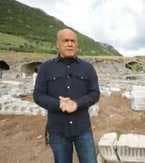
Pastor Greg Laurie walks the ancient streets of Ephesus, reflecting on how the Apostle Paul brought the Gospel to this pagan city dedicated to Artemis, transforming lives and establishing a great church. He warns from Revelation that the Ephesian church lost its first love and influence, urging believers today not to leave their passion for Christ or risk ending up like the ruins around us.
Walking the Stones Paul Walked in Ancient Ephesus
I'm walking down the roadway here, Main Street thoroughfare in ancient Ephesus. Look at these stones. These are the actual stones that the Apostle Paul would have walked on. It's amazing to think as you look around at what is left of this city, of what it must have been like. The magnificent columns and incredible buildings. This city dedicated to the worship of so many false gods. A city that was transformed because someone took the Gospel to them. That's what the Bible reminds us. How beautiful are the feet of those that bring glad tidings of good things.
In Ephesians 6, actually the words of Paul directed toward this very city. He said, having your feet shod with the preparation of the Gospel of peace. God wants us to take our feet and put on our Gospel shoes, if you will, and bring the Gospel to our culture today.
I'm in the ancient city of Ephesus. This city is filled with New Testament history. I'm not far from a temple dedicated to Caesar Augustus. Ephesus, who of course is a Caesar in the New Testament story, who gave the decree that everyone must be taxed. Thus, Mary and Joseph made the journey to Bethlehem. But this city, Ephesus, plays a prominent part in the New Testament church. Especially in the life and ministry of the Apostle Paul.
Ephesus: Paganism Central and the Power of the Gospel
Paul spent two years in this city ministering to the people. And let me tell you why. This place was like paganism central. It was all about the worship of this false goddess known as Artemis or Diana of the Ephesians, they called her. In fact, this is a representation of the image. They made money selling artifacts of this little goddess. And it was very profitable for them. And everything was just going along fine with all of their wizardry and magicians and occultism until the Apostle Paul showed up.
And then he began to preach the Gospel here. And God began to work. People were being healed. In fact, there was... People were coming up and taking like the sweatband that Paul wore and touching it to themselves. And they were being healed. There's one story from Scripture of a guy who was a demon possessed. And a couple of traveling exorcists went up to him and tried to cast the demon out of him in the name of Jesus whom Paul preaches. And the guy who was possessed by the demon said, Paul I know. And Jesus I know. But I don't know you. And he attacked them. And they ran away.
And this just freaked the people out. Because in this place of darkness, God was at work. And the people started turning to God. And so they brought all of their parchments with their writings about the false gods and occultism. And all these false ideas. And they put them in a big giant fire and burned them. And the city was impacted by the Gospel of Jesus Christ.
It's an amazing thing that all this worship was of this little icon here. This goddess. Diana. Or Artemis as she was known. And they made so much money selling this image. That one guy named Demetrius said, You know, these men, speaking of the apostles, are going to mess up our trade here. We need to stop them. And so a big crowd grew. And a riot broke out. And they spilled into this massive stadium that still stands today.
And Paul wanted to go and preach to them. And the other apostles said, No, we don't want you to do it. Don't go in there. Because I think they were concerned for his life. But it just shows you the power of the Gospel. And the impact it can make.
The Church of Ephesus: Commended Yet Warned
You know, the Bible says, When the enemy comes in like a flood, the Spirit of the Lord will raise up a standard against them. And here in the city of Ephesus, a great church was established. In fact, the book of Ephesians was written to this church. I mean, think about how significant the book of Ephesians is. That is the book where we read about the fact that we're saved by grace through faith in Jesus Christ. Not of works, lest any man should boast.
Ephesians is the book that tells us that we're seated in the heavenlies in Jesus Christ. Ephesians is the book that tells us that we're engaged in a spiritual battle and we wrestle not against flesh and blood but against principalities and powers and spiritual might in high places. And as the Gospel went out and the church was established, it was a great thing.
So wherever the devil is at work, know this much. God will always have his people there to proclaim the truth.
Jesus' Message to the Church in Ephesus
The thing we think about most when we hear the name Ephesus is probably the church of Ephesus mentioned by Jesus in the book of Revelation. Remember, John was on the island of Patmos and he had a vision where he was catapulted into the 21st century, if you will. And he saw the future and he was given a flyover of the churches. The seven churches.
And Jesus effectively said what he thinks of the churches. The first church was Ephesus, where we are right now. Then there was the church of Smyrna. Then there was the church of Pergamos, followed by Thyatira, Sardis, Laodicean, Philadelphia. But it all started here in Ephesus.
And remember that Jesus said to these believers, you're in danger of leaving your first love. He said, I appreciate all that you do for me, your hard work, your discernment. And think about it. They're in this crazy pagan city where everything is believed under the sun. And yet they managed to follow the Lord and serve him. So that's significant in and of itself.
So Jesus commends them for the fact that they had this discernment and they worked hard and served him. But Jesus said, but I have this issue with you. You're leaving your first love.
The Warning: Don't Lose Your First Love
So Jesus says, remember from where you have fallen. That's our number one. Repent, our number two. And repeat, get back and do the first works quickly. But then Jesus gave a warning. And the warning was, if you don't do this, I'm going to remove your lampstand from its place.
Now in the book of Revelation, the lampstand or the menorah, the candelabra is a symbol of the church. Jesus says, I walk in the midst of the seven golden lampstands, which means he walks in the middle of the church. But he says to this church, Ephesus, if you don't do what I'm telling you, I'm going to remove your lampstand from its place.
What does that mean? He is saying in effect, look, you can't rest on your laurels. You can't live in your past. If you don't do what I've told you to do, you'll lose your position of influence and significance.
Well, they didn't listen. And now as you look around Ephesus today, what do you see? A great city? Once one of the greatest cities of the ancient world? No. You see ruins. Oh, impressive ruins, no question. But ruins nonetheless. Ruins that are a symbol of lives that go on the same path.
You know, we say, well, I'm not going to walk closely with the Lord. I'm going to compromise a little bit here and a little bit there. And what happens? You lose your influence. You lose your impact. You no longer are an effective witness for Jesus Christ.
Jesus put it this way in the Sermon on the Mount. He said, what good is salt if it isn't salty? It's good for nothing. Then he says, you are a light, a city set on a hill. So let your light so shine before men. They may see your good works and glorify your Father in heaven. But if you lose your light, what good are you?
And here's my question. What good is a half-hearted Christian? What good is a compromising believer? Not much good at all. Do people look at your life and see ruins? Or do they see a life that is productive for Jesus Christ?
We would all do well to take heed to the message of the city of Ephesus and the church of Ephesus, which is don't leave your first love or you will lose your influence. Our country is filled with cavernous churches that were once filled with the brim. With people worshiping God and hearing the word. And many of them lie empty now. Because those people stray. Let's not stray. Let's stay as close to him as we possibly can. Lest we end up like this city and this church.
Paul's Pictures of Ministry to the Ephesian Leaders
The second picture that Paul uses is he speaks to the leaders of Ephesus as we are stewards. He says, the ministry that I received from the Lord. Now, the word steward is just another word for a servant or a slave. I know a lot of people don't like the idea of being a slave of Jesus Christ, but it's actually the perfect description.
But let's understand what that meant. You know, back in those days, there was something called a bond slave. Paul said, I'm a bond slave of the Lord Jesus Christ. Now, a bond slave is someone who was purchased and then freed. So here's the picture. We're like a slave down in the open market. Jesus comes along. He sees us there in the auction block. He pays the full price. And we are now his slave. He owns us.
The Bible says, you're not your own. You've been bought with a price. So glorify God in your body. I am the purchased property of Jesus Christ. His ID tag is on me.
From Auction Block to Adopted Child
But wait, it goes on. Let's just go back to that illustration. So Jesus takes me from the auction block. And I'm thankful he purchased me. Because I know he'll be a good master. And he says, let's go down to the courtroom. Why are we going to the courtroom? He says, because I'm going to adopt you.
See, I am not only a slave of Christ. I'm the adopted child of Christ. Being someone who is adopted in life, I appreciate this. It's a wonderful thing that God has adopted us. Hence, we become a bond slave. The apostle Paul said that he was a bond slave of the Lord Jesus Christ. And a bond slave was a servant who was purchased, but then went on to voluntarily serve his master. He did it because he wanted to, not because he had to.
So Paul is saying to these leaders of Ephesus, you're a runner in a race, and you're also a slave. So serve the Lord. Jesus told a parable about a man that hired servants to do their work. And they said, we only did that which was our duty to do. You know, I have my duty to God. Sometimes people will come and thank me for what I do. And I thank them. But I say, you know, I'm just doing my duty. I don't deserve extra credit or special applause. I'm just doing what I'm supposed to do as a Christian.
And we're all supposed to do what we're called to do as a Christian. Because one day we'll stand before God. And we'll be held accountable for how faithful we were with what God gave us. Listen, everything that you have belongs to God. Your family belongs to God. Your career belongs to God. Your possessions belong to God. Everything. It's his. His.
So really when we say, well, my plans for my future with my money. Well, wait a second. You belong to the Lord. And we want to make sure that we remember that and all that we say and do.
Here's another thing about having God's ID tag on us. You know, when you travel and you wait for your luggage. And by the way, sometimes I check myself in his luggage. It's a much more economic way to fly. It's much cheaper than buying a plane ticket. As you can see, it works out quite well. It's going with the luggage. This part's a little tricky, but it's working out really well. So I'll see you later.
But anyway, when you travel, you have your ID tag on your suitcase. And I actually have brightly colored ones. So my suitcases stand up from all the rest. And we have the ID tag of Jesus Christ on each of us. And you know what? When the devil sees that, he backs off. Because we belong to the Lord.
Paul as Herald and Witness
Number four, Paul compares himself to a herald. He says that I have gone preaching among all of you the kingdom of God. And you will see my face no more. The word preaching means to declare a message as the herald of a king. You see, the witness tells what has happened to him. But in contrast, the herald tells what the king tells him to declare.
Elaborating on this, Paul says in verse 27 that he was going to declare the whole counsel of God. Look, as a herald, I need to give the whole message. A king's given me a message. My job as a herald is to announce it. To proclaim it. I'm not to add to it. And I'm not to take away from it.
You know, when I preach the gospel in our crusades. I feel I have a solemn responsibility to give the gospel accurately. To not distort it. To not take away from it. To not add to it. I've had people say, you know, the message you give is so simple. Exactly. I work hard at that. Because you want to leave out the things that are not essential. And keep in place the things that are core to the gospel message.
The Gospel Message: Good News in a Bad World
Really, what is this message we've been called to bring to our culture today? It's a message of the gospel. The word gospel means good news. It's good news in a bad world. The bad news is that we've all sinned and broken God's commandments. And we fall short of his glory. And there's nothing we can do to make that right in our own strength.
But the good news is, God loved us so much he sent his own son, Jesus Christ, to die on the cross in our place. And if we'll turn from our sin and believe in Jesus, he says, we can be forgiven. Okay, I'm a herald. That's the message I'm to declare.
But also as a pastor, I am to declare the whole counsel of God. So as we teach through books of the Bible, a line upon line, precept upon precept, verse by verse, we get the whole counsel. You know, sometimes there's a temptation for a preacher to only go to the topics that personally appeal to him. But the reality is, we must give all that God's word has to say.
And really, what does it matter what I think about anything anyway? I've been told in scripture that I'm to preach the word, not preach pop psychology or preach politics or preach morality per se. I'm to preach the word. People need the word of God. That's the only thing that will change a life.
It was the word of God proclaimed by the apostle Paul in this city that turned it around. And it was the negligence of the word of God that caused it to fall into ruin. The same could be said of our lives. When we believe the word of God and follow it, we just flourish and grow and we're blessed. But when we neglect the word of God, we shrivel to irrelevance.
Psalm 1 sums it up best. Blessed is the man that walks not in the counsel of the ungodly, nor stands in the way of sinners, nor sits in the seat of the scornful. But his delight is in the law of the Lord, and in it does he meditate day and night. Then it goes on to say he'll be like a tree planted by the rivers of waters that will bring forth fruit in his season. His leaves shall not wither, and whatever he does will prosper.
If you want to be a fruitful Christian and a growing Christian, you need to stay grounded in the word. Paul also in this chapter warns of false teachers coming in. He says, Grievous wolves will come in drawing away disciples after themselves. And as we are immersed in the word of God and conversant with scripture, we'll know the true from the false.
I heard the story of a man that worked for the counterfeit department in England's Scotland Yard. And there he was to identify counterfeit currency. Someone asked him if he spent a lot of time handling the fake money. And he said, I never touch the false currency. I only handle the real thing. So when I come into contact with the counterfeit, I know the difference.
I think if we're conversant with the word of God, if we read it on a daily basis, thus reading and learning the whole counsel of God, we will know the true from the false.
Paul as Witness: Telling What He Has Seen
I'm standing on a platform here in ancient Ephesus. And behind me is the great library that had thousands of parchments. And then you see the main street going through the city there. And they had public bathrooms along there for guys only, by the way. Nothing for the girls. Aren't you glad you're alive today instead of the first century? Anyway, so here, as we look over at Ephesus, we think again of the words of Paul to the leaders there.
And the next category he identifies as that of a witness. He says, I want to solemnly testify of the grace of God. From Miletus he sent to Ephesus and called for the elders of the church. And when they had come to him, he said to them, You know, from the first day that I came to Asia, in what manner I always lived among you, serving the Lord with all humility, with many tears and trials, which happened to me by the plotting of the Jews, how I kept back nothing that was helpful, but proclaimed it to you and taught you publicly, and from house to house, testifying to the Jews, and also to the Greeks, repentance toward God, and faith toward our Lord Jesus Christ.
See, the job of a witness is to just tell the truth. For instance, if you witness an accident and the police officer interviews you, you are to state the facts. You're not there to embellish your testimony or make it more entertaining or more interesting or adapt it to your own particular view. No, no, you just say what you've seen.
This is what Paul is saying. You know, we are to give testimony of what we have seen. The apostle John said, that which we have seen and heard, we declare unto you that you may have fellowship with us and our fellowship is with God.
It seems to me that if you're walking with God as you ought to, and you're in his word and you're growing spiritually, your witness, your testimony will just overflow from a Christ-filled life. If you find it's a hard thing to kind of work it up to tell others about Jesus, that doesn't make sense to me. It should just overflow.
Running the Race of Faith
So Paul is saying, hey, we are a runner in a race. We're a servant. And we are someone who is to give testimony to what we have seen and heard.
So here in the ancient city of Ephesus, the apostle Paul likens our walk with Christ to a runner in a race. He says that he wants to finish his race with joy. You know, Paul really liked the analogy of running races. He used it many times. He said in the book of Corinthians, Don't you know that those that run in a race all run, but only one receives a prize. So run that you may win.
I mean, that's the goal, right? To win. Not to get last place or honorable mention. You know, when I was back in elementary school, I went and entered a lot of races and I never won any of them. But I had a lot of those honorable mention ribbons on the wall. Honorable mention ribbons are basically an acknowledgement that you exist. You exist. You exist. And here's a ribbon. Now go away.
But you should run to win. Go for the gold, as they say. Not go to just get in the race, but go to win the race. And you know what? There's no place for mediocrity. as you are a follower of Jesus Christ. You should do the best you could possibly do and give the best that you can give to God. So you go for the gold.
Discipline and Motive in the Race
Paul also, speaking of the idea of running a race, said, I'm going to run this race, but I'm going to discipline myself lest I would be disqualified. In other words, I got to play by the rules. You can't just make up the rules as you go. You can't disregard the rule book. You have to do it the way God tells you to do it.
What is the rule book? Well, it's the Bible. The Bible is far more than a mere rule book, of course, but it does indeed tell us what not to do, as well as what we should do. So basically, we need to do what God says in his word. And he's given us those parameters for our own good to keep us away from danger.
Another thing about running the race is, I think, a motive helps. Back when I was in high school, I went out for track and field. I did a little better than I did in elementary school. And I remember I'd have to go out and practice and just run around the track. And man, that was just so exhausting. But I always found if I had an audience, I did a little bit better. And especially if in that audience was a pretty girl, right?
Well, listen, we're running for an audience, not a pretty girl. We're running for an audience of one, God. In fact, we're told in Hebrews that we're running a race and we should run in such a way to win, and that we should keep our eyes on Jesus, who is the author and finisher of our faith. That's our motive.
See, in the Greek games, when they would run in the races, at the end, there would be the emperor, or someone else holding the Laurel leaves. So that was sort of the reward. Run for the reward. Go for the gold, as it were. And so we're looking to Jesus, and that keeps us going in the Christian life.
You know, there are things that will discourage us as Christians. Things that will get us down. I think it was Corrie ten Boom that said, Look within and be depressed. Look without and be distressed. But look at Jesus and be at rest. And I think if we can keep our eyes on the Lord, we can run this race well.
And by the way, in the race of life, my competition is not with you or with another preacher. I'm not trying to outdo another minister. No, my competition, if you will, is the world, the flesh, and the devil. I want to run to win. I want to play by the rules. I want to keep my eyes on Jesus giving me the motive.
Finishing the Race with Joy
And finally, Paul says, I want to finish my race with joy. That's the key. Finishing the race. Quite frankly, it's not going to do you any good if you're in first place for nine tenths of the race and you bail at the end. Because you're disqualified. So we need to think about how we're going to finish this race that we have begun.
This is the picture that Paul uses to describe what's important to him. But he had many other word pictures he would use with these people from Ephesus.
Paul as Watchman on the Wall
Number five, and finally, Paul compares himself to a watchman. In verse 26 he says, Therefore I testify to you this day that I am innocent of the blood of all men. What does that mean exactly to be innocent of the blood of all men? Well, it's explained in Ezekiel 3, 17-18. Son of man, God says, I have appointed you as a watchman for Israel. Whenever you receive a message from me, pass it on to the people immediately. Have I warned the wicked saying, you're under the penalty of death, and you fail to deliver the warning, they will die in their sins, and I will hold you responsible, demanding your blood for theirs.
So what does a watchman on the wall do? Well, he's up high, giving him the vantage point. As I look down here on the ancient city of Ephesus, and here is the great library that housed all the volumes. of books and parchments and so forth. And the watchman's job was to be alert, to look out for an approaching enemy. It was to watch over the citizens inside. And it was to give warning. If he saw an enemy coming, he would warn the people, an enemy's coming.
Guess what? We're a watchman on the wall as well. We need to warn people. You know, I think it's really important that as we proclaim the Gospel that we don't shy away from telling the whole truth. I mean, I mentioned that the Gospel is good news. Good news that I can be forgiven, but there's bad news if I don't believe. And the bad news is that if I reject Jesus Christ, I face an eternity separated from him in hell.
You know, it's been said as a criticism of the church over the years, Oh, there's all these hellfire and brimstone preachers. And my response to that is, Really? Where are they? I haven't seen many of them lately. Oh, I know there are a few out there still. Thank God. But it seems to me we have so many feel-good preachers that tell us all we can be successful and champions and winners. And what are the guys that are warning, like Jonathan Edwards did many years ago, that there is a future judgment?
I'm telling you, we've got to give the whole Gospel. So if you're talking to someone about the Lord and they say, Well, you know, I hear what you're saying and I can see you're a happier person because you're a Christian, but what will happen to me if I don't want to believe in Jesus Christ? What are you going to say? Well, you know, it'll be uncomfortable. Tell them the truth. There's a judgment awaiting them.
That's the job of the watchman on the wall, to give warning to the people so they don't have to face that judgment. Are you being a faithful watchman? I hope so.
The Amphitheater and the Call to Action
So this is the actual amphitheater where the Apostle Paul came. He wanted to preach, but the others would not let him as the people were whipped into a complete frenzy yelling out, Great is Diana of the Ephesians! It was just madness!
But you can see why Paul wanted to bring the Gospel to this city. And you can see why Paul addressed the elders here in Ephesus and told them, you guys, now listen, we're runners in a race and we are stewards and we are watchmen on the wall and all the pictures that he used that we have to be vigilant, that we have to be on alert because the only way to turn back darkness is to let the radiant light of the Gospel shine.
You know, I think of our own culture today and it seems like it could be described as an ABC culture. ABC, anything but Christ. You know, not unlike ancient Ephesus that believed in pretty much anything and everything and people would come from all around the world to take a ride in their magical mystery tour that led to oblivion and nowhere and frankly to ruins.
There's a message of the Gospel that we are to bring to our culture. It's so urgent. It's amazing to me how though some 2,000 years have passed since Paul walked in this place and brought the Gospel, things haven't changed all that much. People still believe in false gods. People still put other things in the place of the true and living God. They want to find some worship system that will accommodate the lifestyle they've chosen.
But we can't back off. We're the watchmen on the wall. We're the steward of the message. We are the witness. And we need to bring the message of the Gospel to our culture because it's the only thing that can turn it around.
Because of Paul's preaching, this city was turned upside down. Because they forgot his preaching, this city lies in ruins. Let's remember to bring the Gospel to our culture, to our world, to your world, from the ancient city of Ephesus. God bless you.