
Greg Laurie - Jesus Saw Potential in Imperfect Men (02/15/2026)
- Watch
- Donate
- Become Partner
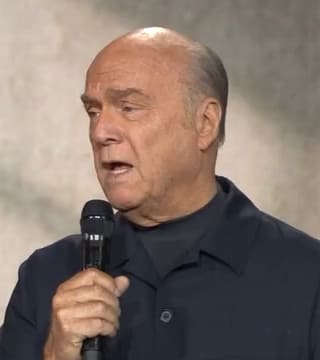
In this message from Luke 6, Pastor Greg Laurie shows how Jesus chose twelve very ordinary, flawed men to become His apostles—God's unlikely heroes. Through their stories we see that God uses imperfect people who make themselves available to Him for His glory and purposes.
Opening Prayer and Introduction to the Series
Father, we're so glad that you never gave up on us. And you love us. And you're working in our lives. And you have a plan for our lives that far exceeds perhaps even our wildest dreams. And that plan ultimately is good for your glory. So we pray now that as we open your word that you will speak to us. And that we will be encouraged to offer ourselves in service to you. So bless this time of Bible study, we pray. In Jesus' name we ask this. Amen.
Alright, you can all be seated. Why don't you grab your Bibles and turn to Luke chapter 6. And the title of my message is, God's Unlikely Heroes. And this is our new series in the Gospel of Luke that we're calling The Gospel for Everyone.
A Funny Genie Story and the Reality of Prayer
So, I heard a story of a guy who was walking down the beach here in Southern California. He saw something shiny embedded in the sand. He reached down and he picked it up and brushed the sand off. And a genie appears. True story. The genie says, “Oh Master, I will grant you one wish. Whatever your heart desires.” The guy says, “One wish? What happened to three wishes?” The genie says, “Well ever since COVID, it kind of messed us up.” “Oh really? One wish.” “Yeah, one wish.”
The man says, “Well I've always wanted to go to the beautiful island of Maui. But I have a fear of flying. And so my wish, genie, is that you would build a bridge from California to Hawaii. So I could drive over to the island.” The genie says, “Are you out of your mind? You know how long that would take? You know how much money that would cost? How much concrete that would involve? That's ridiculous. Come up with another wish.”
The guy thinks about it for a moment and says, “Well, women. I've never understood women. My wish, genie, is to understand women.” The genie says, “Back to the bridge. Is that two lanes or four?”
How many of you have heard this before? Raise your hand if you've heard it. How many of you still think it's funny? How many of you have never heard it before? How many of you who have heard it think I should do it again? How many of you wish I would never do it again? Never? Nobody? Okay. Go, get out. No.
God is not a genie from a bottle. That's not even real. God is a Father in heaven. And sometimes maybe we think we can talk to God like a genie and say, “Lord, I want these things.” But that's not the way it works. Because the ultimate purpose of prayer is to align myself with the will of God.
Jesus' Promise in John 15 and the Importance of Abiding
However, Jesus makes an amazing promise in John 15 where he says, “If you abide in me and my words abide in you, you shall ask what you will and it shall be done unto you.” We gravitate toward the latter part of that verse because whatever my heart desires, yeah. So an expanded translation would go as follows. Jesus speaking, “If you maintain a living communion with me and my word is at home in you, you can ask at once for yourself whatever your heart desires and it's yours.” Wow.
Wait. I have to maintain a living communion with him and his word needs to be at home in me. Bottom line, if I'm studying scripture and learning more about God's will for my life, I will want his will above my own. And I will find myself praying like our Lord in the Garden of Gethsemane, “Not my will but yours be done.”
But prayer is so important. We're told so many times to pray. And here in Luke chapter 6, we find Jesus praying. He's praying for wisdom before he makes a very important decision which involves the selection of the twelve apostles. We read in Luke 6:12, “Jesus went to a mountainside to pray and he spent the night praying.”
Why Jesus Prayed All Night – Four Powerful Reasons to Pray
Now, if Jesus himself was compelled to pray, how much more should you and I pray? Billy Graham was once asked if he had any regrets in life. And he said, “Yes, I would not have taken all those speaking engagements all around the world and I would have spent more time praying and telling the Lord how much I love him.” And we all would have to admit we could pray more. Don't you think? I would certainly admit it. I could pray more about things. So it's very important for us to pray.
Why should I pray? I'm going to give you four reasons to pray. Frankly, I could give you a hundred, but I'm going to just give you four quickly.
Number one, I should pray because Jesus told us to. Or told me to. Is there any other reason I need? Jesus told me that I should pray. It says in Luke 18:1, the Lord says, “Men are always to pray and not to lose heart.” The blessings of watching your prayers get answered are so incredible. You pray for something and it happens. Maybe it's a salvation of a loved one. Maybe it's a healing. Maybe it's a provision. If Jesus says we should do it, we should do it.
Number two, we should pray because through prayer we overcome our anxiety and worry. Philippians 4:6 says, “Don't worry about anything. Pray about everything. And the peace of God that passes all understanding will guard your heart and mind in Christ Jesus.” Prayer is the act of staring down the things that trouble us and handing them over to God. We're told in Scripture, “Casting all of your care upon Him for He cares for you.”
God's Appointed Way to Receive and Gain Wisdom
Number three, we should also pray because it's God's appointed way of obtaining things. Scripture tells us “we have not because we ask not” (James 4:2). In the Lord's Prayer, which is really a template for all prayer, Jesus says, “After this manner therefore you should pray: Our Father who art in heaven, hallowed be your name. Your kingdom come, your will be done on earth as it is in heaven. Give us this day our daily bread.” So what is Jesus teaching us? Go to your Father and ask for what you need. And do it on a daily basis. “Give me this day my daily bread.” I should not be apprehensive about this or reluctant.
I should go to God because it is entirely possible there is something God wants to give to you, God wants to say to you, God wants to provide for you that is not happening because you haven't asked Him yet. Again, that statement: “You have not because you ask not.” Jesus says, “Ask and it shall be given. Seek and you shall find. Knock and the door shall be opened.” And in the original language, there is an increasing intensity in the verbs. Meaning, keep asking. Keep seeking. Keep knocking. Be persistent. Don't give up.
And another reason to pray, the last of four, is to get wisdom from God. James 1:5 says, “If any man lack wisdom, let him ask of God who will give it generously.”
So here we have Jesus praying to the Father all night long as He's preparing to select the twelve men that will shake the world. And did you know Jesus is praying for you too? The Bible says He lives to make intercession for you. That reminds you that you're not alone in your personal struggles. Even if people have abandoned you, Jesus will never abandon you. He said, “I will never leave you or forsake you.” He's interceding for you right now.
The Chosen Twelve – Flawed but Called by Jesus
Robert Murray McCheyne, an old Scottish preacher, said years ago, and I quote, “If I could hear Christ praying for me in the next room, I would not fear a million enemies. Yet distance makes no difference. He is praying for me.” Imagine for a moment if you were going through a time of struggle and you opened a door in a room and there was Jesus interceding for you by name. Would that encourage you? Talk about Jesus speaking for you. He's interceding. He cares.
Now let's look at what He was praying about and who He selected to be the apostles that would represent Him. Luke chapter 6, let's read verses 12 to 16. “One of those days, Jesus went to a mountainside to pray, and He spent the night praying to God. When morning came, He called His disciples to Him and chose twelve of them, whom He also designated apostles: Simon, whom He named Peter, his brother Andrew, James, John, Philip, Bartholomew, Matthew, Thomas, James the son of Alphaeus, Simon who was also called the Zealot, Judas the son of James, and Judas Iscariot, who became a traitor.” We'll stop there.
Simon Peter – The Bold, Impulsive Leader
Let's look now at these men that Jesus chose, starting with Simon Peter, the man who often spoke before he thought. Apart from Jesus Himself, no name is mentioned more in the New Testament than Simon Peter. Jesus spent more time with Simon Peter than any of the other apostles. And no other person speaks as often or is spoken to as often as Simon Peter. Also, no other apostle is corrected and reproved as many times as Simon Peter was.
While others may have thought certain things, Peter said them out loud. You ever heard the expression, “inside thoughts, outside thoughts”? And you say things, “Ooh, that's an inside thought.” You know, as you get older, you don't care anymore. You start blurting things out. “I can't believe you said that.” “Hey, I'm old. I don't care anymore,” you know. And Peter was the kind of guy who would just say it. There's an old proverb. It's not in the Bible, but it has some truth. “Better to be silent and be thoughtful than to open your mouth and dispel all doubt.” And Peter would just blurt things out at the worst moments. Hence, he just didn't seem to have a filter.
As an example, the moment of transfiguration. Jesus takes Peter, James, and John with him. And they fall asleep. And they wake up. And what do they see? They see Jesus shining like the sun. And on one side is Moses. And on the other side is Elijah. And Peter stands up and says, “It is good we are here.” Was anyone asking for his thoughts? No. “It's good we are here.” Instead of sitting in stunned silence at such a sight, he wants to tell everyone, “It's good we are here. Let's build three tabernacles. One for Jesus. One for Moses. And one for Elijah.” And I love the commentary of one gospel that says, “This he said because he did not know what to say.” When you don't know what to say, don't say anything. And he blurted it out.
But then there are other times he blurted things out that were inspired by God. Jesus and the disciples were at a place called Caesarea Philippi. Jesus said, “Who do men say that I am?” “Well, Lord,” they responded. “Some say you're Elijah the prophet. Others have other thoughts on the topic.” “Well, who do you say that I am?” And Simon Peter, inspired by the Holy Spirit, says, “You are the Christ, the Son of the living God.” Jesus said, “Flesh and blood did not reveal that to you, but my Father who is in heaven. And you are Peter. And upon this rock I will build my church.”
So does that mean Jesus was building the church on Simon Peter? Of course not. The church is not built on the foundation of any man, including Peter. What it means is Christ was building his church on the foundation of what Peter said. It's built on Christ. He said, “You are the Christ, the Son of the living God.” The church is built on Christ. Our lives are built on Christ. But hey, credit to Peter. Nobody else came up with that.
Peter's Bold Faith and Ultimate Restoration
And he probably thought he was on a roll. Because then Jesus says, “I, the Son of Man, I'm going to be betrayed. I'm going to be beaten. I'm going to be crucified. And three days later I'll rise again.” Peter says, “No, no, Jesus, hold on. Be that far from you.” And he starts correcting the Lord. And the Lord turns to him and says, “Get behind me, Satan, for you are an offense to me.” Wow. One moment, Simon Peter is speaking under the inspiration of God in heaven. And the next moment, he gives a statement that came from the devil himself. But again, Peter, you always knew where you stood with that fisherman.
But having said all of these things, Peter took bold steps of faith that no one else took. Like when Jesus was walking on the water. Peter sees him and says, “Lord, if it's you, tell me to come.” Now we criticize Peter because he got out there and took a few steps and sunk. But hey, he said, “Lord, if it's you, tell me to come.” Jesus could have said, “Stop being so crazy. Stay in the boat. Don't embarrass yourself.” But Jesus says, “Yeah, come on. Go for it.” And Peter did what no other apostle did. He put it on the line. He walked on the water. Oh yes, he sank. But he took a few steps.
Yes, we know Peter for his denial of the Lord. We know that he fell short. We also know that he wept bitterly. We also know that he repented. And we also know that Jesus said to Peter, “Follow me and I'll make you a fisher of men.” And on the day of Pentecost, 3,000 people believed. And later in Acts 4, another 5,000 believed. Now those were adult males. So the number would be much larger. This is why we love Peter so much. Because we relate to him. We think, “Oh man, I'm just like that.” And it shows us that God can use flawed people.
Andrew, James, John – Quiet Servants and Fiery Disciples
Now we come to Andrew, his brother. The behind-the-scenes guy who brought people to Christ. Andrew was the first of the disciples to be called. And the first thing he did was he brought his brother, Simon Peter. And then Jesus called Peter in a special way. Now, listen, Andrew probably lived in the shadow of his brother his whole life. Because Peter was one of those dominant personalities. You know, there's quiet people. There's loud people. Peter was a loud person. Andrew was a more quiet person.
And Andrew could have said, “I'm tired of always being overshadowed by Peter. I'm keeping this to myself.” No, he went and got his brother, brought him to Jesus. And Jesus commissions Peter, even gives him a new name. But Andrew was the guy who was willing to just do whatever needed to be done. You know, he was the guy setting the chairs up before the service. Making sure the row was neat. Andrew was the guy who was running the soundboard. Making sure everything worked. He didn't want to be on the stage. He wanted to run the sound. Andrew was the guy working behind a camera or the lights or doing follow-up counseling. You don't even know his name, but he's faithfully serving the Lord.
I remember my wife and I, the first date I took her on. By the way, we're celebrating 52 years of marriage tomorrow. So it's a big day for us. And the beautiful Kathy Laurie just turned 70 this week as well. So 70 is the new 40, I'm told. So, you know, great time. And seeing what God has done all these years. And I took her out on our first date. And I wanted to impress her. So I took her to a concert where I was running the lights. Love Song. Remember them in the Jesus Revolution film? They were playing. I think it was Long Beach Municipal Auditorium. And so they had the big spotlights and then the color wash that you would put across the stage. So I would tell the guy, “Okay, go to red, go to blue, do this, do that.” I felt so powerful. And I was doing it and Kathy was watching me. And I asked her the other day, “Did that impress you?” She said, “Oh yeah, I was really impressed.” So cool, it worked.
Now I'm kind of contradicting what I'm saying. Because my point is, Andrew works behind the scenes and doesn't want any credit. And I was doing it to impress a pretty girl. But still, I was doing something. But I have found that people that God uses are the ones who are willing to do whatever needs to be done without fanfare, without applause. And you see those people and you say, “Let's give them more responsibility. And more responsibility.” And so that's Andrew working behind the scenes and always bringing people to Jesus. What a great trait.
James and John – From Fiery to Faithful
There was a time when the people were hungry after they'd been listening to Jesus. And they were waiting for something. They needed food. They were getting angry, I'm sure. And it was Andrew who found a young boy with some fish and some bread. And he brought him to Jesus. Like, “I don't know what to do with this kid, but maybe he could help.” And he brought him to the Lord. That was Andrew always bringing people to the Lord. There were some Greek guys who came wanting to meet Jesus. It was Andrew that connected them to Jesus.
We celebrate the Simon Peters of the world, but we often forget the Andrews. And there would be no Simon Peters if there were no Andrews. How many of you have heard of D.L. Moody? Raise your hand, D.L. Moody. Well, a lot of you. I mention him from time to time. He was one of the greatest evangelists in human history. And so, we know of his life somewhat. How many of you have heard of Edward Kimball? Raise your hand. Edward Kimball. One person. Okay, good. Well, Edward Kimball is the man that led D.L. Moody to Christ. Moody was working in a shoe store. And Kimball was a believer and Moody was not. And so, Edward felt led by the Lord to share the gospel with Dwight Moody. And he finally mustered up the courage and Dwight immediately responded and came to Christ and went on to be a great evangelist. So, Moody went from selling shoes to saving souls, I guess you could say.
But, you know, we celebrate the D.L. Moodys, but we forget the Edward Kimballs. There would be no D.L. Moodys if there weren't Edward Kimballs. There would be no Simon Peters if there were not Andrews. So, we have to find our place in the kingdom of God and do what God has called us to do. Everyone has a part to play in the church.
And that brings us to James and John, the outlaw bikers of the first century. I mean, these guys were rough around the edges. They had fiery temperaments. On one occasion when the people of Samaria were not hospitable toward Jesus and his disciples, it was James and John who said, “Lord, we think we should call fire down from heaven on them.” And Jesus said, “You guys do not know what kind of spirit you are of.” And they want to call an airstrike. “Lord, should we light them up right now?” Jesus responds, “Guys, I did not come to barbecue people. I came to save people. You are missing the point completely.” But that was James and John.
On another occasion, Jesus said that he was going to go and suffer and die. And he went into great detail about it. And I'm not laughing about that, but it's what they said after. So, he's bearing his heart, all that he's going to go through. And then they said, “Okay, but Lord, we're wondering, what can you do for us right now?” You know, it's like, “I'm going to suffer and die on the cross. Interesting. Okay, what can you do for us?” That would be like having a friend who just found out from the doctor they have a month to live. And you say, “Wow, a month. What are you going to do with that new car you just bought?” Could you be a little less disengaged? And that was James and John.
On another occasion, they asked—or their mother asked, rather—for them to sit on the right and left hand in glory. But Jesus didn't leave them as they were. He transformed them. John, who was known for his fiery temperament, later became known as the apostle of love. And as you read his three epistles, they're just filled with admonitions to love one another. And John, who was the only of the twelve apostles to not die the death of a martyr—well, Judas didn't. And he hung himself. But among the others, he was put into, according to church tradition, a pot of boiling oil. And he would not boil. So they banished him to an island called Patmos, thinking “we'll never hear from him again.” And there on that island, Jesus came to him and gave to John the apostle what we call the book of Revelation. The unveiling of end times events. And James, he was the first martyr of the apostles, beheaded by King Herod.
Philip, Thomas, and the Others – Each with a Unique Role
Then there's lesser known apostles like Philip. He was the administrator handpicked by Jesus. You know, when you're a Philip, it's hard to compete with a James and a John and a Peter. Because they're such dominant personalities. But we need everybody. We need administrators. We need bean counters. We need people that keep things organized. If the world was filled with Simon Peters, it would be chaos. But if the world was filled with Philips counting beans, it would be boring. So we all have to work together and find our place in the church.
The Bible says that the church is like a human body. In 1 Corinthians 12:21, it says, “The eye can never say to the hand, ‘I don't need you.’ Or the head can't say to the feet, ‘I don't need you.’” So we all have a part to play and God called Philip.
Going back to the feeding of the 5,000, here's the crowd gathered. And Jesus turns to Philip and says, “Where shall we find bread to feed all of these people?” Now, Philip had actually seen a number of miracles. He had seen Jesus turn water to wine. He saw Jesus cleanse the leper, cast out demons, calm a storm, raise the daughter of Jairus from the dead. How easily he could have said, “Well, I don't know, Lord, but after watching you in action, I'm sure you'll come up with something.”
“Where will we find food to feed all of these people,” Jesus says. Philip says, “Well, there's this little kid here with five loaves and two fish. What is that among so many?” He missed that opportunity. But he was called by the Lord. Some people are setting the world on fire, while others are still looking for a match. So Philip missed an opportunity, but he was selected by the Lord to be one of the apostles.
Thomas – The Skeptic Who Became a Believer
And that brings us to Thomas, the skeptic who believed. Thomas gets a bad rap. If someone has a little skepticism, we say, “You're a doubting Thomas.” Well, why did he end up with that title, doubting Thomas? We don't call Peter “denying Peter.” We don't call James and John “the arson twins.” Why do we refer to Thomas as doubting Thomas? Well, he did doubt. But in fairness, he just wanted evidence. He just wanted to know the truth. And in our fake news culture, we could use more people who say, “Show me the receipts. Let me see the evidence. I'm not going to just believe your hearsay or your accusations. Prove that.” That was Thomas. He wanted to know. Thomas would not let others do his thinking for him. And I actually admire that quality.
After Jesus was crucified, he told his disciples he would rise again from the dead. So they were gathered in the upper room, praying, worshiping. And guess who shows up? Jesus. So the next day, they see Thomas, who wasn't there. “Hey, Thomas, should have been at worship last night.” “Yeah, why?” “Well, guess who showed up?” “Who?” “Jesus.” “No way.” “Oh, yeah. They all said, ‘We saw him.’ Jesus was there.” “I'll believe that,” Thomas says. “But I can put my hand in the wound in his side and put my finger in the holes in his hands.”
Okay. Next time they were meeting together, Thomas was there. And guess who came? Jesus. “Hey, Thomas, here I am. Go ahead. Put your hand in the wound to my side.” Thomas just responded by saying, “My Lord and my God.” He got the evidence. See, once he had the evidence, he believed.
Sometimes when our children begin to ask hard questions, we feel we have somehow failed as parents. When your child says, “Mom, I'm not sure if the Bible is trustworthy.” Or, “Dad, how can I know that Jesus is the only way to God?” That's good. That means you've raised an intelligent, thinking child. And you need to help that child find the answers to those questions for themself. Skepticism is not always a sign that a person is wrong. It can be a sign that they're thinking. Because they can't live off the faith of their parents. A husband can't live off the faith of his wife. Or the wife off the faith of her husband. You need to have your own faith. Because as I've said before, the faith that cannot be tested is the faith that cannot be trusted. That's Thomas. “Just show me.” And once it was shown to him, he believed. To his credit.
There was one occasion. I love this story. John 14. Jesus says, “In my Father's house are many mansions. If it were not so, I would have told you. And if I go, I will come again and receive you unto myself. That where I am, you may be also. Where I go, you know. And the way, you know.” Sure, all the apostles are nodding their heads. “That's good. That's deep.” I don't think they understood it. It's Thomas who was honest enough to say, “Excuse me, Lord.” Maybe he's waving his hand back and forth. “Yes, Thomas.” “What's your question?” “We don't know where you're going. And we don't know the way. We don't even know what you're talking about.” And then Jesus responds with what we call John 14:6. Where he says, “I am the way, the truth, and the life. And no man comes to the Father but through me.” I'm so glad Thomas asked that question. So Thomas was the guy who wanted to know for himself. And church tradition tells us he died the death of a martyr being thrust through with a lance.
Judas Iscariot – The Betrayer Chosen by Jesus
Finally, that brings us to Judas Iscariot. The hypocrite extraordinaire. Consider this fact. Jesus prayed all night. He chose Peter. He chose James. He chose John. He chose Philip. He chose Andrew. And listen, he chose Judas. How does that work? Judas betrayed the Lord. Sometimes people want to portray Judas as a victim. That was caught up in circumstances. And really wanted more people to believe in Jesus. Nonsense. Judas was evil. And the Bible actually says, Satan filled his heart. And he sold Jesus out for 30 pieces of silver. It was greed. And he had every opportunity to believe.
Jesus saw all the miracles the other apostles saw. Jesus heard with his own ears the Sermon on the Mount. Judas saw with his own eyes Lazarus rise again from the dead. Judas saw Jesus walking on the water. But yet, he betrayed the Lord. He was the textbook definition of a hypocrite. Because the word hypocrite in the Bible means an actor. It means somebody playing a part. That's who Judas was.
In fact, he almost appeared to be more virtuous than the other apostles. There was one occasion when Jesus was in a room with a lot of people. And a woman came and took very expensive perfume—worth thousands and thousands of dollars—and poured it on his feet. And the fragrance filled the room. And it was Judas that stood up and said, “This is a waste of money. This perfume could have been sold and the money given to the poor.” I'm sure all the others are thinking, “Wow, he's very thrifty. That's very good.” But then we have this commentary from the Gospel of John that says, “This he said because he was stealing the money.” He just wanted the money for his own pocket. So at the moment he appeared the most virtuous, he was actually the most evil.
And how did Judas betray our Lord? He did it with a kiss. He could have just pointed and said, “There's Jesus, arrest him, my job is done, give me my money.” But he goes and he kisses the Lord. And in the original language it's implied, he kissed him over and over again. Almost wanting to appear as a devout worshiper. When he was the ultimate betrayer. And even in that last moment of betrayal, we read Jesus said to him as he approached, “Friend, why have you come?” Wow, “friend”? He should have said, “Fiend, why have you come?” But he said, “friend,” which was really one last opportunity for Judas to repent. Which he did not do. And he went out and hung himself.
Why God Chooses the Unlikely – Availability Over Perfection
But, you know, I think on paper, Judas probably looked better than all of the others. Imagine if Jesus posted on LinkedIn, “Looking for 12 leaders to change the world. No experience necessary.” And he gets hundreds of applications. And he runs them through an AI hiring platform. And the algorithm spits out this report. Simon Peter, red flag. Anger management issues. Makes impulsive decisions. Would say reply all on a sensitive email. Recommendation, do not hire. Andrew, caution, lacks experience. He has no leadership potential at all. Recommendation, entry level only. James and John, red flag. Toxic workplace behavior. Competitive, asking about promotion during the orientation meeting. Recommendation, liability risk. Thomas, caution. Questions leadership decisions. Recommendations, culture fit concerns. Matthew, red flag. Multiple fraud investigations. Previously worked for an IRS equivalent. Recommendation, hard pass. Judas Iscariot, top candidate. Excellent with finances. Detail oriented. Strong references. Recommendation, promote to CFO immediately.
See, things are not always as they appear. Why would Jesus ignore the algorithm, so to speak, and pick these guys? Paul gives us a clue in 1 Corinthians 1:27, when he says, “God deliberately chose the things the world considers foolish in order to shame those who think they are wise.” In other words, God is not looking for resumes. He's looking for availability. And as we've seen with these apostles, they were human. Hopelessly human. Not perfect. Flawed people just like you and just like me. In many ways, these guys were a mess. A beautiful mess. And God can take a mess and turn him or her into a messenger.
Heard this story about an old violin that was being sold by an auctioneer. He held it up and says, “Who wants to buy this violin?” He had one offer for $5. Suddenly, an elderly man from the back of the room walked up and took the violin out of the auctioneer's hand. He blew the dust off, pulled out the bow, and played a complex, classical, musical piece. Everyone was in awe. Then he set the violin down. The auctioneer went back up again and said, “Who will give me $1,000 for this violin?” And the bids went up until it reached $10,000. So it was sold for $10,000.
And finally, a woman goes up to the auctioneer and says, “How is it that a violin that you could not get $5 for sold for $10,000?” And the auctioneer said, “Ma'am, it's simple. It was the touch of the master's hand.”
So we're like that old dusty violin, thinking we're never going to amount to anything. And then Jesus picks us up and touches our life. And he does something wonderful through us. See, he's still changing people, and he's still looking for people to represent him. He can do extraordinary things through the most ordinary people. Every one of these apostles could have said no to him. But instead, they said yes. And he's still looking for people to follow him now.
Jesus Sees Your Potential – A Call to Salvation
Jesus doesn't just see you for what you are. He sees you for what you can become. You see all of your shortcomings, all of your flaws, all of your mistakes, all of your sins. He sees that. But he also sees you for what he can make you into, a new person in Christ, old things passed away, everything becoming fresh and new. God can change your life.
You say, “Oh, I don't know, Greg. I've tried.” Okay, you've tried. “Well, I've tried religion.” Oh, good. Why don't you come to Jesus now? “Well, I'm in a 12-step program.” This is a one-step program. Come to Christ and believe. He'll change you. But you have to do something that's hard for many people to do. You have to admit failure. You have to say, “I am a sinner. I can't do this on my own. I can't save myself any more than a drowning person could save themselves. I have to call out to God.”
But the Bible promises, “Whoever will call upon the name of the Lord will be saved.” And would you want to do that right now? There might be someone that has never been to church before. Or this is your first time. Or maybe you've heard these things for years. But you've never believed for yourself. “Well, I was raised in a Christian home. And I have questions.” Okay. “Show me and I'll believe.” Effectively, Jesus says, “Believe and I'll show you. You'll see.”
If you believe in Jesus, I would suggest to you, most of your questions will be answered. Maybe not all. I still have a few questions. Like, what happened to my hair? I don't know. We all have questions to ask God one day. But the big questions of life, such as, why am I here? Why do I exist? What happens after I die? All those questions will be answered. What is the meaning of your life? You'll find it in a relationship with God through Jesus Christ, who died on the cross for you. And paid for your sin. He came to pay a debt he did not owe, because you owed a debt you could not pay. And he rose again from the dead three days later.
And if you'll believe in him, he'll forgive you of your sin, and give you a fresh start. That's why he uses the term “born again.” That's what he said to the religious leader, Nicodemus. “You must be born again.” Nicodemus is like, “Wait a second. Am I supposed to go and be back in my mother's womb?” “Yeah, seriously, no. That which is born of flesh is flesh. That which is born of spirit is spirit. You must be born from above.” It's a spiritual rebirth. And it can happen for you. He's just a prayer away.
In a moment, I'm going to pray for you and with you. And I'm going to extend an opportunity for anybody here that wants their sin forgiven. Anybody here that wants this relationship with God. Maybe you're like a Simon Peter, and you messed up. Maybe you denied the Lord as he did, but God gives second chances. God would have given Judas Iscariot forgiveness had he taken it from the Lord. Even as he was betraying Christ, Jesus said, “Friend, why have you come?” If Judas would have said, “I'm wrong, I'm sorry,” Christ would have even forgiven him. How do you know that? He prayed for the people who crucified him. There's no person he will not forgive. But that person must come. And maybe that person is you.
And if you need to believe in him and have your sin forgiven, you can do it right here, right now. Let's all pray together.
Father, thank you for your word to us today, Lord Jesus. Thank you for coming and dying on that cross and rising again from the dead. And now we pray for anyone here among us that does not yet know you. Help them to come to you and believe.
Well, our heads are bowed and our eyes are closed and we're praying together. If you would like Jesus Christ to forgive you of your sin, if you would like to know that you will go to heaven when you die, or if you've fallen away from the Lord and you would like to come back to him again, if you want this new beginning in life, if you want to fill that void in your heart, just raise your hand up and let me pray for you. And in doing so, you're saying, “I need Jesus.” Just raise your hand up. I'll pray for you. God bless you. You want Christ to come into your life. Raise your hand up. I'll pray for you. God bless you. Anybody else? Raise your hand up. This is your moment where everything can change.
But just like a drowning person, you have to call out to the Lord. Only he can save you. I can't save you. The church can't save you. But Christ can and will save you. But you must say, “Lord, help me. Save me. Forgive me.” Anybody else? Raise your hand up. Let me pray for you right now. God bless you. God bless you. Yes.
Now you that have raised your hand, just pray this prayer with me right where you are. Just pray, “Lord Jesus, I know that I'm a sinner. But I know that you're the Savior who died on the cross for my sin and rose again from the dead. I turn from my sin now. And I choose to follow you from this moment forward. In Jesus' name I pray. Amen.”