
Cedric Pisegna - The Bible is Gods Dynamite (01/24/2026)
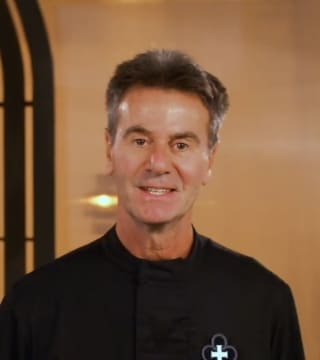
Father Cedric Pisegna dives into Romans 1 and especially chapter 8, calling the Bible God's dynamite power for salvation and transformation. He shares how Scripture sparked his own rebirth and urges everyone to read it prayerfully, letting it blow up strongholds, bring hope amid suffering, and shape us into Christ's image as more than conquerors through unbreakable love.
Introduction: The Power of God's Word
I'm a Catholic priest, and I'm so glad that you tuned in to the program. I want to share with you about the power of God's Word, and this comes from Romans chapter one. This is Paul the Apostle speaking. He said, "I'm not ashamed of the gospel, for it is the power of God." The word used is "dunamis"—the power, dynamite of God—for salvation to everyone who has faith, to the Jew first and also to the Greek.
Favorite Things
Oprah Winfrey has a program, and so does Ellen DeGeneres. On their programs, every once in a while, right around Christmas time, they talk about their favorite things. Those shows feature things like handbags, trips, jewelry, and whatever her favorite thing is—it could be an iPhone or an iPad or whatever it is. The crowd goes wild because they know that if they're attending this "favorite things" program, they're going to get something valuable. So the crowd goes crazy when it comes to their favorite things.
And you know, we all have favorite things in life. It could be a favorite TV program, a favorite restaurant, a favorite place that we like to go on vacation, or your favorite music on the radio—whatever it is. So we're very familiar with favorite things.
My Favorite Thing: The Bible
Well, in this episode, I want to share with you my favorite thing, and it's much more valuable than Oprah's things or Ellen DeGeneres's things. It's not so much about money or iPads, but my favorite chapter in the Bible and some of my favorite verses in the Bible that are valuable and that have touched my life. Because remember what we just said: the Bible, the Scriptures—the name "Bible" means books, books together; "Scriptures" means the sacred writings. The Bible is the power of God, and I want you to receive this power.
I've had this Bible that I'm holding here for over 40 years. This particular version is the Revised Standard Version. There are many different versions of the Bible, of course. This has been approved by the Catholic Church, and I've had it for over 40 years. I don't know if you can see it, but I have a Bible cover on there, and it's of a butterfly. It's been etched in there, and the butterfly, because of course, represents metamorphosis and transformation. That's exactly what the Scriptures have brought to my life: metamorphosis and transformation.
Transformation Through Scripture
I love what it says in 1 Peter: we have been born again through the living and abiding Word of God. So you can actually experience a new birth through the Scriptures, through the Word of God. The Word of God is so powerful that way.
But speaking about Bible covers, I heard about a man who had a New Testament, and he had a leather Bible cover. He wanted to get, in gold glittering letters, the words "The New Testament" engraved on his leather Bible cover. So he gave it to the man. The man said, "Sure, I'll do it." About a week later, he came back, and when he came back, the man handed him the Bible cover and said, "Sir, I apologize. We ran out of some of the vowels. I had to abbreviate 'The New Testament.'" And gave him his Bible cover, and there in gold glittering letters were the initials "TNT." And that's exactly what the Scriptures are: God's dynamite, explosive, something that's powerful.
The Gospel's Inbuilt Power
It was Billy Graham who said that the Bible, the gospel, has inbuilt power for salvation. And I just read to you about Paul the Apostle, where he said the gospel is the power of God unto salvation. That's the greatest extreme where the power comes: a person being saved, a person being born again through reading these powerful words of Jesus and the words of Paul the Apostle.
Sometimes people think that Catholics don't believe in the Bible, and I want to dispel that myth right now because I want you to know that the Catholic Church is a Bible-believing Church. We have always believed in the Bible. In fact, the Bible came through the Church early on, through the Catholic Church. I don't want to get into any arguments about that, but just to let you know we are a Bible-believing Church.
At every Mass, we read the Scriptures—not philosophy or novels or anything like that. We read the Scriptures: Old Testament, New Testament, Gospel, Psalms. And Pope Francis has designated one of our Sundays in the liturgical year—the third Sunday in Ordinary Time every year—as Word of God Sunday. That began in 2020. It's Word of God Sunday, with a special emphasis on the Bible. He encouraged all people, especially Catholics, to make room in their hearts for the Bible and for listening to the Word of God.
Pope Francis on the Dynamite of Scripture
He said something about this power, this dynamite. Pope Francis said that when the Holy Spirit visits the human word—and it was written by a human community inspired by the Holy Spirit—when the Holy Spirit visits the human word, it becomes dynamite. So something special happens when God mixes with us: dynamite. And like dynamite, capable of lighting hearts, blowing up patterns and strongholds, and opening up new paths in our life.
So if you have a stronghold in your life—maybe an addiction, a bad habit, some type of clinging sin—the Scripture can actually, like dynamite, blow that up and bring you to a new freedom. It can bring you to a new relationship with God. There's all kinds of inspiration and encouragement, all kinds of comfort and challenge in the Scriptures.
My Personal Salvation Experience
So I want to get into that a little bit. I wanted to tell you about a salvation experience that I had. I'm not just talking about theology here. I'm not just saying good words because the Pope said to say it. I actually had a salvation experience through the Scriptures. This is why I'm so gung-ho on the Bible. And not just me—really, the Catholic Church has been preaching this for years now: that we ought to be reading the Scriptures on our own. Bible study groups are appearing everywhere, and it's so wonderful. People get together and talk about the Gospel, the Sunday readings, the Scriptures—very important. And biblical scholarship has advanced so much in the last 50 years, in archaeology, to teach us about the Scripture and the meaning of the Scriptures.
So I just wanted to tell you that when I was a young man—not this particular Bible, but my parents had one of these big family Bibles, and it was on our bookshelf in the living room. I finally took it and read it because I was searching. It was one of those red-letter editions. So when I came to it, I started to read from the Gospel of Matthew, and it was Matthew 7:7 because there was a lot of red words there—that's where Jesus spoke. And I read, and I'll never forget this.
Prayer
Ask, and it will be given to you; seek, and you will find; knock, and the door will be opened.
For the first time in my life, God spoke to me through the Scriptures. You can hear God's voice. It's not real loud, but it penetrates. It's dynamite. It breaks open, breaks up the doubts, breaks down the denials and the walls that we can put up about religion and about God. And I heard God inviting me to prayer.
So as I started praying, that's when everything changed for me. Of course, I had prayed, but nothing like I was being invited to. I started asking and seeking and knocking, and I had a born-again experience. Wow, the Holy Spirit touched me, and things started changing. I know that I know that I know that the Bible was a catalyst for this rebirth in my heart.
Sharing the Word
And so the Scriptures are so important. That's one of the reasons why, when I preach my parish missions, I not only talk about the Scriptures, but I do something interesting. I take with me these little booklets called "The Word Among Us." "The Word Among Us" is a Catholic booklet that has some Mass devotionals in it, but it has all the Scripture readings for a particular month—all the Mass readings: the Old Testament reading, the New Testament reading, the Gospel. It has a little commentary, some meditations.
So when I go on my missions, I don't just invite people to read the Bible—I give them the Bible—because I realized that there's a lot of people out there that don't know the Scriptures and were told, perhaps as a young person by priests—unfortunately—not to read the Scriptures. So that's all changed now. I give them these little booklets called "The Word Among Us," and I invite them to read the daily Mass readings because I believe—just as millions of people have experienced, just as I experienced—that when you read the Scriptures, dynamite can happen. Explosive power and grace can occur in a person's heart. And I want that to happen to you.
Millions and millions of people down through the ages have just simply come to the Bible. I'm not talking about biblical scholars. I'm talking about housewives. I'm talking about teenagers like me. I'm talking about simple, ordinary people. You don't have to be a scholar. You don't have to have a degree in archaeology to understand what's in there. You just simply come with faith and an open heart, and you open up your heart to the Word, and watch what will happen.
How to Read the Bible
So before I forget, I want to get into some of my favorite things that are in the Scriptures. And by the way, just spend five or ten minutes when it comes to reading the Bible. You don't have to spend an hour at a time. It's not so much like a novel where you just go chapter after chapter after chapter—although there are many chapters in the Bible. It's not how much you read; it's how you read it. You read it prayerfully. You read it slowly. You look for something to jump out at you and to touch you. And eventually, it starts to transform your whole concept of what it is to be a disciple of Christ.
I want you to be a biblical Christian, not just some kind of nebulous Christian, because the Scriptures teach us about what it is to be righteous, what it is to be in Christ, how to have a new identity, how to be transformed.
Through Him, With Him, In Him
This whole series is about "through him, with him, and in him." That's a phrase that we use in what's called the doxology in the Catholic Mass when we worship God. Doxology—"doxa" means glory—when we're giving glory to God, and we pray: through him, with him, and in him, in the unity of the Holy Spirit, all glory and honor is yours, Almighty Father, forever and ever. Amen. And the great Amen. So that comes right from the Scripture, and much of the Catholic Mass is very scriptural, very biblical.
So I wanted to share some of my favorite Scriptures with you, and especially my favorite chapter in the Bible, and that's Romans chapter 8.
Romans Chapter 8: Life in the Spirit
Some of you know what that is. Paul was about to travel to Rome, and in advance of his journey to Rome, he wrote the Romans this very beautiful letter. You know, all these chapters—I believe there were sixteen chapters in the letter to the Romans—and full of truths. I read that whole thing about the gospel being the power of God unto salvation. Well, Romans chapter 8 is one of the most beautiful chapters, and it has to do with life in the Holy Spirit.
Let me just say a word about the Holy Spirit here for a second. Any of you who are involved in the charismatic renewal know all about that—that when the Holy Spirit comes upon you, you begin to be transformed, and your ideas change, and your whole relationship with Jesus changes. So Paul had been touched by the Holy Spirit in a very powerful way. He had a Pentecostal experience. So he writes to the Romans and tells them all about life in the Spirit.
I believe that one of the reasons why God has called me to become a Catholic priest is to announce in the Catholic Church and announce on television everywhere that when you come to Christ, you can have encounters with God in the Holy Spirit. And when I talk about "through him, with him, in him," I want to talk about the Spirit being in us. We are in Christ, and the Spirit is in us. Jesus promised that he would be with us, but "in" is closer than "with." "In" is something deep and transcendent and is even closer to us than we are to ourselves. That's what St. Augustine said: God is closer to us than we are to ourselves. Wow, talk about being "in."
The Spirit Helps Us
So the Holy Spirit is this person of God that comes to transform our life. And Paul talks about this in Romans. In chapter 8:26, Paul says the Spirit helps us. These are some of my favorite Scriptures, by the way. The Spirit helps us. By the way, that word "Paraclete" means the helper. "Paraclete" is a word used in John for the Holy Spirit. The Spirit is the helper. God breathes his presence upon us to help us.
Maybe you're going through a difficult moment in your life right now. It could be grieving, could be physical problems, could be a relationship problem, unemployment. Perhaps you're in prison. There are all kinds of difficulties that we have in life. We were never meant to go through them alone. The Spirit is there to help us. The Spirit is the helper.
And when you're anointed with the Spirit—by the way, that's what the word "Christ" means: The Anointed One—and we are Christians, we are anointed ones, anointed by the grace of the Holy Spirit, the presence of the Holy Spirit. And the Spirit comes to help us, but especially in our prayer life.
The Spirit Intercedes
Paul says we don't even know how to pray. And I have many programs on prayer, wrote a book on prayer, but we don't even know how to pray. And those of you who have been in this for a while know that it's true—at times you just don't know how to pray. And Paul says the Spirit intercedes in us with sighs and groanings, maybe even tongues beyond words.
I love that because sometimes, you know, I'll be praying, and I'll realize that I've said that already, and I'm not quite sure what to say, and I just take a deep breath and I let it go and I say, "Holy Spirit, pray through me. Intercede for me." So allow the Spirit to pray through you, to intercede through you, in you, and for you.
And then Paul talks about how the Holy Spirit, the Comforter—you know, the Spirit is the Comforter. Think about if you've ever seen in a bedroom on a bed when it's a cold night, they have these comforters, these blankets. The Spirit comes to comfort us, to help us in our journey.
The Spirit Stands By Us
I think about sometimes when I'm facing something difficult—it could be travels, a challenge in my life, something that's hard that I know is gonna take a lot of energy and a lot of concentration, a lot of focus—and at times I sense the Spirit with me. These waves of glory will come over me—not all the time, but sometimes. And when those waves of glory hit, that strengthens me, that comforts me, that helps me.
I remember Paul the Apostle was going through a hard time, and perhaps this is one of the reasons why he wrote about the Spirit in Romans chapter 8. He was going through a hard time and was put in prison, and the Spirit spoke to him. And actually, it says in Acts that the Spirit stood by him and said, "As you have borne witness for me here, you're gonna bear witness for me in Rome." I love that: "stand by me." The Spirit is the one who stands by our side and helps us whatever we're involved in. Actually, it's a legal term: the Spirit is the defense attorney who stands by you while you're on trial.
I don't know if you've ever heard that song "Stand By Me," and then the verse goes, "When the night has come and the land is dark, no, I won't be afraid because as long as you're there to stand by me." Everybody goes through dark times. Everybody goes through hardships. But what I love about Romans 8 is it's telling us that we don't have to go through them alone, but God stands by us and strengthens us and lives in us and prays through us.
Sufferings and Future Glory
Then Paul continues with these writings, and he says—I love this—"I reckon that the sufferings of the present aren't worth comparing with the glory to be revealed in us." This verse has to be—you know, I have so many favorites—but it's Romans 8:18. "I reckon," he says, "that the sufferings of the present aren't worth comparing with the glory to be revealed in us, to us."
Wow. Sometimes I get so weighed down and discouraged by my sufferings. I've gone through some knee surgery. I've had eye problems. I've had skin problems and all these different things, joint problems, arthritis—and it can get you down. You feel weighed down by that. And never mind just my sufferings—think about the sufferings that are going on in the world right now: mental illness, monetary problems, addictions, relationship problems, people dying, abortions, homelessness, people in prison, pollution, nations in tension, wars and rumors of war, an uncertain future.
Paul himself pens these audacious words in the midst of the world's situation, in the midst of his own sufferings, in the midst of the sufferings of the world. He said, "I reckon that the sufferings that we're going through now aren't worth comparing with the glory that's going to be revealed." What an audacious statement. I love that.
Because the bottom line is—and this is hope—if you've ever seen a scale, a justice scale, it has two sides to it. Picture all the sufferings of the world: the abortions and the murders and the wars and the hardships and the atrocities and the concentration camps and everything else, the physical sufferings that we all go through. And Paul is saying that I reckon that all the sufferings in the world aren't worth comparing with the glory that's going to be revealed.
Wow, what kind of glory? What kind of insight is this? If you want to read a good book—and I don't always recommend other books, but this book has so touched me—it's called "Imagine Heaven" by John Burke. "Imagine Heaven" by John Burke. I don't sell it; you can find it online. He compiles all these near-death experiences—and I've had a couple myself—and what people saw when they went to heaven: the City of God. He talks about paradises being around the City of God, the mansions, the beauty, the pleasure, the fountains of life, the flowing river of life, and how you can swim in it and breathe in it because it's the Spirit of God flowing from the throne of God. And he talks about what it's going to be: the glory of the great reunion that we're gonna have with our loved ones that have gone before us. And everything that we've gone through before—all these sufferings—are gonna be forgotten. It's gonna be over with, as it says in the book of Revelation: God will wipe away our tears.
And that's one of my favorite verses: God holds our tears in his bottle. He sees our sufferings. He knows our tears. So that's one of my favorite verses. I just love that verse. And again, it's Romans chapter 8, verse 18: the sufferings of the present aren't worth comparing with the glory to be revealed.
All Things Work for Good
Then, in the midst of all of his struggles, Paul makes another audacious statement, and he says that God makes all things work for good for those who love him. This is Romans chapter 8. He said we have been predestined to be conformed to the image of Jesus.
Now this is really important. I think this is the hub statement of the whole Bible: What is the meaning of our life? What is the purpose of our life? That we be conformed, transformed into the image of Jesus. That's why, even though we're suffering and dealing with trials and tribulations, even though we're going through hardships and difficult things, God is the Potter and we are the clay. And right in the midst of all of our sufferings and difficulties and trials, God is working for good. And the good that God is working for is to try to mold us and shape us, form us, transform us into the image of his Son.
That is the meaning and the purpose of our life. And I hope that you can get that. That is our call: to be transformed into the image of Christ. And God is working—in your old age, he's working; through your difficulties, he's working; through your tragedies, God makes all things work for good for those who love him.
I heard about a Russian proverb that I really like: the same hammer that shatters glass forges steel. The same hammer that shatters glass forges steel. For some people, when they suffer, they have a breakdown; but for some people, when they suffer, they have a breakthrough. The same hammer that shatters forges. And God is working right now, trying to forge us into the very image of Jesus. That's why I love that verse.
So please understand: that is your call, that is my call—to become the image of Jesus Christ.
More Than Conquerors
Then Paul says, "If God is for you, who can be against you?" That's one of the famous verses of Romans 8. If God is for you—and he is for you, he's not against you—then who can be against you? We even have a song in the Catholic Church: "If God is for us, who can be against?"
He continues, and he says—this has to be one of the most majestic verses in the Bible—"We are more than conquerors through him who loves us." I even put that on my collection envelope, that phrase, because I want everybody to get that: that we are more than conquerors. No matter what adversities and trials and difficulties—because God is at work in us—we are victors, not victims. Yeah, everybody's got to face things.
And then here's the crescendo verse. It all boils down to this at the end of Romans chapter 8. He says, "I am certain that neither death nor life—underline death—angels, principalities, things present, things future, nothing in all creation will be able to separate us from the love of God that comes to us in Jesus Christ." That's Romans 8:38-39. I want that written on my tombstone: nothing, not even death, can separate us from the love of God in Jesus.
Conclusion: Become a Biblical Christian
So do you see what I mean by being a biblical Christian? Many people don't even know about these verses, but these verses have so inspired me. They're my hope. I have such joy and such enthusiasm and passion, and it comes from the Scriptures.
That's why I want you to be a biblical Christian. Get in there and read the Scriptures. Find your own favorite verses. It will inspire you. It will challenge you. It will comfort you. It's God's dynamite for eternal life.
When I was ordained a deacon, the bishop gave me a Bible and he said, "Believe what you read, teach what you believe, and practice what you preach." And I pray that as you come to the Scriptures, you will believe what you read and you will experience God's dynamite and rebirth. Don't just live—live with passion.