
Cedric Pisegna - Victim or Victor (01/24/2026)
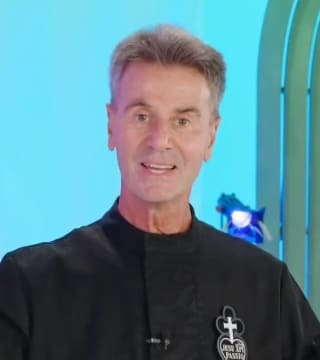
Father Cedric Pisegna reflects on Paul's "thorn in the flesh" from 2 Corinthians 12, where God says His grace is sufficient and power perfect in weakness. He encourages viewers that suffering has purpose—it transforms us, builds compassion, draws us closer to God, and makes us real—turning victims into victors through reliance on divine strength rather than self-sufficiency.
Welcome to «Live With Passion», I’m Father Cedric Pisegna. So glad that you tuned into the program. I’m producing a series about being victorious. You can either be a victim or a victor, right? This comes from 2 Corinthians chapter 12. This is Paul writing. He said, «To keep me from being too elated by the abundance of revelations, a thorn was given me in the flesh, messenger of Satan, to harass me, to keep me from being too elated. Three times I begged the Lord about this, that it should leave me, and God said to me, 'My grace is sufficient for you. My power is made perfect in weakness.'»
Everybody’s going through something. We all have suffering and I wanna help you gain perspective and meaning and let you know that there’s purpose in your pain. You have to understand that you can get perspective from your suffering and actually suffering is something that God uses to bring good. When I sign some of my books, what I sign is, «Your suffering has meaning, » and then I sign my name. What you’re going through right now, you can be victorious if you understand that your suffering has meaning. That it’s not just meant to bring you down but to lift you up.
Saints Who Suffered Greatly
In the Catholic Church, we canonize a number of people. My favorite saint is Saint Francis of Assisi. The Saint Francis of Assisi was a great saint, but the interesting thing is, he died at age 44 and he was blind. He suffered greatly. Another saint of course that I really like is Saint Paul of the Cross, the founder of the Passionists. Saint Paul of the Cross was a great saint, he lived to be 81 years old, into a ripe old age, but he had depression for many years toward the end. That’s something a lot of people get is depression, that mental illness. Mother Teresa, for example, now Saint Teresa, also was depressed at times. And then I think about other saints.
Of course, Saint John Paul II, our former Pope, he suffered with Parkinson’s. He was shot. He went through a great deal of suffering in his life. See, nobody’s exempt from suffering. To be human is to suffer in some way, shape, or form. We know that but can we somehow get a vision about what it means? And I’m gonna help you with that, I’m a Passionist priest. You see by my religious habit. We have a dedication, more than a dedication, a vow to the passion. The word passion means suffering. And also to the suffering of the body of Christ, the sufferings that you’re going through. I write books, I proclaim the gospel on television, I travel preaching parish missions, helping people to get closer to God, especially to have eternal life, but also understand what they’re going through, gain some perspective.
And I wanna help you with that. The number one email that I get, I get emails from people from my website, go to my prayer requests. The number one email that I get has to do with health. «Father, I’m struggling physically, mentally, spiritually, relationship problems, finances, emotions, » as I was talking about. Globally, of course there’s great suffering going on. Wars, Ukraine, Gaza, mass shootings, sex-trafficking, migrant problems, abortions. Suffering is everywhere.
Christianity's Unique View on Suffering
All religions recognize this. Certainly, Christianity does. That life is characterized by suffering. Buddhism, for example, looks at suffering and tries to overcome it through what’s called enlightenment, Buddhism. Christianity, however, takes a different track. Christianity doesn’t so much try to overcome suffering as to allow suffering, the reality of suffering to transform us. That is so important and I want you to get that. We’re not so much trying to overcome suffering, it’s a part and parcel of everybody’s life, but we can use it, we can understand it, we can allow it with God’s grace to transform us.
That’s exactly what we had, the classic case is Paul, Paul the Apostle has this thorn in the flesh, very classic example, very famous verse from the Bible. This thorn in the flesh, we’re not quite sure what it was, but we do know that his conversion Paul had a blindness. If you remember, he was struck blind. And then Ananias came and laid hands on him and something like scales fell from his eyes. Could be that he had eye problems, this thorn in the flesh, he wanted it removed. And it brought him sorrow. Instead of being too elated because of all the wonderful revelations that God gave him, it brought him, yeah, brought him down, the sufferings. But God said something very interesting to him.
God said, «In your weakness, in your suffering, in your being brought down, your humility, my power, my presence, my grace is made perfect». Because what we do sometimes is we rely so much on ourselves, our health, our well being, we’re self sufficient. Yeah, that’s really good and everything but what we need to do is be God-reliant, trusting not so much in our bodies and our abilities as in God. Invite God into what you’re going through at this very moment and watch him work in a powerful way. I live in Houston at a retreat center it’s called Holy Name Retreat Center. It’s a mecca for the 12 step program. Interesting thing about the 12 step program, in order to recover from an addiction, you have to admit that you’re powerless over this urge toward drinking, or towards gambling, or towards sex, whatever it is. And that you don’t have the power to do it on your own to come into recovery. That you need God’s help.
How Suffering Leads to Transformation and Reliance on God
And that to me is classic about what suffering can do. It brings you to the point where you have needs, you’re not self-sufficient, you’re not in control. What you have to do is allow God to take you right where you are to work in you, to bring you to recovery, and to keep you in recovery. And if you’re struggling with an addiction right now and you don’t know how to get out of it, you’ve been stuck, you’ve been trying, it’s not working, surrender yourself to God. Admit it, believe that God can help you, surrender, and his grace, «But there by the grace of God go I». That’s one of the sayings in the 12 step program. He will transform you. He will help you. And I’ve been transformed to my own sufferings. I know that for sure.
C.S. Lewis said, «God whispers in our pleasures, but shouts in our pain. Suffering is His megaphone to rouse a deaf world». And that’s so true, suffering opens us up to grace. It’s interesting how people in the 12 step program usually get into the 12 step program. It’s usually through some suffering of some sort, a bottoming-out experience. Could be an intervention where family and friends come to them and say, «You have a problem». And that suffering makes them make a move into recovery. God shouts in our sufferings.
Number one, suffering can bring transformation. Look for that in your own life. In your weakness, look for God to work, look for God’s power. And then number two, suffering brings compassion. The word compassion, passion means suffering, come with… Our sufferings… you see, we’re not islands unto ourselves, we’re part of a continent, that’s what John Donne wrote about. I’m a man of the cloth, but I’m cut of the same cloth as you. And when we suffer, no matter what type of suffering it is, it should put you in touch with the suffering solidarity with the suffering of other people.
I read an article one time I thought was really eye-opening. It was by Father Michael Buckley. He’s a Jesuit priest. And the name of the article was, «Beset By Weakness». If you know the scriptures, Hebrews chapter 5, Jesus himself was beset by weakness. He was a great high priest who can sympathize with us. And in the article, Father Buckley said, «Not are you strong enough to be a priest, » he said, «are you weak enough to be a priest»? I find that intriguing 'cause most people think, «Yeah, I gotta be strong, and I gotta be up there on a pedestal, and gotta have it all together». When he talked about weakness he wasn’t saying, «Are you sinful enough to be a priest»?
The Power of Weakness and Compassion
And when Jesus was beset by weakness, it didn’t mean that he was morally corrupt. He was perfect, of course. When he talked about weakness, he was talking about Jesus being human, Jesus being rejected, Jesus having suffering, Jesus having loneliness, having to go through and eventually suffer the passion. In the same way, are you weak enough to be a priest? And that means, your weaknesses, your sufferings, your trials, I look at my own life, fear and depression at times, and going through hardships physically. Your weaknesses are meant to make you relate to people, to have compassion on others, to be in solidarity with others. Sometimes on Fridays we fast to be in solidarity with the poor.
Same way we go through sufferings physically and emotionally, puts us in solidarity with other people. Sometimes I get letters and emails from people, «Father your preaching is down to earth, really appreciate that». And the reason why I’m down to earth is because I’m just like you. I go through, I suffer. Show me a great preacher and I will show you a preacher that has suffered. Great preachers aren’t born in ivory towers somewhere with highfalutin theology. It’s real life, real issues, real solutions. And that’s the name of a book that I wrote. I’m hoping that you’ll pick it up because I cover a number of different issues there, some of which I have gone through. Especially fear, and anxiety, and worry, and social phobias, and all that type stuff so that… I’m vulnerable. Are you weak enough to be a priest?
Now you don’t have to hang out all your dirty laundry. But far too often, we’re not relating to people in our preaching because we’re up in these ivory towers somewhere instead of down on the same level as everybody else. As I said, I’m a man of the cloth but I’m cut of the same cloth as everybody else. And I’m not afraid to share my sufferings with you because I’m human. Are you weak enough to be a priest? «Beset by weakness, » we’re told in the Bible Jesus was. He can sympathize with us because he’s our great high priest.
So, your sufferings oughta bring you some compassion. And if they don’t, let it open you up to compassion. As I said, the word means to suffer with. Speaking of compassion, I remember the movie, «The Doctor, » came out about the year 1991, starred William Hurt. William Hurt was a doctor and he was helping people, but his attitude was kind of sour. His bedside manner wasn’t all that good. And then he ended up getting a tumor. He ended up getting sick. Doctors had to minister to him. And the whole movie was about how it revolutionized his life, brought him compassion. And then when he met people, he had a different bedside manner because he had been through the same thing. Remember, Jesus is the doctor of our soul. He called himself a doctor. He came for the sick to make us well.
See, that’s what suffering does, it brings compassion. Then, also, it brings us to God. The classic case of that, of course, in the scriptures, the prodigal son story, classic story. You know the story, I won’t tell you the whole thing, but the bottom line is, here’s this young man, he takes off with the inheritance, and he squanders the whole thing in loose living. Ends up having to get a job, his stomach hurts, he’s slopping with the pigs in the mud, and he has an awakening, and he goes back to his father. And so often in life that’s what it takes for us to go back to God. When things are going well, we’re comfortable, we’re pretty happy, but in order to bring change it’s kinda like these little eaglets that are in the nest, they don’t wanna leave the nest.
Suffering as a Catalyst for Change and Joy
So, what the mother does is she pulls out all the padding and there’s thorns in there. And then the eaglets leave the nest 'cause it hurts. Sometimes it’s the hurts of life, the sufferings of life that brings about change. I wrote a book called, «You Can Change, » and to me the classic catalyst of change is suffering. And I know that from my own life. As a teenager, had a breakup with a girl. I was probably 18 years old and brought a lot of loneliness and emptiness, far from God, I was grieving, it was really hard, developed acne. Softened me, deepened me. And I started then going from the superficial to the supernatural. My sufferings slowed me down. Instead of judging everybody else, I started looking within. And it really did bring me to God. I had a conversion. And if you’re going through sufferings right now, don’t so much try to push them away, learn from your sufferings, let them teach you, let them bring you to God.
I love what it says in the scriptures. And it says, «Why are you cast down, my soul? Hope in God, I will praise him still». That’s what sufferings do, they they cast you down. It can be so difficult but learn from them. You see, they’re transformative, they bring us compassion, they bring us to God. No one is exempt, we all have it. All the religions recognize suffering, but Christianity takes it and realizes that it’s a place where God’s grace works and brings about transformation. And I always tell people, don’t waste your suffering, you can see more through a teardrop, than you can through a telescope. Your sufferings can make you strong. Don’t give up.
One of my all-time favorite books, it’s by an expedition leader, his name is Tim Hansel. The name of the book is, «You Gotta Keep Dancin'». Love the title of that book. It’s like live with passion, you gotta keep dancing. What happened was, he was leading an expedition on a glacier had other people behind him. And they came up to a crevice and he slipped and he fell into the crevice it wasn’t all that deep, but what happened was though he broke his back. He was still able to walk, but it was the pain for years for the rest of his life, the pain that he had, the suffering that he had. And he came to understand something. He had a choice. Not about whether or not he was gonna suffer, that was a given, he was gonna suffer the pain. Been to the best doctors, nothing happened. But he had a choice about how he looked at his pain, his attitude toward the pain.
And he decided, he made the decision that, «Okay, I’m gonna suffer, I’m not gonna let this destroy me. I’m gonna let it lift me up. I’m gonna choose joy, » and it is a choice, «I’m gonna choose joy right in the midst of this». And somehow some way, God’s power in our weakness, somehow some way he was able to be joyful right in the midst of his suffering. And he came up with all these different sayings, these alliterative sayings, «You can be bitter or better. You can turn your hurts into halos. Your irritations are invitations. You can be a victim or a victor, » the title of this episode. «Obstacles are but opportunities. Struggles can make you strong. In life and suffering can either be a tombstone or a stepping stone».
Choosing Joy and Finding Purpose in Pain
Wow, you see, God purifies us through our sufferings. Sufferings are purgative that’s what the great saints have taught us all down throughout the ages. You read their writings and they’ll teach you 'cause they all went through suffering. They will teach you that God is at work purifying us, getting us ready for the beatific vision. Does God inflict suffering upon us? I don’t think so. It comes by being human, we inherit these bodies, we have it in our genes, we get this stuff. All of us have something. Some of us have a lot of different things. The bottom line is that, God though, although he doesn’t so much give it to us, he works through it. He works in our weakness to raise us up. God purifies us, it’s purgative. And he wants a good attitude. He wants us to keep choosing joy, keep choosing to be positive, keep choosing life even in the midst of the hardships.
Paul said in 2 Corinthians, he said, «We were crushed. We thought the sentence of death was given to us, but that was so that we would rely upon God who raises the dead». Remember what I told you? Most people rely upon their own self sufficiency, their own body, their own abilities, but when you get into a very difficult situation of suffering and you lose what you’ve had, that’s the opportunity for you to rely upon God. One of the number one things that we gotta learn in life is to trust God. Sufferings are purgative. Remember Job in the Old Testament? His sufferings brought him close to God. He understood that God was Almighty even though his wife told him, «Curse God and die, » Job said, «I know my redeemer lives».
And I think that’s so good because sometimes when you’re going through suffering, you wonder where God is, and you gotta have a good attitude and you can. Besides all the other things that I’ve talked about when it comes to suffering, if you wanna be victorious, you have to understand that suffering makes us real, makes us human. We’re not from another planet somewhere, we’re not perfect, we’re of the same continent as everybody else. We’re just like everybody else. We have to understand nobody’s exempt from this. I remember reading about the velveteen rabbit maybe you’ve heard about this. Velveteen is a type of fabric. And this little boy had a velveteen rabbit, it was his favorite animal to be with and… his stuffed animal.
Then the boy got sick and the doctor made him move out all of his toys. So, they put the velveteen rabbit outside. And the velveteen rabbit was so broken up that he was separated from the boy that he started to cry. And the tears turned that velveteen rabbit into a real rabbit, that’s the story of the velveteen rabbit. And in the same way, our tears, our grieving, our hurts make us real. We’re not from another planet somewhere. We don’t live in a bubble. We go through real things. And don’t you ever think that God doesn’t see your tears. Says in the scriptures that, «God holds our tears in his bottle». And I love that. Because when you’re grieving, or suffering physically, or feeling that God is far from you, God sees your tears. And in one of the most poetic verses in the Bible, the scriptures say in the book of Revelation, «One day God will wipe away all tears from our eyes». How good is that?
So, suffering has purpose. It’s transformative, it brings compassion, makes us real, God works in it, raises us up. You have to understand that in our weakness God is at work. And I have a saying that I really like. And I think it’s true, some say roses have thorns. I say thorns have roses. Are you weak enough to be a Christian? Are you weak enough to be a priest? Are you weak enough to allow God, and his power, and his grace to work in you? Don’t so much despise your sufferings, learn from them. Let them transform you. Let God’s grace overwhelm you. Bette Midler sang a song called, «The Rose». And she sang, just remember in the winter far beneath the bitter snows lies the seed that when the sun’s love in the spring becomes the rose. May the thorns in your life bring forth roses. Don’t just live, live with passion.