
Bill Johnson - How to Make Your Life a Continual Feast
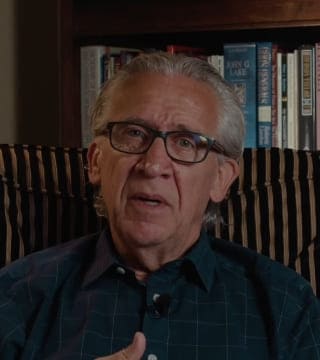
All of you who would say, «I just really need more joy in my life,» well, here it is: a person has joy because of the answer of their mouth. You’re presented with a challenge, a question, a problem, a difficulty. What’s the answer? Your answer determines your measure of joy. I think it’s a big deal for us to take responsibility for managing our own soul in that realm—the healthy area of joy. You and I were designed for great joy. Hello again, welcome back. Uh, once again, I really am thrilled that you’re able to join us in this quest for wisdom. Chapter 15 is where we’re going today, so let’s just get started. Verse four is where we’ll begin. A wholesome tongue is a tree of life, but perverseness in it breaks the spirit. A wholesome tongue is a tree of life.
The tree of life is mentioned in three books of the Bible: in Genesis, in Proverbs, and in Revelation. Genesis is what was; Revelation is what will be. But Proverbs reveals what is—a present tense reality. The thing you need to remember about the tree of life is it marks whoever touches it with their eternal purpose. So when it says a wholesome tongue is a tree of life, that means it is possible, through our speech, to not just create reality but to agree with the reality God has created for us. We get to tap into our eternal purpose. We get to speak life and death—this is in the power of the tongue. We get to speak life and death over our children, our grandchildren, our friends. We are able to speak even over cities, over businesses—things that bring great strength and great courage and, more importantly, help to define or help people to realize God’s eternal purpose in each of these things. So, a wholesome tongue is a tree of life. You have the ability to speak the words of God that mark people with the reason they were created. That’s a significant task.
Let’s move on to verse 13. Verse 13 says, «A merry heart makes a cheerful countenance, but by sorrow of the heart, the spirit is broken.» Now, I want to take verse 15 as well because we will put these two together. Verse 15 states, «All the days of the afflicted are evil, but he who has a merry heart has a continual feast.» Alright, so let’s read these two together: 13 and 15. A merry heart makes a cheerful countenance, but by sorrow of the heart, the spirit is broken. All the days of the afflicted are evil, but he who is of a merry heart has a continual feast. Alright, here’s the deal: if the afflicted versus the merry heart, or the sorrow that breaks the spirit, is compared to a cheerful countenance, then if these are just your lot in life—if you’re just born with a happy nature versus an afflicted nature—then this would be a cruel confrontation of the realities that you and I are stuck with. The only reason it’s brought in here is because these are choices—decisions that we make. What we think and what we talk about helps to determine the prosperity of our own soul. We draw from truth and make that our confession, our prayer, our decrees.
Sometimes we just need to stop and declare things like, «God, I trust in You. I don’t know what’s going on in this situation, but my trust is in You.» Sometimes it has to be spoken; it can’t just be a nice, happy, warm fuzzy thought. It’s got to be a decree, and you and I need to take responsibility for the moment that God’s put us in and make the divine decrees. Why? Because we are the ones who decide if we have the cheerful heart that actually becomes manifest. Did you know in Scripture the Bible actually teaches that nations will turn to God because of the joy that is in the heart of the believer? It’s actually in the Psalms that nations will turn because they see what God has done for His people and the joy that’s on their countenance that captures their attention. That’s where we’re at, and I believe that joy is expected when you just won the lottery. Joy is expected when you just got the raise or you just had a healthy baby. Joy is expected when you have joy in the middle of adversity—that’s when you capture the attention of the people around you. So let’s determine we’re going to be tree of life people, people that decree what God is saying.
Alright, let’s move on quickly. Here’s an interesting one: verse 23. We keep getting back to this thing about our speech, but it’s because it’s all through here and this one stands out strongly to me. It says, «A man has joy by the answer of his mouth.» Is it possible that the joy level that we live in is determined by our conversation and our decrees? Is it possible? All of you who would say, «I really need more joy in my life,» well, here it is: a person has joy because of the answer of their mouth. You’re presented with a challenge, a question, a problem, or a difficulty. What’s the answer? Your answer determines your measure of joy. I think it’s a big deal for us to take responsibility for managing our own soul in that realm—the healthy area of joy. You and I were designed for great joy. Amen. I’m about ready to preach here! How are we doing for time? Well, look at that. We’ve got all kinds of time.
Alright, let’s see. Let’s move on to verse 28. I was just pondering this last night because it caught me off guard. It says in verse 28, «The heart of the righteous studies how to answer.» It was the word «studies» that caught me off guard, so I looked it up, and it’s the same word that’s used in various places in the Old Testament for the word «meditate.» It means to murmur or to mutter. Biblical meditation—if you’ve been to the Wailing Wall or you’ve seen pictures of the Jews who stand at the wall and are bouncing back and forth—that’s actually a physical act of meditation where they are reciting, repeating, and muttering certain statements and phrases. The righteous do that in their heart of hearts about how to answer, what to say, and how to phrase things. I want to make sure that I communicate well; I want to make sure that I communicate accurately, and the righteous do that right there. They rehearse what to say.
Now, let’s go to the last verse. Alright, it’s verse 30. «The light of the eyes rejoices the heart, and a good report makes the bones healthy.» There’s another one! I don’t know—you just can’t get too much good news that it actually affects our health. It actually affects our health. Our bones become healthy. We have to take this as the word of the Lord. Sometimes you just have to go out of your way—sometimes things are so challenging. We’ve got things that we’re facing in our home right now, health-wise, that are quite serious, quite significant. So we go out of our way to find the good news, the report of the Lord. Why? Because a good report makes the bones healthy. I pray that for you again in this issue of divine health, this issue of good news bringing life to every part of our being. I pray that it would be multiplied to you over and over and over again. Yep! Amen! Amen!